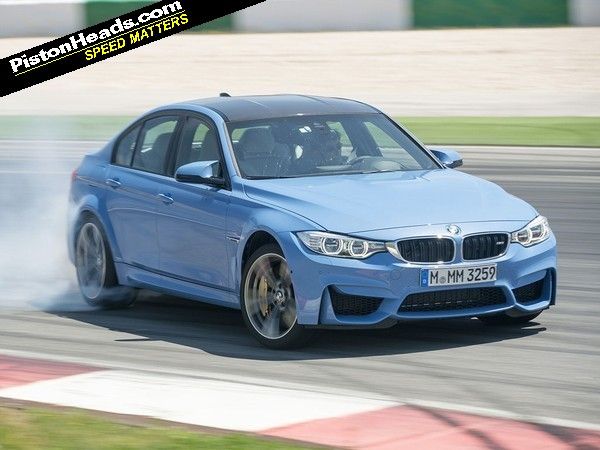
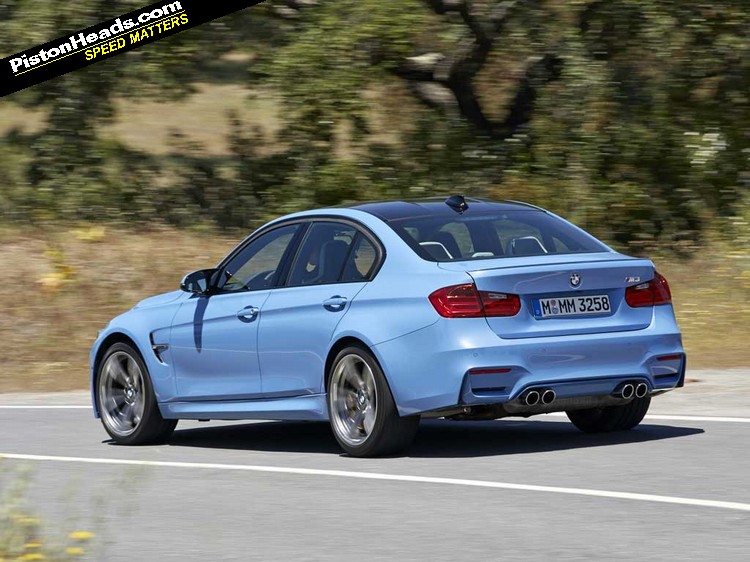
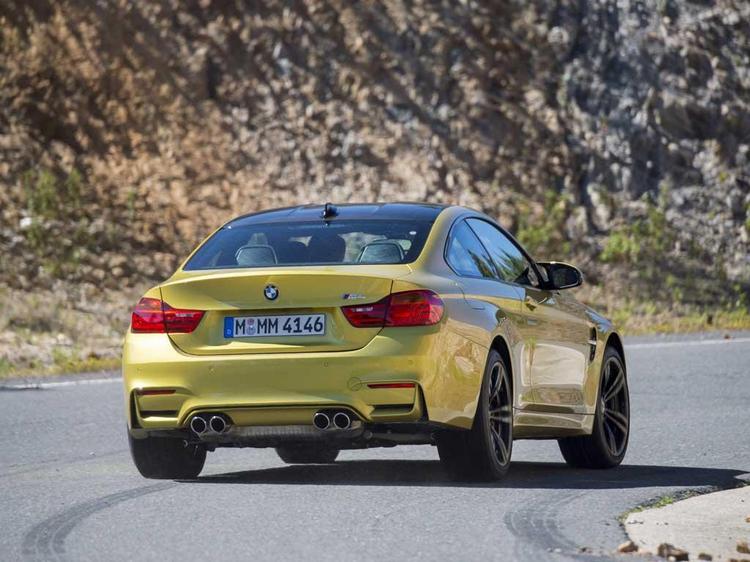
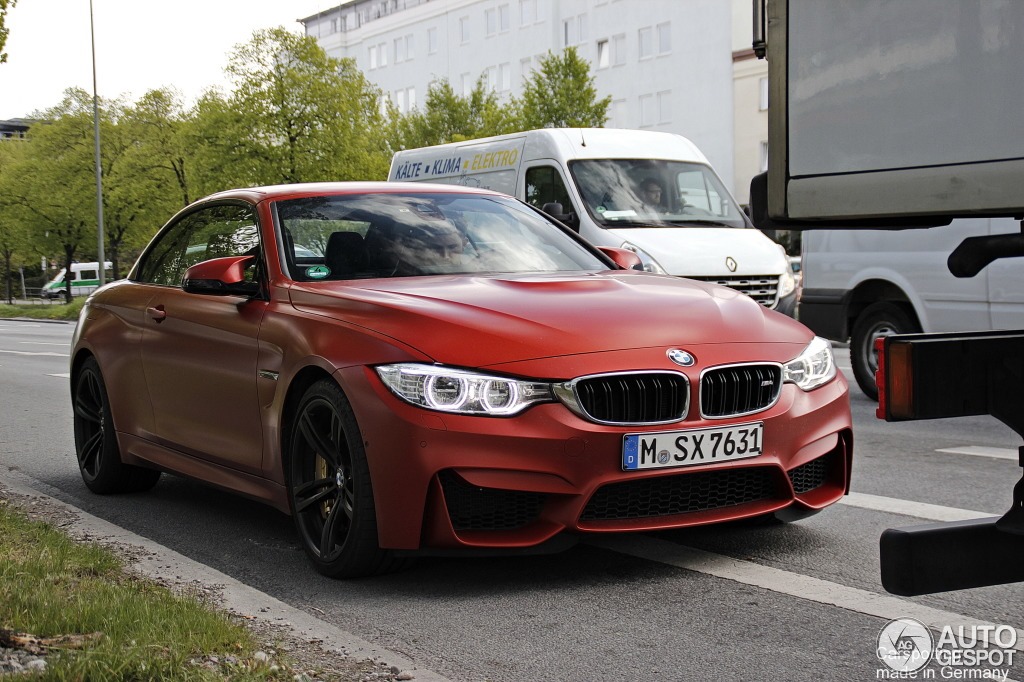
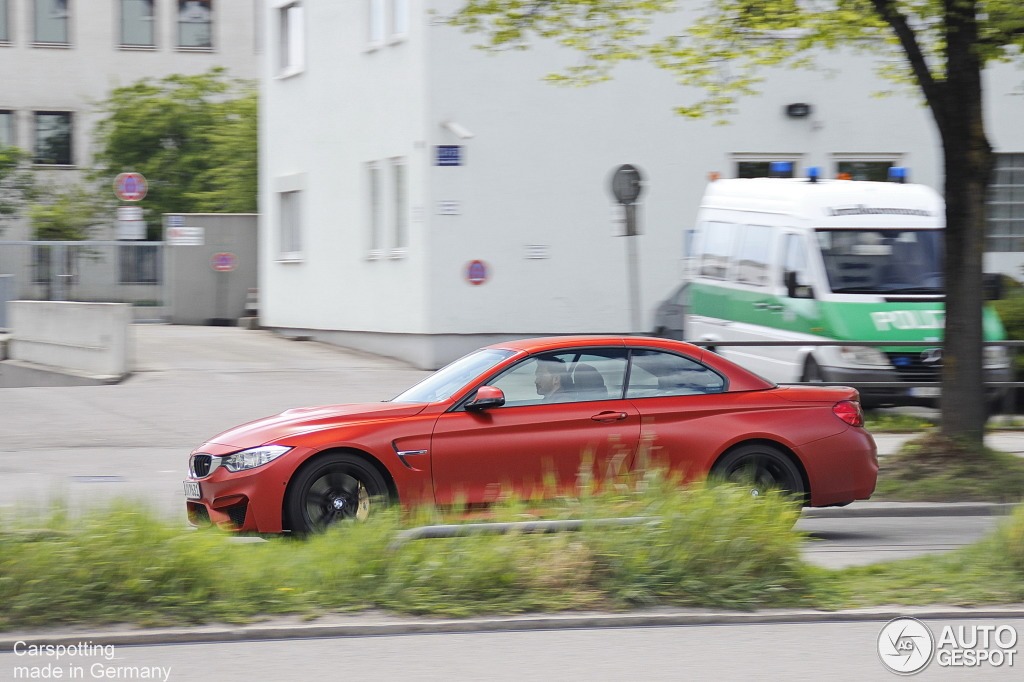
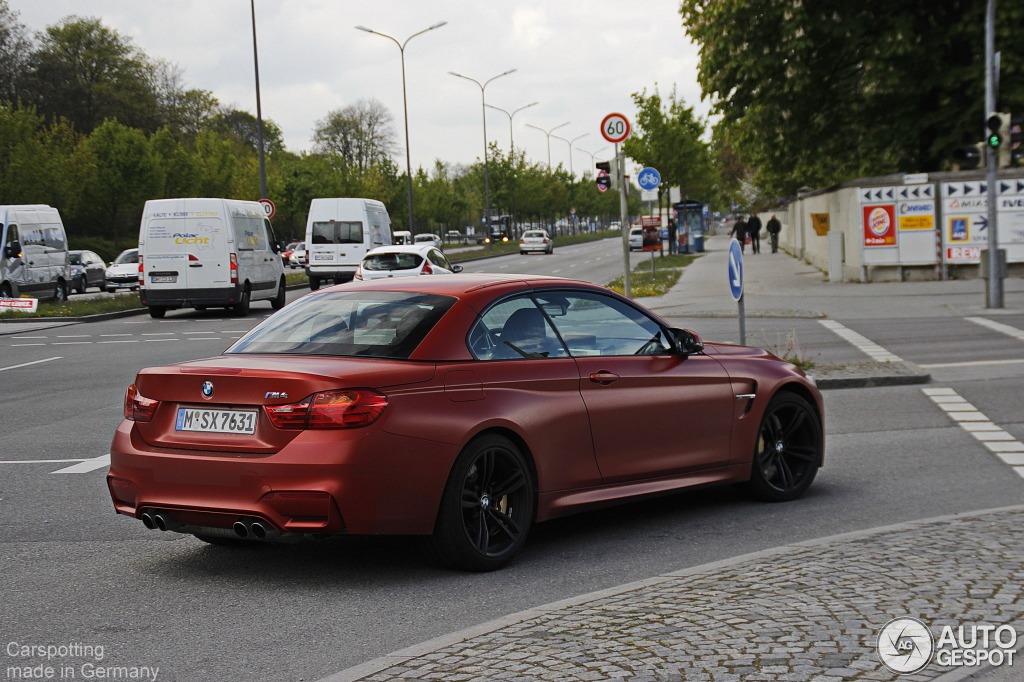
This is the new M3. It’s all present, correct and as you expect apart from the arrival in the engine bay of a pair of turbos.
Turbos?
Yes, and it’s also lost a pair of cylinders. We’re back to a straight six, which enthusiasts will be happy about, but they’re not keen about the turbos. Why? Because while turbos are good for power and torque, they also suffer from lag and mute noise. And if there was one thing previous M3s have been good at, it’s noise and response.
So are you telling me the new M3 fails from the word go?
Not at all. Quite the opposite, in fact. But by adopting turbos the M3’s character has shifted. A good naturally aspirated engine with zingy throttle response and a screaming top end gives any car added zing and spark. Introduce turbos and you’ve got to work around them, because suddenly you’ve got a car that does its best work in the mid-ranges, and so feels lazier.
And is that the case with the M3?
Yes. BMW make much of the fact this 3.0-litre revs to 7,600rpm, but they haven’t given you enough reasons to go there. I had hoped they would save an extra surge of power for the top end, but actually it’s pretty much the same at 5,000rpm as 7,000rpm. Which is the same as at 3,000rpm, too. It’s extremely linear and pulverisingly fast: 425bhp and 405lb ft from 1850-5500rpm in a car that’s now 80kg lighter than before will have that effect. But the engine note doesn’t develop or change as the revs build. It’s kind of tuneful and there’s quite a bit of volume, but you’re aware that it’s not completely natural.
How so?
The ECU is clever. Too clever by half. It knows what revs you’re at and what the engine should sound like at those revs, then adds a bit more through the speakers. You can’t tell where the noise is coming from, but you can tell that it’s a bit artificial.
OK, so what about response?
This could be one of the best turbo engines ever. Stick it in Sport Plus mode and it has anti-lag. You know, like a rally car. Well, not actually like a rally car, but in order to make the turbos as responsive as possible when you’re driving quickly, the engine injects a bit of extra petrol into the cylinders when you lift off or brake to keep the combustion process active and the turbo spinning at over 120,000rpm. So when you get back on the throttle, the turbo is already there, delivering (almost) instant boost and response. You do notice the improvement. It’s not quite naturally aspirated, but it’s damn close. And it’s not just that that makes this engine so good.
No?
It’s how the turbos – which are tiny incidentally, about the size of pill bottle tops – never over-react to your inputs. Turbos often get carried away, and keep on blowing after you’ve lifted off, or have inconsistent response at different points in the rev range. These feel very pure – they respond precisely and are immaculately well behaved. Plus they pack a proper punch – 0-62mph takes 4.1 seconds.
And I understand it’s more economical too?
This is the real reason BMW has switched to turbocharging. Opt for the double clutch gearbox and you’ll only emit 194 carbons and travel 34 miles on a gallon. Those figures are a claimed 25 per cent better than before. And torque has climbed 40 per cent. On paper, this thing rocks.
OK, so what about in reality?
It rocks. It would be reasonable to assume that making it twin turbo would just end up with it feeling like a diddy M5, but it hasn’t. Yes, there are similarities in the power delivery, but the M3 still feels energized and exciting. Oh and by the way, all comments apply equally to both M3 saloon and M4 coupe – BMW has engineered them to drive as identically as possible. Both have the same track widths, even though the standard 4-Series track is 40mm wider than the 3-Series (the M3 is up 80mm. It has stance). BMW has even tweaked the suspension to take account of the extra 23kg the M3 weighs due to its rear doors. Not to make the cars feel different, but to make them feel more the same. Best of all, there’s not much difference in the price – the saloon is £56,175, the coupe just £460 more.
Could you detect a difference?
I thought I could at Portimao racetrack, which is a properly testing circuit with loads of cambered corners, blind crests and elevation changes. I thought the M3 felt a fraction more wayward and lost traction at the back a bit more easily. It could be the slightly more rearward weight distribution, or perhaps the marginally higher centre of gravity due to the higher roofline. Or it could be just me being a self-important chin-scratcher. But it doesn’t really matter because both are a hoot to drive. Let’s not get into actual steering feel as that seems to be a thing of the past now everyone is using some kind of electrical assistance on the racks. The M3 - as long as you avoid either Comfort mode (too much assistance) or Sport Plus (too little) – does a pretty good job in Sport of being accurate, well weighted and giving you confidence in the front end. Which, to be fair, sticks like glue.
So, still not a car that understeers, then?
No, but contrary to some of the pictures above, neither is it a complete sideways monster. Well, not unless you ask it nicely. Most of the time it’s just beautifully balanced, and at the track plays happily in the zone between pushing a bit wide at the front and stepping out a little at the back. It’s all very manageable – and you don’t even have to turn the traction off. MDM mode, which loosens the shackles a bit, is genius and the M3 just moves very well indeed. It’s got great traction, but the turbos hit so hard on the way out of corners that you find yourself short shifting just the manage the power a bit better. But it does get round a difficult circuit very well indeed, aided no end by the optional carbon ceramic brakes – which might just be the single best thing about the car.
The brakes are the best thing about the car? Why?
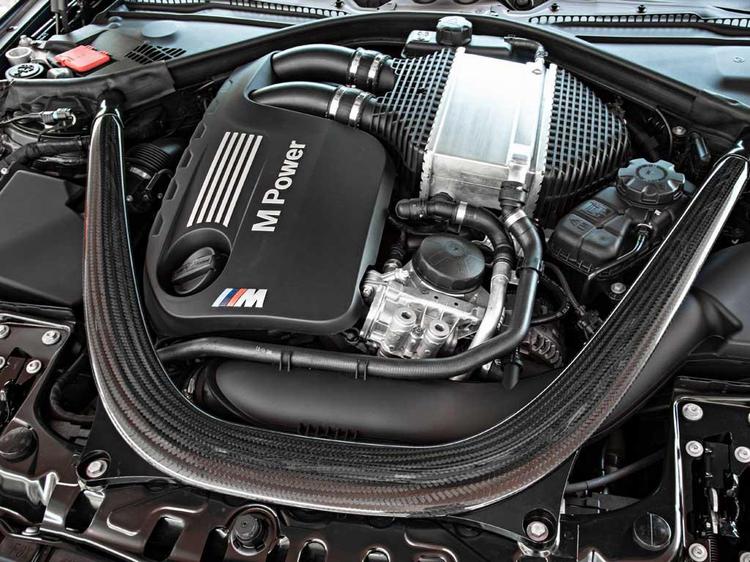
Because they’re so nice to use on the road – lovely bite and progression, masses of power. Oddly, at the track they weren’t quite so stellar – the ABS chipped in a bit earlier than necessary and the pedal got a bit long even though the brakes didn’t fade. No news on how much they cost yet, but they’re worth it. That’s not the only trick stuff going on under the skin. M division has a lot of autonomy in what it’s allowed to do to the 3-Series to turn it into an M3. Here we have completely bespoke front and rear subframes that are rigid mounted to the car with no bushing in order to deliver the stiffest platform possible for the suspension and drivetrain. Open the bonnet and you’ll spot this curvaceous carbon strut brace that encircles the whole engine, linking chassis to suspension turrets to subframes, locking everything solid. And you can feel the results of that in the car’s poise and agility, it’s turn-in and crispness. Both on road and track. I have one or two issues with the ride quality, which felt rather sudden over sharp expansion joints and broken tarmac, but that’s offset by the car’s relaxed nature when you’re ambling around.
Do you mean it’s easy-going?
It is – especially if you opt for the double clutch DCT gearbox. I’m not completely convinced of its integration, as the shifts hit home a bit hard in max attack mode, but combined with the car’s hushed cabin, it does make the M3 an easy car to do distance in. And you really can get 30mpg from it. The seats are superb, and I’m not sure any company, bar perhaps Volvo, places you better in the car, sites the controls more logically or is ergonomically superior. The cabin feels good. And there’s room in the back and boot. Honestly. If you’re thinking of buying an M5, stop and have a long hard look at the new M3. Or M4 over M6, of course…
What about its more natural rivals, the Mercedes C63 AMG and Audi RS4?
The C63 is wonderful – a genuinely exuberant car, but I don’t think it’s as well rounded as the BMW. It’s a little more wayward, which can be fun, but also intimidating. It has charisma to spare, though. I love it, but I think I’d have an M3 over it. The latest RS4 isn’t as good as the previous generation – it’s a bit leaden, although it can tuck itself down a road quickly enough. I’d have that third.
So overall the M3 is still up to scratch?
It is, although it’s also a different car. It’s not as fiery now, not as raw and frantic. You’ll end up surfing the mid-range on the exits of corners because it’s more than enough. You might end up driving everywhere a gear higher, because it feels right. This is a shame – some of the naturally aspirated M3’s purity and hardness has undoubtedly been lost. You don’t have to interact with the car as closely or know it as intimately as you did with the old one. But things are going this way, and the trade off is 30mpg, cheaper tax and passengers that won’t moan about the racket. I think BMW has judged it about right. The chassis is peachy, the engine wonderfully potent – it’s a winning combination.
LaFerrari, Lamborghini Huracan, first drive of the Porsche 918 on US soil: This has been one hell of a month for new metal (and composite). But the BMW M4 is arguably the most interesting and the most important of the lot. Why? Because even if you can’t afford the $65,125 needed to put one in your driveway right now, you know that in three, maybe five years' time, this could be your daily supercar ride. That's not something you can say of the Maranello hybrid.
Let’s start by saying there is no soft option here. Both cars were engineered to feel and respond as similarly as the guys at M Division in Garching could manage. Given that the two are separated by a mere 10 lbs in curb weight and are almost identical in terms of bending stiffness, they didn’t have to try hard to manage it. Both get the carbon roof, but the coupe needed some help to match the sedan’s downforce, so it gets a specially-shaped carbon trunk lid, too. Both get the hood bulge, both get the quad pipes, and both get flared fenders. Both look seriously badass.
The big news for this fifth generation of M3 is the return of the inline-six. The M3 might have started with a four back in 1986 and worked up to a V8 in 2007, but the straight-six, the quintessential BMW engine, is the engine that we most closely associate with the M3. So out goes the 4-liter turbo V8, a strung-out, torque-shy monster of a motor that didn’t get out of bed unless the tachometer was halfway into the red, and in comes a 3.0-liter six. BMW says it’s a proper M engine because it’s not used elsewhere, but the truth is that it’s loosely based on the N55 engine fitted to the 316-hp M235i.
Despite the twin-power name, that N55 makes do with a single blower, but this S55B30 gets a pair, each operating a trio of cylinders. While power climbs only slightly over the old V8, from 414 hp to 424 hp, the torque curve is on another planet. Instead of 295 lb-ft at 3900 rpm, you get 406 lb-ft all the way from 1800-5500 rpm, and that comprehensively transforms the way this car drives—and how much more mischief you can now get up to.
Curves that required second gear before can now be dispatched in third. Cheeky on-ramp powerslides that used to last 100 ft now feel like they’d last all the way onto the highway and onto the off-ramp a junction down. Roll onto the gas hard in second gear in moving traffic, and the bespoke Michelin Pilot sports will actually spin up. Go for the seven-speed DCT dual-clutch transmission, and besides the expected launch control, which will scoot you from 0-62 mph in 4.1 seconds (down 0.7 seconds), there’s a smoky-burnout mode. Instead of building power against the brake to be a holeshot hero, you simply mash the right pedal from idle, the revs swing up to 3500 rpm, the clutch engages with a bang, and you’re left sawing at the wheel as the car slews up the road. Not the fastest way to get off the line, but a whole lot of fun.
Opt for the six-speed manual and those two features are down to your own clutch control (and total lack of mechanical sympathy). But there are good reasons to go for the stick. Price is one. The DCT will set you back $2900. Weight is another. This manual ’box comes from the old 1 M and weighs 26.5 lbs less than the old one, 88 lbs less than the DCT. And it’s a really sweet change. First gear is longer than on the double-clutch, but from there on, the gearing is pretty close through sixth, the key difference being that the DCT has the benefit of a long seventh ratio for cruising.
Whichever transmission you go for, it drives through a one-piece carbon prop to an electronically-controlled LSD. In fact, the rear axle assembly is essentially lifted from the M5 and bolted solidly to the rear floor. This diff is a great piece of hardware: staying unlocked on the way into a curve to promote turn-in and locking up smartly when you need to unload all 424 hp. Whether you want to tease the rear tires a little or exit in plumes of smoke is up to you, but the traction is actually really strong, and there’s virtually no understeer. The default DSC-on setting has been tuned to be uber-safe so as not to freak out drivers used to unflappable Audi RS AWD traction, but the middle-setting MDM (M Dynamic Mode) is properly fun, allowing some serious angles before cutting in, and then doing so as smoothly as a lounge lizard at a 1950s dance.
Equally smooth is the change in rack gearing as you move the steering from the straight ahead to the lockstops. It’s way more subtle than in something like a 3 Series sedan with optional sport steering, which just feels plain odd on the track. This is actually the first time BMW has fitted an electric rack to an M3, but you’d never know it, so convincing are the sensations. We enjoyed it best in Sport rather than over-weighty Sport Plus, or one-finger Comfort, and mated to the sharpest of the three engine maps. As with the M5, you can save your favorite settings and call them up by pressing one of two buttons on the steering wheel.
While you’re fiddling with those buttons, and maybe the one for the optional adaptive shocks, you'll notice one major difference between this M4 and the last M3. It finally has a set of seats that look like they belong in a 400-hp M car, and they’re mounted much lower in the car so you no longer feel like you’re umpiring a tennis tournament. And to keep customers happy, BMW has finally ditched the sliding caliper brakes for four-pots. Our test cars went one further with the carbon-ceramic brakes and six-pot calipers. Great stopping power and fade resistance, but at $8150, I wasn’t keen on the long pedal travel on track. If you want the ceramics, they don’t fit behind the stock 18-inch rims, but the $1200 19s should be considered mandatory from an aesthetic viewpoint alone.
With so much new tech, BMW had so many opportunities to drop the ball with this new M3 and M4, but it seems like they’ve nailed every aspect—well, nearly every aspect. For all its newfound punch and the massive difference that makes to the car’s real-world performance, I’m not convinced by this engine. Sure, it pulls hard right 'round to 7500 rpm—big speeds for a turbo engine—but it somehow never feels that exciting. There’s never any real encouragement to chase the limiter, and when it comes to the soundtrack, while there’s plenty of volume (some of it amplified through the speakers), it’s a case of quantity over quality. It sounds more like a tuned diesel engine than the heart of a pedigreed motorsport product.
On every other level, though, this M4 is more than fit to carry the M3 mantle forward, and at almost $40K cheaper than a Nissan GT-R, it’s even pretty good value. Whether you’re in the market now or planning a used buy five years ahead when prices have tumbled, you won’t be disappointed.
The new BMW M4, replacement for the M3 Coupe, with the most iconic M Division nameplate now reserved solely for a saloon car. It marks the end of the model’s natural aspiration, the old M3’s soaring 4-litre V8 engine replaced with a 3-litre straight-six twin-turbo with more power. Prices start at £56,635.
Technical highlights?
The engine possesses 425bhp and 406lb ft of torque, enough for a 4.1sec 0-60 time (that’s for both M3 and M4) and an electronically limited 155mph top speed. Its forced induction allows these figures to combine with a claimed 194g/km of CO2 emissions and 34mpg fuel economy.
The BMW M4 weighs 1537kg, a saving of around 80kg compared to an equivalently specced E92 M3, achieved via the extensive use of lightweight materials, including a standard carbonfibre roof on both saloon and coupe versions, an aluminium bonnet and a bootlid that uses SMC plastic over a carbon frame.
There’s an electronically controlled limited-slip differential, while the electric power steering and Adaptive M Suspension (standard on UK cars) are adjustable between Comfort, Sport and Sport+ modes. Carbon ceramic brakes are optional. Optional technology includes a head-up display, while a free laptimer app for smartphones connects up to the car’s iDrive.
A six-speed manual comes as standard (and saves 40kg) but unsurprisingly there’s a stumpy little lever like an upside-down teardrop in our test car, indicating that we’ve got the seven-speed Dual Clutch Transmission that most buyers will no doubt plump for.
What’s it like to drive?
Mooching along with its twin-clutch gearbox in auto and the dampers and steering in either of their first two modes (Comfort or Sport), the ride is good and you only really notice the suspension’s underlying firmness over bigger hits like speed bumps. In its efficiency setting the engine is just a distant murmur at lowish revs so the cabin has a refined air about it that would undoubtedly make the M4 a fine long journey or everyday companion.
The first slide is a little tentative because it seems to initiate so easily that I’m worried it might get quite big quite quickly, but not so. And once you know how easy it is, literally every corner on our Portuguese test route seems to become an opportunity to get the rear wheels over-rotating. Load up the outside-front, then with the revs somewhere in the monstrous mid-range torque plateau (1850-5500rpm), simply press the throttle. There’s no need to stamp or mash the pedal deep into its travel because the M4 is already balanced in such a way that it’s just waiting for a nod of approval from the 406lb ft to tip itself into a slide. You’ll feel the rear go light and hear the revs rise as the tail steps out of line, but catching it is easy and the brilliant Active M Differential means your right foot is then the master in deciding how long the black lines behind you are going to be.
The M4’s engine is curious. The torque and mid-range punch are not in doubt. However, BMW’s claims that it still revs like a naturally aspirated engine are open to a bit more debate. If you accelerate hard down a long straight from the mid-range and hold on until the floating rev counter in the head-up display is glowing yellow and red before flicking the right-hand paddle, then acceleration seems unabated and the noise improves. However, there is certainly no final rush to the red line and the actual substance behind the last 1500rpm feels a bit thin. Instinctively you feel like you want to change up before you even start tickling the top end, and coming out of a corner you know that you want to be in the meat of the torque rather than at the peak of the power.
It’s certainly a very different experience to the E92, where the best drives I had were when the needle seemed to be living permanently above about 6000rpm. The engine’s performance is, however, more accessible in the M4 and the throttle response is phenomenal for a car with forced induction – helped perhaps by the reductions in rotating mass thanks to a forged crank and a carbon propshaft. But there is just a tingle of disappointment that there’s not much reward for hanging on to the gears.
How does it compare?
You can read a full comparison between the two in the next issue of evo, but perhaps the BMW M4’s toughest rival to beat will be the Jaguar F-type S Coupe, a car both brilliant to drive and oozing class and desirability. Another rival with a very similar price tag is the new Porsche Cayman GTS – possibly the best sports car Porsche makes.
Anything else I need to know?
The BMW M3 saloon is mechanically identical, weighs 23kg more than the M4 and costs around £500 less. For many, its subtler looks and practicality will make it a little cooler, too.
There’s a lot to get your head round with the new BMW M3 coupe, not least that’s it not called M3 anymore; in line with BMW’s 3-series saloon/4-series coupe naming logic, it’s now the BMW M4. Clearly, this scared M Division witless, so for the first time it’s launching the saloon and coupe simultaneously, so we’ve got the M3 saloon and, the car we’re driving today, the M4 Coupe.
Besides the name, what else is new about the new BMW M4 Coupe?
The big news is the engine. For the first time, the M3/M4 actually shrinks in capacity, from a 4.0-litre naturally aspirated V8 to a 3.0-litre straight six; the last time an M3 had an engine that small was the E36 of two decades ago. To make up for the lost displacement, M Division has added twin turbochargers.
The new engine makes 425bhp and 406lb ft, returns 34mpg and emits 194g/km, which compares rather favourably with the eight’s 414bhp, 295lb ft, 23.7mpg and 285g/km. Couldn’t they have followed AMG’s lead in theupcoming C63 replacement and downsized a V8? Well, M Division insiders say the M5’s V8 wouldn’t fit and that, anyway, the six is lighter to the benefit of handling and that fewer cubes ensure even faster response from the tiny twin turbos.
What's the 3.0-litre turbo like?
If you hope it’ll substitute for some of the aural drama of the V8, you’re in for a nasty shock. The M4 has an uninspiring idle and sounds much like a big capacity turbodiesel at part throttle.
All the extra torque makes a huge difference to the driving experience. Not only is it 111lb ft more substantial overall, but that peak is delivered from 1850-5500rpm, and you can feel much of it kick in from 2000rpm.
So where we’re used to working our M3 motors, this one gives it all up in the mid-range and encourages you to short shift; like a honey trap, it all feels too easy. Still, the performance and excellent response are not in doubt, and there is a reward for winding the engine out to 7500rpm: up at the top it has a much more manic, engaging note.
Don't tell me, you can't get a manual...
Wrong, you can, one that’s based on the slick-shifting unit in the 1-series M Coupe, but beefed up for the torque; it should shift far more sweetly than the previous car’s notchy manual. Oh, and it also blips the throttle for you, just like the system pioneered in the Nissan 370Z – you can, however, turn it off if you’re a real-men-heel-and-toe kind of guy. Albert Biermann, second in charge at M Division, says he’s driving about in an M3 manual right now. Bodes well for the preservation of the three-pedal M breed.
We’re driving the dual-clutch seven-speeder, though. The previous M-DCT had a choice of five shift ferocities with a secret sixth level if you knocked off the traction control. The M4 mirrors the latest M5 with a simplified three shift speeds, which you can apply independently to the auto and manual modes.
You might as well forget the slightly ponderous first mode unless you’re squirming about on snow and ice. The question is, should you go for the second or third mode? The third mode is pleasingly snappy, but when you use all the revs there’s a strong kick to the change with what feels like an unnecessary wave of torque immediately after it; second is perfectly quick enough, but that odd kick is gone. The second level is my choice.
Anything else to configure?
Yes, and again the M3/M4 copies the M5 with three modes for the throttle response, steering and suspension, but defaults to Efficient throttle and Sport suspension and Sport steering every time the ignition’s turned on. I’d leave the throttle in the third Sport Plus mode, because the response really is impressively crisp for a turbo motor, certainly far more so than the 1-series M, with everything little flex of your ankle yielding a reaction. Meanwhile, I left the suspension in Sport, but need to drive it in the UK to make a definitive verdict on the ride – I’m undecided over whether it's too stiff. Finally, Comfort is our preferred steering setting. Sport Plus was predictably wooden, and Sport had a nice weight but an unnaturally sticky insistence to self-centre. Comfort was light and natural, the rack fast and accurate, but I craved more feedback and feel.
If this all sounds too confusing, you can configure your perfect choices via the M1 and M2 buttons on the steering wheel, grouping traction control, gearbox, steering, suspension and throttle settings to suit one of two moods: Jekyll or Hyde.
Okay, so how does this thing actually drive?
It’s very competent and enjoyable. The body control is excellent, the bite from the front end stubbornly unstickable, the performance outstanding and the chassis predictably well balanced. And, yes, it still does all the trademark M3 stuff: drive into a corner hard, brake hard, then pin the throttle and the rear end will arc out in a beautiful drift. And although that happens easier because of all the torque – we haven’t driven it in the wet yet… – the sticky 19-inch Michelin Pilot Super Sport tyres actually give you an awful lot of traction to work against, bringing a high level of control and more progression than you’d experience in the snappy 1-series M, M Division’s first forced-induction coupe (yes, if you ignore the pre-M Division, but actually really M Division 2002 Turbo…).
I always prefer natural aspiration, especially with rear-wheel-drive cars because it gives you such intimate control over the rear end once it starts sliding, and although the M4 is very biddable, you notice that the kick of the turbos does turn second-gear drifts where you’re backing in and out of the throttle into a slightly more frantic affair. Finally, the brakes are fantastic, but that’s because our test car was fitted with the optional carbon ceramics, the first on an M3 (M4!). They require almost comedic levels of recalibration to your approach: brake far too late and you basically use a couple of centimetres of pedal travel to bring everything back under control with an almost eerie detachment. They’re as good as anything I’ve ever tried in a supercar.
Verdict
A turbocharged M3/M4 does take some getting your head round, so if you know your M cars intimately, let me try to explain: on one side of the M3/M4 you’ve got the raucous 1-series M, which was a very old school kind of M car in the mould of the Z3M and Z4M; at the other end of the spectrum you’ve got the new twin-turbocharged V8 M5, a very new school kind of M car. The M3/M4 is most definitely a small M5, not a big 1-series M.
The new M4 is a great car, but it feels more competent than its predecessor rather than any more enjoyable to drive, and I desperately miss the sound, the delivery and the response of the V8. More than anything, I want a little more feel and interaction from my M3/M4, something approaching the hardwired M3 GTS. Who knows, maybe a drive of manual car on a favourite UK road will warm me to it. But first impressions leave me highly impressed but just a little cold.
Mostly, I love the new BMW M3 (and the M4; beneath their slightly different skins they are,BMW goes to some lengths to make clear, exactly the same car). But there is one whopping great caveat to that judgement, and it concerns you-know-what: the fact that its turbocharged.
But in this instance it isn’t just the once straightforward issue of turbocharging itself and the lag this used to create that is to blame, because to all intents and purposes there is no lag to speak of. You put your foot down in the new M3 and it goes, wallop. And it goes very hard indeed, right from the word go, thanks to some deeply clever engineering of the 3.0-litre straight six from BMW’s M magicians.
But it’s what happens after that, after the initial wave of acceleration has started to break, that I have an issue with, and you need to drill right down deep into the torque characteristics of the engine to realise why.
Peak torque of 406lb ft – which is 40 per cent more than in the old V8 M3, for heaven’s sake – arrives at a quite astonishingly low 1800rpm and then stays flat all the way to 5500rpm. And on the surface, this would appear to be the perfect way to ensure that the new twin-turbocharged 3.0-litre M3 feels like it is propelled by a non-turbocharged 6.0-litre V12.
But actually, it doesn’t quite turn out like that – because so linear is the flow of torque between 2000 and 6000rpm that there is a strange lack of edge to its delivery. In many ways it feels like a really potent turbodiesel rather than a high-revving petrol-powered sports coupe, and that’s because there’s almost no sense of crescendo to its power delivery.
Instead, the M3 feels – and sounds – as lively at 2500rpm as it does at 7000rpm, and for a petrol-powered M car this comes as a fairly major disappointment. The surging, slightly manic sense of excitement that has defined the M3’s personality since 1986, right up until this point in time, is simply no longer there, unfortunately. And it’s been replaced by a more efficient, much more clinical but rather less memorable flow of power.
To some, this won’t matter one iota. But to others, it will mean everything; and to these people the latest M3 engine might come across a touch beige as a result.
Other than this, though, the new M3 is a corker – good looking, great to sit in, ridiculously rapid, spacious, great chassis, reasonably decent steering, excellent brakes and extremely well priced.
Good enough to unseat the mighty C63 AMG? We’ll tell you that this time next week.
The speaker-enhanced induction noise is a bit irritating at times. And the electrically-assisted, progressive rack steering isn’t the last word in feel or feedback.
So that’s the bad news out of the way.
M revives the art of the beautiful engine bay
Looking in the rear view mirror whilst making progress in an M3 probably isn’t the most sensible. But the sight of a freshly painted stripe of Michelin’s finest on shimmering Portuguese tarmac is an irresistible distraction. That this came from the outside rear wheel, yet tracks perfectly the arc of the central road markings, tells as much about the dynamic characteristics of this fifth-generation M3 as any spec sheet.Still not up to speed on the data and tech? We’ve got you covered in our preview story here.
Luddites
Out where it matters, frankly, we’re having a ball. PH has bagged one of just a couple of manual M4s among a launch fleet dominated by M DCT equipped Yas Marina Blue M3s and Austin Yellow M4s. Which is probably a neat analogy for the likely sales split. On E46 the manual/SMG split was about 50/50. When the dual-clutch M DCT came in on the E9X range it settled to about one in four buyers sticking with a manual, globally at least. Our UK PR man reckons it’ll be 85 per cent DCT in the UK for the new F80 M3 and F82 M4 range.
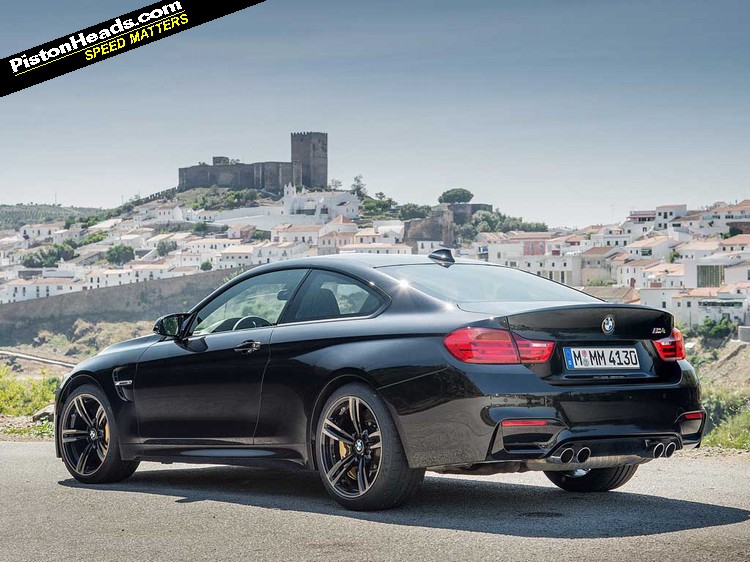
Black M4, manual gearbox ... evil
But we’re die-hards, right? Hence the PH beachtowel going down on the sinister black coupe. Rowing a stick shift around on a car as tech-laden as this does seem a little anachronistic truth be told. And though it’s better than many it’s still a very BMW manual shift, which is to say a bit rubbery and somewhat off the pace of the rest of the car. You don’t flick up and down the ’box as you do with the paddle-shifted M DCT, rather you plan ahead, make your gear choices deliberate and considered and hold the ratio longer than you might otherwise. Downshifts get auto blipping, heel'n'toe purists able to do their own thing with the engine in Sport Plus mode.Which is good, because it means the engine gets to show off how broad and expansive its power band really is. Unrelated to any other BMW straight-six turbo, the M3’s new twin-turbo feels like an authentic M engine, with a hint of classic RB26 Skyline motor on the side. Listen hard and you might catch the odd chuff from the small, low inertia turbos but the aim has clearly been to disguise the forced induction as much as possible. Peak torque of 406lb ft is there from 1,850rpm and your full 431hp is there until 7,300rpm, the curves’ peaks intersecting at 5,500rpm. Basically the whole reach of the rev counter is your playground but it’s very happy in the upper reaches.
Manual gearbox for the hardcore; DCT better
Rear steer And the way it interacts with that fully active diff is proper witchcraft. Exit a corner with a hoof on the throttle and there’s no destabilising wodge of torque like you’d get in a M135i or other ‘regular’ BMW turbo six. Just an increasingly more involving interaction between the engine and rear axle.With the DSC on you’ll get a lot of orange flashing lights and tugging of leashes, even on a dry road. You need at least M Dynamic Mode to get a sense of the diff locking and unlocking, sending power this way and that. Traction is impressive, DSC, diff and dampers all working together to deploy as much power as possible even when hitting mid-corner lumps and bumps. In all three modes the damping is sublime; fast, slick and always managing weight transfers with casual disdain. And when you start pushing the limits and those black lines start appearing on the tarmac it’s wonderfully progressive and readable.
Fatter arches give M3 a ruder look than coupe
And that’s the magic of this new M. Everything works in harmony. True, that steering doesn’t give you a huge amount of feedback. But it is trustworthy and front-end bite is immense. At pace you’ll hear chirrups indicating how hard the front tyres are working but understeer just isn’t on the menu and rotations from neat and tidy to properly lairy simply a matter of how bold and early you want to be on the throttle. In an age of dumbed down performance cars this single-minded focus is hugely refreshing. Put simply? It’s proper. If we’re being picky a faster rack minus the city friendly lower gearing around the dead ahead would give something more convincing to lean against than three-mode artificial weighting. And that's about the only real gripe.
Neat and tidy
On a track you try and drive it in a neat and tidy fashion. But it’ll take all of a couple of corners before thoughts of the racing line disappear, turn-in points get earlier and power applications more aggressive. MDM will cleverly juggle diff and stability control to let you hold a respectable amount of angle; switch it all off and it’s even more transparent and predictable, the angles even more outrageous. In the dry you’re going to be getting through a lot of tyres. In the wet things might well be somewhat lively.
DCT cars much more open to manhandling
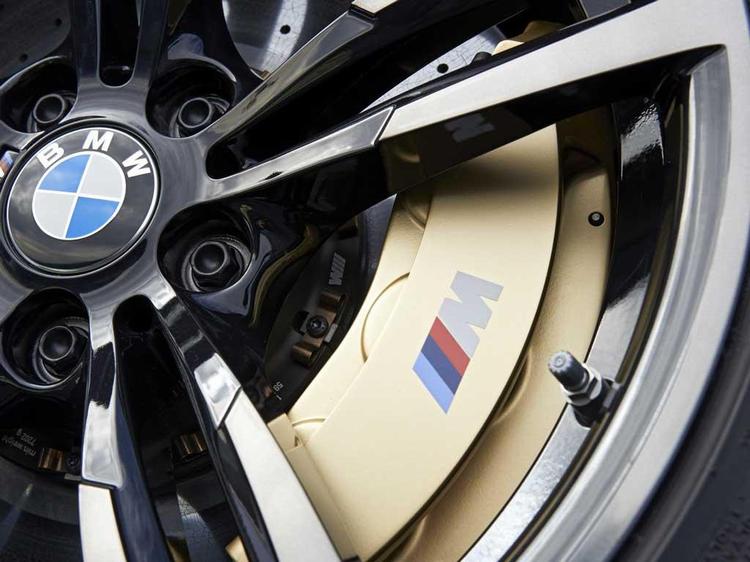
If you drive the manual deliberately and proactively the M DCT car is all about instinct and being able drive it just slightly out of your comfort zone. Need to shift on corner entry? Just flick the paddle. Upshift mid drift? Likewise. The harshest of the shift speed settings will still chirrup the tyres on full bore upshifts for a sense of the old SMG thump in the back but it’s in a different league of sophistication. Hand on (heavy) heart it’s the cherry on the top of the cake and while it’s great there’s still a manual option the M3/M4 is all about the complete package. And the DCT makes it that. Oh, and you might want to scrape together another £6,300 for the ceramic brakes which are both grab- and fade-free. And have natty gold calipers for additional bling.M3 saloon or M4 coupe then? Thus far the comparisons have been interchangeable, as much for convenience as anything. And on the road they’re functionally pretty much identical, with all the settings, functions and measurements as close as dammit to identical. 47mm lower, the M4 is a slightly favourable centre of gravity but really the choice is going to be one of image and practical needs.
Ceramic brakes for the first time on an M3
Ironically the grafting of M4 rear track onto the saloon body has resulted in a more dramatic transformation than with the coupe. And though M3 coupes have traditionally far outsold saloon equivalents as the sole recipient of the celebrated badge and blessed with those more aggressive looks the saloon deserves to stand on its own. As usable day to day as a well-equipped 320d, a proper mentalist when you want it to be and packed with delightfully geeky engineering details to set it apart from the BMW crowd the M3 and M4 are a stirring return to form for an M division we’d feared had lost the plot a little. You get the sense the engineers have really dug deep on this one and gone all out to deliver a good’n. The happy news is it seems they truly have.
BMW M3
Engine: 2,979cc 6-cyl twin-turbo Transmission: 6-speed manual/7-speed dual-clutch auto (M DCT), rear-wheel drive Power (hp): 431@5,500rpm Torque (lb ft): 406@1,850-5,500rpm 0-62mph: 4.3 sec/4.1 sec M DCT Top speed: 155mph (limited) Weight: 1,595kg/1,635kg M DCT (EU, with driver) MPG: 32.1mpg/34mpg M DCT (NEDC combined) CO2: 204g/km/194g/km M DCT Price: £56,175 (Basic OTR) BMW M4
Engine: 2,979cc 6-cyl twin-turbo Transmission: 6-speed manual/7-speed dual-clutch auto (M DCT), rear-wheel drive Power (hp): 431@5,500rpm Torque (lb ft): 406@1,850-5,500rpm 0-62mph: 4.3 sec/4.1 sec M DCT Top speed: 155mph (limited) Weight: 1,572kg/1,612kg M DCT (EU, with driver) MPG: 32.1mpg/34mpg M DCT (NEDC combined) CO2: 204g/km/194g/km M DCT Price: £56,635 (Basic OTR)



 ]
]