
You are using an out of date browser. It may not display this or other websites correctly.
You should upgrade or use an alternative browser.
You should upgrade or use an alternative browser.
Reporting from Hell:The Lamborghini Topic
- Thread starter Johnny E.
- Start date


JRodrigues
Well-known member
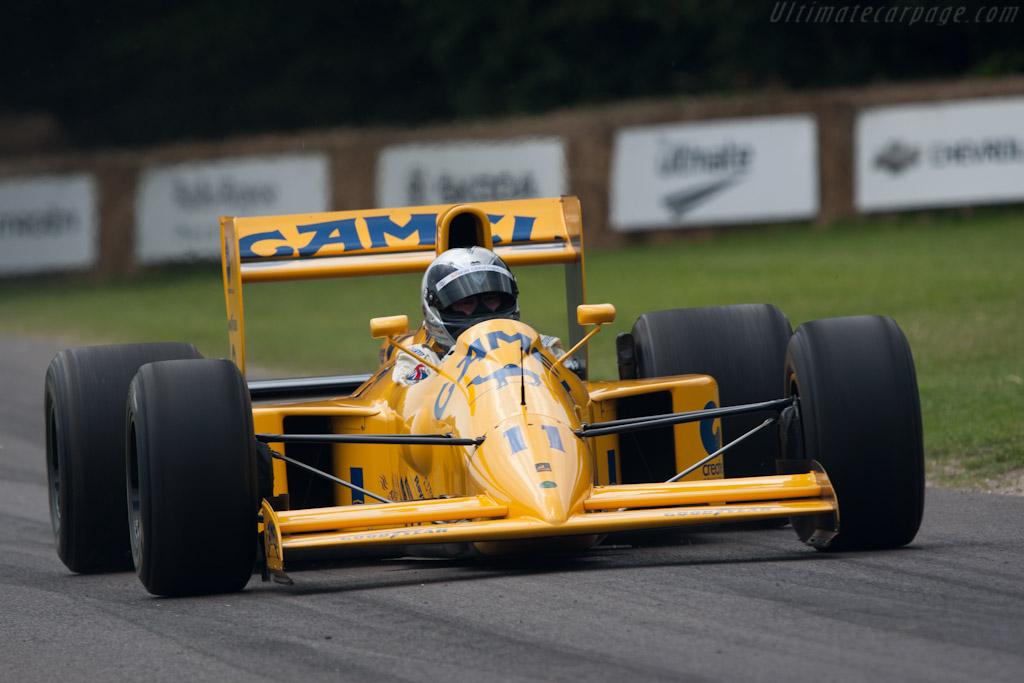
Lamborghini na Fórmula 1



CarlosAndrade
Well-known member
citação:Originalmente colocada por Johnny E.
Murciélago...

[B)][B)][B)][B)][B)][B)][B)][B)]


CarlosAndrade
Well-known member
essa cor...não o favorece[|)][|)][|)]...
JRodrigues
Well-known member
Outro azulinho, e que dizem que terá sucessor


Urraco


Jalpa

Urraco
Jalpa
JRodrigues
Well-known member
Signore Ferruccio Lamborghini e as suas criações

JRodrigues
Well-known member
The Lamborghini tractors, Ferruccio's first business.
Sig. Ferruccio Lamborghini didn't start by building high-performance cars, he was actually born into a farmer family, so when World War II was over and Ferruccio returned to Italy, he began converting the military left-over engines into powerfull tractors, which were much needed at that time.
With his studies at a technical school, and his assigned during the war in the car park of the army, he was well cabable of building just about anything from scratch, and keep it running afterwards.
The tractor business, which he started in an old barn, went extremely well, and soon Ferruccio was able to move into bigger premises in 1949, he built had a completely new factory built in Cento and founded Lamborghini Trattori SpA. At that time they built just one tractor each day with a rather small group of employees. But things only got better, and by 1958 Lamborghini Trattori SpA built 1500 tractors a year.
Lamborghini tractors were considered to be among the very best, in the beginning Ferruccio even organised tractor-pulling contests between his machines and those belonging to nearby farmers, just to show that his tractor was the most powerfull one. The Lamborghini tractors were very reliable and they were built in a very high quality, mainly because over 80 percent of the parts were made inside the factory at Cento, so Ferruccio could asure himself of the best possible quality.
In 1969 production went up to 5000 units a year, which caused Ferruccio to start thinking about moving into even larger premisses again. He moved the factory in 1971, at that time the Lamborghini Trattori SpA was the third best selling tractor manufacturer on the Italian market. But in 1972, after a fatal cancellation of an important order, Ferruccio lost confidence in his tractor business and sold his company to Same Co of Treviglio, but production still continued and by 1979, the former Lamborghini factory produced some 10,000 tractors a year, from which 26 percent was exported all over the world while 8 percent remained in Italy.
It should therefore be much easier to find a Lamborghini tractor than a Lamborghini car, because the total production of Automobili Lamborghini is nowhere near 10,000 units.
Ferruccio Lamborghini was a self made millionaire, he made a fortune by building tractors from army surplus left by the Allied Forces back in 1945. He started this business from a small garage but soon was able to move to larger buildings because demand for his very powerfull tractors rose.
He also started manufactoring oil burners and airconditioning systems after his tractor plant started making lots of money, it turned out his second business also made big money so Ferruccio Lamborghini became one the wealthiest men in Italy. He could afford just about everything he wanted, including high speed GT cars like the Mercedes SL300 and Ferrari he owned alongside the Jaguar he liked very much.
But his Ferrari started giving problems with the clutch, the local workshop couldn't fix this problem so Ferruccio decided to drive to Modena and confront Enzo Ferrari himself.
But Enzo, who was known for his arrogance, told this 'farmer' to take a walk, Ferruccio was furious and at that moment decided to show Enzo how he should build GT cars.
Of course this is a legend, and the thruth about it could be a little different, it was obvious that Ferruccio had lots of money to spare and the GT car market was still open for new things, money could still be made by building high speed, well finished cars, so it is more likely this persuaded Lamborghini to start his own company.
The founding of Automobili Lamborghini SpA
Automobili Lamborghini SpA was founded in early 1963, Ferruccio bought a green-field site of 90,000 square metres near Bologna, in Sant'Agata Bologna and work on his brand new factory started immediately. The building were erected in only eight months. This was a very modern factory using lots of open spaces and glass everywhere, but this state of the art building cost money, about 500,000,000 Lire was needed to make Ferruccio's dream come true. The entire factory was surrounded by a road and in front of the main office building a nice garden was made. The large glass hall welcomed visitors and Ferruccio's own office was located at the front of this central building.
But a car factory needs people, so Sig. Ferruccio Lamborghini started looking for the top men in the business and was able to recruit Giotto Bizzarrini after he'd left Ferrari, to design and build a V-12 for Lamborghini. The engine was finished soon and was able to pump out about 400 Bhp at 11,000 rpm, but Ferruccio wanted a GT car and not a race car, so the engine was detuned to 'only' 280 Bhp at 7,000 rpm. Bizzarrini was made very clearly that there was no way he could make a race car for Lamborghini so he decided to leave again very soon after the final tests were completed.
By that time two members were added to the technical team at Sant'Agata, Giampaolo Dallara and Giampaolo Stanzani joined Ferruccio, and in early 1964 Ubaldo Sgarzi started working for the new Automobili Lamborghini SpA company. Ubaldo would remain at the firm for many years to come, and lasted even through the very rough times that were to come in the seventies.
Ferruccio had a fabulous team of engineers surrounding him to make his dreamcar, but a car has to be road tested so he made an offer to Bob Wallace he couldn't refuse. Bob Wallace became chief test driver for Lamborghini, he already had an extensive experience with racing both Ferrari's and Maserati's after he moved to Italy from his origins in New Zealand.
The Lamborghini 350 GTV prototype was shown to the public on the Turin Auto Show of 1963, it was however not built in this new factory, because the tooling equipment wasn't delivered yet, so Ferruccio decided to finish this car in a closed section of his Tractor plant in Cento di Ferrara.
In 1964 the first 350 GT's were able to be completed in this new plant, Touring supplied the bodywork the chassis and the engine were mounted together with the leather interior.
The future of Automobili Lamborghini SpA looked very bright during the sixties, the 350 GT was succeeded by the 400 GT and the 400 GT 2+2, but the best move Ferruccio allowed his engineers to take was the design and construction of the Lamborghini Miura. The 350 GT and 400 GT 2+2 made the Lamborghini name known troughout the world, but the Miura made it legendary and the name alone made people dream of supercars and road-ready race cars.
The Countach was shown as the successor of the Miura and together with the Espada, these two cars kept the company alive through some very troublesome times. With the futuristic Countach, Lamborghini managed to build an extreme looking car that was usable on the road, this car made the name Lamborghini enter automotive history. Even if by some strange way, Automobili Lamborghini SpA was to disappear from the market, the name would stay known as one of the most extreme Italian carbuilders ever.
The first problems came in 1974, just after the Lamborghini Trattrice received a major setback, a massive order for tractors was cancelled, and Ferruccio lost a lot of money over it, he already upgraded the tractor factory to be able to build the numbers required and bought most of the raw materials needed to do so. His personal fortune was still large, but he decided to sell this factory to SAME, who eventually was taken over by Fiat years later.
The Rosetti / Leimer period
During these early seventies, Automobili Lamborghini Spa had the Miura in production and in 1970 they even built 400 cars, the factory was making money for the first time in ten years, and it was becoming very attractive to possible buyers, Ferruccio lost interest in the company after his tractor factory got into trouble and sold a controlling interest of Automobili Lamborghini SpA to Georges-Henri Rossetti, a Swiss industrialist. Ferruccio stated he would still remain at the factory to run it, but the oil-crisis of 1973 made things even worse for Ferruccio and he lost interest completely, soon after this he sold his remaining 49% of the shares to Rene Leimer, also from Switzerland. From this day on, Automobili Lamborghini SpA had nothing to do with it's founder anymore, fortunately the new owners kept this name, they didn't get the idea of changing it. Rossetti and Leimer couldn't get the glorious times back to Lamborghini, even with the Countach, it did sell quite good, but there wasn't any money to pay for the materials needed to build them, some buyers had to wait two years before they would receive their car, and more often than not their cars would be used on Car Shows all over Europe before it was delivered to the dealer. EmilianAuto in Bologna and Achilli Motors in Milan, two major Lamborghini dealers payed the Countach's ordered by them in advance to be able to get one finished for their customers
A bright moment came when Automobili Lamborghini SpA managed to get the building contract for the new BMW M1, a mid-engined road car that was ultimately designed for Group 5 racing. But they used the funds from BMW to design and built the Cheetah, a car that looked promising but didn't live up to the expectations. By then it was too late to save the BMW M1 project and the German car manufacturer took his business elsewhere.
Automobili Lamborghini SpA is declared bankrupt
By now things looked really bad and Rossetti and Leimer tried to sell the factory again, but it didn't work out and during 1977 - 1978, Automobili Lamborghini SpA was officially declared bankrupt by the Italian court.
In 1978 the company was run by Dr Alessandro Artese, appointed by the courts to try and get the famous raging bull back on it's feet to be able to pay their suppliers. In the mean time he also tried to find a capable buyer for this work of art, the Lamborghini car factory made Italy famous again just like Ferrari did, so it was very important to keep it from going under. Dr Artese attracted Giulio Alfieri, a former technical director from Maserati to manage to Countach S project and to get the Jalpa into production.
One moment in 1979 the company was led by Raymond Noima and Hubert Hahne, who was the German importer for Lamborghini, at that time Automobili Lamborghini SpA was converting Fiat 127's into an off-road version, just to stay working and to keep the artisan people from leaving or being laid off The world famous race team owner Walter Wolf came into the picture, his personal custom made Countach was a great way to try out new things, and eventually led to the production of the Countach LP400 S. But Mr Wolf also tried to buy the company in early 1980, but for some reason his offer was declined, the Italian court decided against it. On February 28th, 1980 the receiver Giorgio Mirone and the commissioner Artese decided to wind up the factory, nothing else could be done ... they offered the factory to Sig. Ferruccio Lamborghini for a rather small amount of money, but he refused, something he probably regretted afterwards.
The Mimran reign
The Swiss based Mimran brother's were able to save the factory, although at first they were only allowed to manage it as a test of their capabilities. In July 1980 Patrick Mimran, the youngest of the two brothers entered the factory after his 'financial value' was verified to be unlimited by his Swiss bank. The name was changed into Nuova Automobili Ferruccio Lamborghini SpA, and Patrick Mimran, although he was very young to be a manager did get Lamborghini back to where it belongs, at the top of the exotic car market.
Mr Mimran was smart enough to keep Giulio Alfieri and Ubaldo Sgarzi at their current positions, Angelo Morandi was able to salvage the company, after he completed this difficult task he left and was succeeded by Emil Novarro who was already working for the Franco-Swiss family, he was put at the helm of Nuova Automobili Ferruccio Lamborghini SpA. Under his managment the company continued to develop the Countach from the LP500 S right up to the impressive QuattroValvole, it is therefore save to say the Countach kept the company alive.
In 1984 Patrick Mimran was finally allowed to buy the factory for 3,850,000,000 Lire, about 3 million US dollars at the 1984 exchange rates.
The Cheetah was further developed into the LM004 and LM002, the latter being sold to the public and some Middle-Eastern armies, and last but not least the V-8 engined Jalpa became a relative success under the Mimran managment. Patrick Mimran even ordered a Spider version to be designed on the Jalpa chassis, but this prototype, which was actually built, never made it into production.
During the latter Eighties, several developments of the Countach were made under direct supervision of both Patrick Mimran and Giulio Alfieri. The Countach Evolution and the Restyling prototype were both built, the former was destroyed in a crash test but the latter is currently still owned by Mimran himself.
But the Countach lasted long enough by now and something new was needed, work on the Project 132 began, it was again designed by Marcello Gandini, a gray painted fully driveable prototype was constructed long before Chrysler arrived.
Chrysler takes over
The Nuova Automobili Ferruccio Lamborghini SpA was making money again, but suddenly on April 23rd 1987 Lee Iacocca, president of Crysler Corporation, announced he bought the Sant'Agata company from Patrick Mimran. Why Mr Mimran decided to sell the company remains unknown but he couldn't have chosen a better time, the supercar market was at the top and the Countach was selling very well in the United States and prices for exotic cars were booming at that time, second hand cars costing even more than their new counterparts. At this time it wasn't unusual to get about $ 10,000,000 US for a Ferrari 250 GTO, an amount which soon dropped after Japanese investors lost interest in these exotics.
Chrysler changed the name back to Automobili Lamborghini SpA but did keep the winning team together, Emil Novarro stayed at his position, together with Daniele Audetto, Liugi Marmiroli, Gianfranco Venturelli and naturally Ubaldo Sgarzi they were allowed to keep managing the Italian factory. Public Relations was headed by Sandro Munari, when he joined Lamborghini he already was a world famous rallye driver and multiple world champion.
The first car to emerge from this puchase was the 'Portofino', although this car was entirely built in the United States, it never even entered the Sant'Agatha factory. Before the 'Project 132' was ready to go into production the Countach received a final update, to celebrate the 25th anniversary of the founding of Automobili Lamborghini SpA, the Countach 25th Anniversario was build. Intended to be a limited production car at first, the orders began pouring in, and Chrysler decided to keep it in production until their successor was ready, the 25th Anniversary became one of the most successfull Countach types ever.
Chrysler decided to halt production of the Jalpa in 1988 and the LM002 was being built in larger numbers than ever, this mastodont off-road racer hybrid was becoming a very hot commodity in the States, a head turner completely without competition.
Lee Iacocca didn't like the Gandini design for the P132 and decided it had to be redesigned by his own American based designers, but the Italian managment was able to get him to compromise between the Gandini design and the US designs, so Marcello was still willing to put his signature on the most drivable Lamborghini since the Espada.
Lamborghini goes to Far-Eastern owners
Chrysler decided to sell Automobili Lamborghini SpA after it became obvious to them the managment of a small Italian supercar manufacturer was in no way comparable to that of a mass-producer like Chrysler.
A fairly unknown group of three Far-Eastern companies bought Lamborghini for a rumoured amount of 35,000,000,000 Lire, after the paperwork was finished on January 21st 1994, Ubaldo Sgarzi decided to leave the company.
Megatech, the biggest of the three received 28243 shares, while Sedtco and V'Power both got only 3530 shares each. The new owners immediately fired the foreign managers put in place by Chrysler, even Tim Adams was laid off, while he probably was the best man for the job of president, but he was replaced by Indrajit Sardjono. These three companies were in fact all part of the same holding owned by Tommy Suharto and Setjawan Djody.
April 1994 brought a new president to the company, Michael J. Kimberly, former top manager for Lotus and Jaguar was attracted by the Indonesian owner to keep Automobili Lamborghini SpA at the top of the supercar market, one of his first decissions was to evaluate a plan to put the LM 002 back in production after it was halted in 1992, but the LM002 was never put back online.
But the long awaited open top version of the Diablo did go into production, the Diablo VT Roadster became an immediate success and sales for the United States started to boom, the US based subsidiary of Automobili Lamborghini SpA was renamed to ALUSA, standing for Automobili Lamborghini United States of America, and was headed by Robert A. Bramer. But things started to worsen and the ALUSA encountered financial problems from the start, they were unable to pay their supplies from Italy.
Some problems became visible in Sant'Agata too, the Cala prototype was frozen and Megatech sold all its shares to the other two, Mycom Sedtco got 22760 shares while V'Power received 34140 shares, this latter was now also owner of Vector Automotive, building the Vector M12 powered by the Lamborghini V-12.
The economical crisis started to hit the Indonesian owners hard and the much needed money for research on the Tipo 147 just wasn't available. The managment tried to boost car sales with the Diablo Trophy, but this idea didn't work just the way they thought it would and the financial position of Automobili Lamborghini SpA became even worse.
In August 1996, Vittorio Di Capua joined the Board of Directors, he almost immediately got into a dispute with Kimberley who resigned on November 12 leaving the position of Managing Director to Di Capua.
The 1996 Balance Sheet showed a 17 Billion Lire loss and to make things even worse, in 1997 the ALUSA ceased payment completely and already owed the cost of about 30 Diablo's to Sant'Agata.
Di Capua decided to freeze all deliveries to their US branch, luckily during January 1998 Platinum Motors offered to buy the ALUSA stock both in the United States and in Italy. Under the 'Excellence' name they became the new official US importer for Automobili Lamborghini SpA.
By now Liugi Marmiroli, Gianfranco Venturelli and Sandro Munari left Sant'Agata, Marmiroli's place was taken by Ceccarani and Alberto Armiroli became the new External Relations Manager. Di Capua decided Automobili Lamborghini SpA had to grow if they wanted to survive, and the successor to the Diablo had to be finished as soon as possible. But building the Tipo 147 turned out to be far more expensive than calculated and the money was really running out in the Far East so it started to look very bad for this small Italian exotic car manufacturer.
AUDI AG steps into the picture
Towards the end of 1997 Di Capua started negotiations with Audi AG for the use of their 4.2-Litre V-8 engine together with the Audi A8 Quattro four-wheel drive to be used in the new 'Baby Lambo' since developing an all-new V-10 engine seemed impossible at the time.
Suddenly in 1998 Ferdinand Piëch, top level manager at Audi AG, offered to buy Automobili Lamborghini SpA, Di Capua managed to convince the Indonesian owner to agree and on June 12, 1998 a 'letter of intent' was drawn up stressing both partners to close this deal as soon as possible.
On July 27th Audi AG became the single owner of all Automobili Lamborghini SpA shares, the necessary paperwork was finalized on August 4, the amount of money that changed hands is however still unknown.
The entire Board of Director was replaced by managers from Audi AG on November 4, 1998 and during 1999 Automobili Lamborghini SpA will be transformed into a holding, managed by Franz-Jozef Pfaefgen, helped by Vittorio Di Capua and Rodolfo Rocchio.
The new Board of Directors for the Lamborghini Holding will be made up of Werner Mischke, George Flandorfer, Helmut Aurenz, Ditman Schimanski and Haydan Leshel as Sales Manager.
These people will actually run three different branches of the Lamborghini holding, the Car Factory, the Marine engine division and the new Lamborghini Artimarca, founded especially for brand and image managment.
To start working Audi AG already invested DM 50,000,000 in the factory to get the research for the Canto back on its feet. Since the Audi AG takeover the future of this 'small' factory is looking better every day, once again there is enough capital to develop the successor of the famous Diablo, and even a smaller 'entry-level' follow-up to the Jalpa is under consideration. Some sources even state that during the first years of the next millenium, a new car will be designed like the Espada in it's time, even a new off-road utility vehicle is still possible, things we can only wait for and hope everything keeps going in Italy without too many German influence from Audi AG.
www.lambocars.com
Sig. Ferruccio Lamborghini didn't start by building high-performance cars, he was actually born into a farmer family, so when World War II was over and Ferruccio returned to Italy, he began converting the military left-over engines into powerfull tractors, which were much needed at that time.
With his studies at a technical school, and his assigned during the war in the car park of the army, he was well cabable of building just about anything from scratch, and keep it running afterwards.
The tractor business, which he started in an old barn, went extremely well, and soon Ferruccio was able to move into bigger premises in 1949, he built had a completely new factory built in Cento and founded Lamborghini Trattori SpA. At that time they built just one tractor each day with a rather small group of employees. But things only got better, and by 1958 Lamborghini Trattori SpA built 1500 tractors a year.
Lamborghini tractors were considered to be among the very best, in the beginning Ferruccio even organised tractor-pulling contests between his machines and those belonging to nearby farmers, just to show that his tractor was the most powerfull one. The Lamborghini tractors were very reliable and they were built in a very high quality, mainly because over 80 percent of the parts were made inside the factory at Cento, so Ferruccio could asure himself of the best possible quality.
In 1969 production went up to 5000 units a year, which caused Ferruccio to start thinking about moving into even larger premisses again. He moved the factory in 1971, at that time the Lamborghini Trattori SpA was the third best selling tractor manufacturer on the Italian market. But in 1972, after a fatal cancellation of an important order, Ferruccio lost confidence in his tractor business and sold his company to Same Co of Treviglio, but production still continued and by 1979, the former Lamborghini factory produced some 10,000 tractors a year, from which 26 percent was exported all over the world while 8 percent remained in Italy.
It should therefore be much easier to find a Lamborghini tractor than a Lamborghini car, because the total production of Automobili Lamborghini is nowhere near 10,000 units.
Ferruccio Lamborghini was a self made millionaire, he made a fortune by building tractors from army surplus left by the Allied Forces back in 1945. He started this business from a small garage but soon was able to move to larger buildings because demand for his very powerfull tractors rose.
He also started manufactoring oil burners and airconditioning systems after his tractor plant started making lots of money, it turned out his second business also made big money so Ferruccio Lamborghini became one the wealthiest men in Italy. He could afford just about everything he wanted, including high speed GT cars like the Mercedes SL300 and Ferrari he owned alongside the Jaguar he liked very much.
But his Ferrari started giving problems with the clutch, the local workshop couldn't fix this problem so Ferruccio decided to drive to Modena and confront Enzo Ferrari himself.
But Enzo, who was known for his arrogance, told this 'farmer' to take a walk, Ferruccio was furious and at that moment decided to show Enzo how he should build GT cars.
Of course this is a legend, and the thruth about it could be a little different, it was obvious that Ferruccio had lots of money to spare and the GT car market was still open for new things, money could still be made by building high speed, well finished cars, so it is more likely this persuaded Lamborghini to start his own company.
The founding of Automobili Lamborghini SpA
Automobili Lamborghini SpA was founded in early 1963, Ferruccio bought a green-field site of 90,000 square metres near Bologna, in Sant'Agata Bologna and work on his brand new factory started immediately. The building were erected in only eight months. This was a very modern factory using lots of open spaces and glass everywhere, but this state of the art building cost money, about 500,000,000 Lire was needed to make Ferruccio's dream come true. The entire factory was surrounded by a road and in front of the main office building a nice garden was made. The large glass hall welcomed visitors and Ferruccio's own office was located at the front of this central building.
But a car factory needs people, so Sig. Ferruccio Lamborghini started looking for the top men in the business and was able to recruit Giotto Bizzarrini after he'd left Ferrari, to design and build a V-12 for Lamborghini. The engine was finished soon and was able to pump out about 400 Bhp at 11,000 rpm, but Ferruccio wanted a GT car and not a race car, so the engine was detuned to 'only' 280 Bhp at 7,000 rpm. Bizzarrini was made very clearly that there was no way he could make a race car for Lamborghini so he decided to leave again very soon after the final tests were completed.
By that time two members were added to the technical team at Sant'Agata, Giampaolo Dallara and Giampaolo Stanzani joined Ferruccio, and in early 1964 Ubaldo Sgarzi started working for the new Automobili Lamborghini SpA company. Ubaldo would remain at the firm for many years to come, and lasted even through the very rough times that were to come in the seventies.
Ferruccio had a fabulous team of engineers surrounding him to make his dreamcar, but a car has to be road tested so he made an offer to Bob Wallace he couldn't refuse. Bob Wallace became chief test driver for Lamborghini, he already had an extensive experience with racing both Ferrari's and Maserati's after he moved to Italy from his origins in New Zealand.
The Lamborghini 350 GTV prototype was shown to the public on the Turin Auto Show of 1963, it was however not built in this new factory, because the tooling equipment wasn't delivered yet, so Ferruccio decided to finish this car in a closed section of his Tractor plant in Cento di Ferrara.
In 1964 the first 350 GT's were able to be completed in this new plant, Touring supplied the bodywork the chassis and the engine were mounted together with the leather interior.
The future of Automobili Lamborghini SpA looked very bright during the sixties, the 350 GT was succeeded by the 400 GT and the 400 GT 2+2, but the best move Ferruccio allowed his engineers to take was the design and construction of the Lamborghini Miura. The 350 GT and 400 GT 2+2 made the Lamborghini name known troughout the world, but the Miura made it legendary and the name alone made people dream of supercars and road-ready race cars.
The Countach was shown as the successor of the Miura and together with the Espada, these two cars kept the company alive through some very troublesome times. With the futuristic Countach, Lamborghini managed to build an extreme looking car that was usable on the road, this car made the name Lamborghini enter automotive history. Even if by some strange way, Automobili Lamborghini SpA was to disappear from the market, the name would stay known as one of the most extreme Italian carbuilders ever.
The first problems came in 1974, just after the Lamborghini Trattrice received a major setback, a massive order for tractors was cancelled, and Ferruccio lost a lot of money over it, he already upgraded the tractor factory to be able to build the numbers required and bought most of the raw materials needed to do so. His personal fortune was still large, but he decided to sell this factory to SAME, who eventually was taken over by Fiat years later.
The Rosetti / Leimer period
During these early seventies, Automobili Lamborghini Spa had the Miura in production and in 1970 they even built 400 cars, the factory was making money for the first time in ten years, and it was becoming very attractive to possible buyers, Ferruccio lost interest in the company after his tractor factory got into trouble and sold a controlling interest of Automobili Lamborghini SpA to Georges-Henri Rossetti, a Swiss industrialist. Ferruccio stated he would still remain at the factory to run it, but the oil-crisis of 1973 made things even worse for Ferruccio and he lost interest completely, soon after this he sold his remaining 49% of the shares to Rene Leimer, also from Switzerland. From this day on, Automobili Lamborghini SpA had nothing to do with it's founder anymore, fortunately the new owners kept this name, they didn't get the idea of changing it. Rossetti and Leimer couldn't get the glorious times back to Lamborghini, even with the Countach, it did sell quite good, but there wasn't any money to pay for the materials needed to build them, some buyers had to wait two years before they would receive their car, and more often than not their cars would be used on Car Shows all over Europe before it was delivered to the dealer. EmilianAuto in Bologna and Achilli Motors in Milan, two major Lamborghini dealers payed the Countach's ordered by them in advance to be able to get one finished for their customers
A bright moment came when Automobili Lamborghini SpA managed to get the building contract for the new BMW M1, a mid-engined road car that was ultimately designed for Group 5 racing. But they used the funds from BMW to design and built the Cheetah, a car that looked promising but didn't live up to the expectations. By then it was too late to save the BMW M1 project and the German car manufacturer took his business elsewhere.
Automobili Lamborghini SpA is declared bankrupt
By now things looked really bad and Rossetti and Leimer tried to sell the factory again, but it didn't work out and during 1977 - 1978, Automobili Lamborghini SpA was officially declared bankrupt by the Italian court.
In 1978 the company was run by Dr Alessandro Artese, appointed by the courts to try and get the famous raging bull back on it's feet to be able to pay their suppliers. In the mean time he also tried to find a capable buyer for this work of art, the Lamborghini car factory made Italy famous again just like Ferrari did, so it was very important to keep it from going under. Dr Artese attracted Giulio Alfieri, a former technical director from Maserati to manage to Countach S project and to get the Jalpa into production.
One moment in 1979 the company was led by Raymond Noima and Hubert Hahne, who was the German importer for Lamborghini, at that time Automobili Lamborghini SpA was converting Fiat 127's into an off-road version, just to stay working and to keep the artisan people from leaving or being laid off The world famous race team owner Walter Wolf came into the picture, his personal custom made Countach was a great way to try out new things, and eventually led to the production of the Countach LP400 S. But Mr Wolf also tried to buy the company in early 1980, but for some reason his offer was declined, the Italian court decided against it. On February 28th, 1980 the receiver Giorgio Mirone and the commissioner Artese decided to wind up the factory, nothing else could be done ... they offered the factory to Sig. Ferruccio Lamborghini for a rather small amount of money, but he refused, something he probably regretted afterwards.
The Mimran reign
The Swiss based Mimran brother's were able to save the factory, although at first they were only allowed to manage it as a test of their capabilities. In July 1980 Patrick Mimran, the youngest of the two brothers entered the factory after his 'financial value' was verified to be unlimited by his Swiss bank. The name was changed into Nuova Automobili Ferruccio Lamborghini SpA, and Patrick Mimran, although he was very young to be a manager did get Lamborghini back to where it belongs, at the top of the exotic car market.
Mr Mimran was smart enough to keep Giulio Alfieri and Ubaldo Sgarzi at their current positions, Angelo Morandi was able to salvage the company, after he completed this difficult task he left and was succeeded by Emil Novarro who was already working for the Franco-Swiss family, he was put at the helm of Nuova Automobili Ferruccio Lamborghini SpA. Under his managment the company continued to develop the Countach from the LP500 S right up to the impressive QuattroValvole, it is therefore save to say the Countach kept the company alive.
In 1984 Patrick Mimran was finally allowed to buy the factory for 3,850,000,000 Lire, about 3 million US dollars at the 1984 exchange rates.
The Cheetah was further developed into the LM004 and LM002, the latter being sold to the public and some Middle-Eastern armies, and last but not least the V-8 engined Jalpa became a relative success under the Mimran managment. Patrick Mimran even ordered a Spider version to be designed on the Jalpa chassis, but this prototype, which was actually built, never made it into production.
During the latter Eighties, several developments of the Countach were made under direct supervision of both Patrick Mimran and Giulio Alfieri. The Countach Evolution and the Restyling prototype were both built, the former was destroyed in a crash test but the latter is currently still owned by Mimran himself.
But the Countach lasted long enough by now and something new was needed, work on the Project 132 began, it was again designed by Marcello Gandini, a gray painted fully driveable prototype was constructed long before Chrysler arrived.
Chrysler takes over
The Nuova Automobili Ferruccio Lamborghini SpA was making money again, but suddenly on April 23rd 1987 Lee Iacocca, president of Crysler Corporation, announced he bought the Sant'Agata company from Patrick Mimran. Why Mr Mimran decided to sell the company remains unknown but he couldn't have chosen a better time, the supercar market was at the top and the Countach was selling very well in the United States and prices for exotic cars were booming at that time, second hand cars costing even more than their new counterparts. At this time it wasn't unusual to get about $ 10,000,000 US for a Ferrari 250 GTO, an amount which soon dropped after Japanese investors lost interest in these exotics.
Chrysler changed the name back to Automobili Lamborghini SpA but did keep the winning team together, Emil Novarro stayed at his position, together with Daniele Audetto, Liugi Marmiroli, Gianfranco Venturelli and naturally Ubaldo Sgarzi they were allowed to keep managing the Italian factory. Public Relations was headed by Sandro Munari, when he joined Lamborghini he already was a world famous rallye driver and multiple world champion.
The first car to emerge from this puchase was the 'Portofino', although this car was entirely built in the United States, it never even entered the Sant'Agatha factory. Before the 'Project 132' was ready to go into production the Countach received a final update, to celebrate the 25th anniversary of the founding of Automobili Lamborghini SpA, the Countach 25th Anniversario was build. Intended to be a limited production car at first, the orders began pouring in, and Chrysler decided to keep it in production until their successor was ready, the 25th Anniversary became one of the most successfull Countach types ever.
Chrysler decided to halt production of the Jalpa in 1988 and the LM002 was being built in larger numbers than ever, this mastodont off-road racer hybrid was becoming a very hot commodity in the States, a head turner completely without competition.
Lee Iacocca didn't like the Gandini design for the P132 and decided it had to be redesigned by his own American based designers, but the Italian managment was able to get him to compromise between the Gandini design and the US designs, so Marcello was still willing to put his signature on the most drivable Lamborghini since the Espada.
Lamborghini goes to Far-Eastern owners
Chrysler decided to sell Automobili Lamborghini SpA after it became obvious to them the managment of a small Italian supercar manufacturer was in no way comparable to that of a mass-producer like Chrysler.
A fairly unknown group of three Far-Eastern companies bought Lamborghini for a rumoured amount of 35,000,000,000 Lire, after the paperwork was finished on January 21st 1994, Ubaldo Sgarzi decided to leave the company.
Megatech, the biggest of the three received 28243 shares, while Sedtco and V'Power both got only 3530 shares each. The new owners immediately fired the foreign managers put in place by Chrysler, even Tim Adams was laid off, while he probably was the best man for the job of president, but he was replaced by Indrajit Sardjono. These three companies were in fact all part of the same holding owned by Tommy Suharto and Setjawan Djody.
April 1994 brought a new president to the company, Michael J. Kimberly, former top manager for Lotus and Jaguar was attracted by the Indonesian owner to keep Automobili Lamborghini SpA at the top of the supercar market, one of his first decissions was to evaluate a plan to put the LM 002 back in production after it was halted in 1992, but the LM002 was never put back online.
But the long awaited open top version of the Diablo did go into production, the Diablo VT Roadster became an immediate success and sales for the United States started to boom, the US based subsidiary of Automobili Lamborghini SpA was renamed to ALUSA, standing for Automobili Lamborghini United States of America, and was headed by Robert A. Bramer. But things started to worsen and the ALUSA encountered financial problems from the start, they were unable to pay their supplies from Italy.
Some problems became visible in Sant'Agata too, the Cala prototype was frozen and Megatech sold all its shares to the other two, Mycom Sedtco got 22760 shares while V'Power received 34140 shares, this latter was now also owner of Vector Automotive, building the Vector M12 powered by the Lamborghini V-12.
The economical crisis started to hit the Indonesian owners hard and the much needed money for research on the Tipo 147 just wasn't available. The managment tried to boost car sales with the Diablo Trophy, but this idea didn't work just the way they thought it would and the financial position of Automobili Lamborghini SpA became even worse.
In August 1996, Vittorio Di Capua joined the Board of Directors, he almost immediately got into a dispute with Kimberley who resigned on November 12 leaving the position of Managing Director to Di Capua.
The 1996 Balance Sheet showed a 17 Billion Lire loss and to make things even worse, in 1997 the ALUSA ceased payment completely and already owed the cost of about 30 Diablo's to Sant'Agata.
Di Capua decided to freeze all deliveries to their US branch, luckily during January 1998 Platinum Motors offered to buy the ALUSA stock both in the United States and in Italy. Under the 'Excellence' name they became the new official US importer for Automobili Lamborghini SpA.
By now Liugi Marmiroli, Gianfranco Venturelli and Sandro Munari left Sant'Agata, Marmiroli's place was taken by Ceccarani and Alberto Armiroli became the new External Relations Manager. Di Capua decided Automobili Lamborghini SpA had to grow if they wanted to survive, and the successor to the Diablo had to be finished as soon as possible. But building the Tipo 147 turned out to be far more expensive than calculated and the money was really running out in the Far East so it started to look very bad for this small Italian exotic car manufacturer.
AUDI AG steps into the picture
Towards the end of 1997 Di Capua started negotiations with Audi AG for the use of their 4.2-Litre V-8 engine together with the Audi A8 Quattro four-wheel drive to be used in the new 'Baby Lambo' since developing an all-new V-10 engine seemed impossible at the time.
Suddenly in 1998 Ferdinand Piëch, top level manager at Audi AG, offered to buy Automobili Lamborghini SpA, Di Capua managed to convince the Indonesian owner to agree and on June 12, 1998 a 'letter of intent' was drawn up stressing both partners to close this deal as soon as possible.
On July 27th Audi AG became the single owner of all Automobili Lamborghini SpA shares, the necessary paperwork was finalized on August 4, the amount of money that changed hands is however still unknown.
The entire Board of Director was replaced by managers from Audi AG on November 4, 1998 and during 1999 Automobili Lamborghini SpA will be transformed into a holding, managed by Franz-Jozef Pfaefgen, helped by Vittorio Di Capua and Rodolfo Rocchio.
The new Board of Directors for the Lamborghini Holding will be made up of Werner Mischke, George Flandorfer, Helmut Aurenz, Ditman Schimanski and Haydan Leshel as Sales Manager.
These people will actually run three different branches of the Lamborghini holding, the Car Factory, the Marine engine division and the new Lamborghini Artimarca, founded especially for brand and image managment.
To start working Audi AG already invested DM 50,000,000 in the factory to get the research for the Canto back on its feet. Since the Audi AG takeover the future of this 'small' factory is looking better every day, once again there is enough capital to develop the successor of the famous Diablo, and even a smaller 'entry-level' follow-up to the Jalpa is under consideration. Some sources even state that during the first years of the next millenium, a new car will be designed like the Espada in it's time, even a new off-road utility vehicle is still possible, things we can only wait for and hope everything keeps going in Italy without too many German influence from Audi AG.
www.lambocars.com
JRodrigues
Well-known member
Ferruccio Lamborghini, the man and his dreams (1916 - 1993)
Ferruccio Lamborghini was born in 1916 under the Zodiac sign of Taurus, his parents were farmers but Ferruccio soon decided he wanted to do something with mechanics. He started working on his fathers tractor out of interest and was able to attend a technical school in Bologna.
During the second World War he was enrolled into the Italian Air Force, working for the transport sections, after 1944 he became a prisoner of the Britisch military forces who put him to work in their motoring department.
After the war he returned to his hometown and started converting old war surplus material into much needed tractors for the local people. He began his tractor business in a small garage but he got really successfull and had to move into larger premises soon thereafter.
During this time he also started tuning Fiat cars, he built a Fiat Topolino for himself and competed with it in the 1948 Mille Miglia, unfortunately the car was wrecked in an accident. By 1949 he was able to start building tractors from scratch, without using any leftovers, his own Lamborghini Trattrice factory was founded and the production soon took off. The Lamborghini tractors became known as the best in Italy and Ferruccio started organizing tractor-pulls in his hometown just to show the superiority of his machines.
The tractor business made him a very wealthy man, and he started a second factory to build airconditioning and central heating equipment. This enterprise made Ferruccio even richer and soon he was on of the wealthiest men in Italy, his love for fast cars became known and Ferruccio owned several exotic cars back then, a Mercedes SL300, a Jaguar and a Ferrari among other cars. But his Ferrari ran into problems with the clutch and Ferruccio went to visit Enzo Ferrari to complain about it, but Enzo refused to meet with him but that didn't stop Lamborghini. He noticed that the clutch fitted to his Ferrari wasn't any different from the ones he mounted in his tractors so he drove the Ferrari to Cento and fitted a Borg & Beck clutch of his own in the car, the problem never returned after that.
Ferruccio Lamborghini decided it was time to start a new business and the Grand Turismo cars seemed like a good idea, so he built a completely new factory at Sant'Agata and started building probably the best GT cars of that time.
But things weren't always that simple and during the early Seventies he decided to sell most of his companies and retire at his estate near Perugia, further South in Italy were he began making wines known as 'The blood of the Miura'.
His son Tonino went to Japan and started a few shops over there selling designer clothing under the Lamborghini name, while Ferruccio married his second wife Maria Theresa, together they had a daughter.
This large estate La Fiorita near the Lake Trasimone now held a state of the art winemaking facility producing over 800,000 bottles of wine each year. This estate also housed a small private museum of Lamborghini cars Ferruccio owned, and the vineyard and golf terrain were open for visitors by appointment only, in his car museum you would find Ferruccio's favourit Lamborghini, the Miura. There were rumours that Ferruccio was involved in Paolo Stanzani's attempt to take over the Bugatti Automobili SpA factory but this was never officially confirmed.
Ferruccio Lamborghini died in February 1993 at the age of almost 76.
Tonino Lamborghini created a tribute to his father, he contacted the architect Diversi in Imola to design a kind of 'arch' to hold just about everything Sig. Ferruccio Lamborghini ever did during his life.
This museum was constructed on the grounds of Lamborghini Calor, at Dosso di Ferrara, the official grand opening occured on May 13th, 1995. This project was named the Cento Polifuzionale Ferruccio Lamborghini and reached great popularity the moment its doors opened for the public. All visits were by appointment only, but still during 1997 over 4000 pilgrims arrived at Sant'Agata to visit this spectacular space-like museum. If you ever have the opportunity to visit it, don't hesitate it is surely worth it, I was able to visit it during the summer of 1998 and it was overwhelming.
Tonino Lamborghini has later named his son Ferruccio Jr, in honor to his father...


Ferruccio Lamborghini was born in 1916 under the Zodiac sign of Taurus, his parents were farmers but Ferruccio soon decided he wanted to do something with mechanics. He started working on his fathers tractor out of interest and was able to attend a technical school in Bologna.
During the second World War he was enrolled into the Italian Air Force, working for the transport sections, after 1944 he became a prisoner of the Britisch military forces who put him to work in their motoring department.
After the war he returned to his hometown and started converting old war surplus material into much needed tractors for the local people. He began his tractor business in a small garage but he got really successfull and had to move into larger premises soon thereafter.
During this time he also started tuning Fiat cars, he built a Fiat Topolino for himself and competed with it in the 1948 Mille Miglia, unfortunately the car was wrecked in an accident. By 1949 he was able to start building tractors from scratch, without using any leftovers, his own Lamborghini Trattrice factory was founded and the production soon took off. The Lamborghini tractors became known as the best in Italy and Ferruccio started organizing tractor-pulls in his hometown just to show the superiority of his machines.
The tractor business made him a very wealthy man, and he started a second factory to build airconditioning and central heating equipment. This enterprise made Ferruccio even richer and soon he was on of the wealthiest men in Italy, his love for fast cars became known and Ferruccio owned several exotic cars back then, a Mercedes SL300, a Jaguar and a Ferrari among other cars. But his Ferrari ran into problems with the clutch and Ferruccio went to visit Enzo Ferrari to complain about it, but Enzo refused to meet with him but that didn't stop Lamborghini. He noticed that the clutch fitted to his Ferrari wasn't any different from the ones he mounted in his tractors so he drove the Ferrari to Cento and fitted a Borg & Beck clutch of his own in the car, the problem never returned after that.
Ferruccio Lamborghini decided it was time to start a new business and the Grand Turismo cars seemed like a good idea, so he built a completely new factory at Sant'Agata and started building probably the best GT cars of that time.
But things weren't always that simple and during the early Seventies he decided to sell most of his companies and retire at his estate near Perugia, further South in Italy were he began making wines known as 'The blood of the Miura'.
His son Tonino went to Japan and started a few shops over there selling designer clothing under the Lamborghini name, while Ferruccio married his second wife Maria Theresa, together they had a daughter.
This large estate La Fiorita near the Lake Trasimone now held a state of the art winemaking facility producing over 800,000 bottles of wine each year. This estate also housed a small private museum of Lamborghini cars Ferruccio owned, and the vineyard and golf terrain were open for visitors by appointment only, in his car museum you would find Ferruccio's favourit Lamborghini, the Miura. There were rumours that Ferruccio was involved in Paolo Stanzani's attempt to take over the Bugatti Automobili SpA factory but this was never officially confirmed.
Ferruccio Lamborghini died in February 1993 at the age of almost 76.
Tonino Lamborghini created a tribute to his father, he contacted the architect Diversi in Imola to design a kind of 'arch' to hold just about everything Sig. Ferruccio Lamborghini ever did during his life.
This museum was constructed on the grounds of Lamborghini Calor, at Dosso di Ferrara, the official grand opening occured on May 13th, 1995. This project was named the Cento Polifuzionale Ferruccio Lamborghini and reached great popularity the moment its doors opened for the public. All visits were by appointment only, but still during 1997 over 4000 pilgrims arrived at Sant'Agata to visit this spectacular space-like museum. If you ever have the opportunity to visit it, don't hesitate it is surely worth it, I was able to visit it during the summer of 1998 and it was overwhelming.
Tonino Lamborghini has later named his son Ferruccio Jr, in honor to his father...

citação:Originalmente colocada por carlos andrade
essa cor...não o favorece[|)][|)][|)]...
Esta cor é para usar em Miami...


HaagenDazs
New member
Jrodrigues.. e agora traduzir isso como é que vai ser?Looool
JRodrigues
Well-known member
citação:Originalmente colocada por HaagenDazs
Jrodrigues.. e agora traduzir isso como é que vai ser?Looool
