Topico dos Crash-Tests ⚠️Euroncap- 10/10/2026

Euroncap Julho 2024

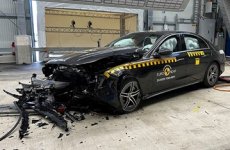
Mercedes Classe E
https://www.euroncap.com/en/results/.../e-class/51910
VIN From Which Rating Applies - variants identified in 'Rating Validity', from W1KLF5****A084967

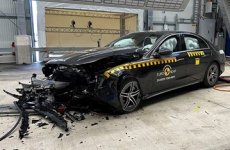
mercedes-benz-e-class-2024-1064_mpdb1.jpg - Click image for larger version  Name:	mercedes-benz-e-class-2024-1064_mpdb1.jpg Size:	98.8 KB ID:	14481260

The passenger compartment of the E-Class remained stable in the frontal offset test. Dummy numbers showed good protection of the knees and femurs of both the driver and passenger.

tection would be provided to occupants of different sizes and to those sitting in different positions. Analysis of the deceleration of the impact trolley during the test, and analysis of the deformable barrier after the test, revealed that the E-Class would be a moderately benign impact partner in a frontal collision.

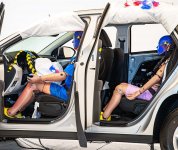
In the full-width rigid barrier test, protection was good for all critical body areas of the driver and good or adequate for the rear passenger. In both the side barrier and pole impact tests, protection of all critical body areas was good and the car scored maximum points in this part of the assessment. Control of excursion (the extent to which a body is thrown to the other side of the vehicle when it is hit from the far side) was found to be adequate.

The E-Class has a countermeasure to mitigate against occupant-to-occupant injuries in such impacts and this performed well in Euro NCAP's test, with good protection of heads of both front occupants. Tests on the front seats and head restraints demonstrated good protection against whiplash injuries in the event of a rear-end collision


Anexos

  • mercedes-benz-e-class-2024-1064_mpdb1.jpg
    mercedes-benz-e-class-2024-1064_mpdb1.jpg
    98,8KB · Visualizações: 0
Euroncap 10/7/2024

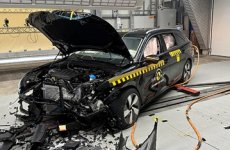
VW Passat
https://www.euroncap.com/en/results/vw/passat/51928

vw-passat-2024-1021_mpdb1.jpg

The passenger compartment of the Passat remained stable in the frontal offset test. Protection was good for all critical body areas of both the driver and passenger, and full points were scored for the dynamic dummy results. Volkswagen demonstrated that the same level of protection would be provided to the knees and femurs of occupants of different sizes and to those sitting in different positions.

In the full-width rigid barrier test, protection was good or adequate for all critical body areas of the driver and rear passenger. In both the side barrier and pole impact tests, protection of all critical body areas was good and the car scored maximum points in this part of the assessment. Control of excursion (the extent to which a body is thrown to the other side of the vehicle when it is hit from the far side) was found to be adequate.

The Passat has a countermeasure to mitigate against occupant-to-occupant injuries in such impacts and this performed well in Euro NCAP's test, with good protection of the heads of both front occupants. Tests on the front seats and head restraints demonstrated good protection against whiplash injuries in the event of a rear-end collision. A geometric analysis of the rear seats also indicated good whiplash protection.
 
Euroncap 10/7

Skoda Kodiaq
https://www.euroncap.com/en/results/skoda/kodiaq/51924

skoda-kodiaq-2024-1074_fw1.jpg

The passenger compartment of the Kodiaq remained stable in the frontal offset test. Dummy numbers showed good protection of the knees and femurs of both the driver and passenger. Škoda showed that a similar level of protection would be provided to occupants of different sizes and to those sitting in different positions.

For the passenger, all critical body areas were well protected. Analysis of the deceleration of the impact trolley during the test, and analysis of the deformable barrier after the test, revealed that the Kodiaq would be an aggressive impact partner in a frontal collision.

In the full-width rigid barrier test, protection was good or adequate for all critical body areas of the driver and rear passenger. In both the side barrier and pole impact tests, protection of all critical body areas was good and the car scored maximum points in this part of the assessment.

Control of excursion (the extent to which a body is thrown to the other side of the vehicle when it is hit from the far side) was found to be adequate.

The Kodiaq has a countermeasure to mitigate against occupant-to-occupant injuries in such impacts and this performed well in Euro NCAP's test, with good protection of the heads of both front occupants. Tests on the front seats and head restraints demonstrated good protection against whiplash injuries in the event of a rear-end collision.
 
​Euroncap 10/7/2024
https://www.euroncap.com/en/results/dacia/duster/51909

Dacia Duster MK3


The passenger compartment of the Duster remained stable in the frontal offset test. Dummy numbers showed good protection of the knees and femurs of both the driver and passenger. Dacia demonstrated that a similar level of protection would be provided to occupants of different sizes and to those sitting in different positions

The driver’s chest protection was rated as weak, based on dummy readings of compression during the test.

In the full-width rigid barrier test, protection was rated as marginal for the chest of the driver and rear passenger, based on dummy readings of compression. In both the side barrier test and the more severe side pole impact, protection of all critical body areas was good and the Duster scored maximum points in this part of the assessment.

Dacia did not provide evidence to demonstrate the degree to which the Duster would control excursion (the extent to which a body is thrown to the other side of the vehicle when it is hit from the far side).

In addition, the Duster has no countermeasure to mitigate head to head contact between the front seat occupants, so far-side protection was rated as poor. Tests on the front seats and head restraints demonstrated good protection against whiplash injuries in the event​​
 
Euroncap 10/7/2024
https://www.euroncap.com/en/results/suzuki/swift/51926

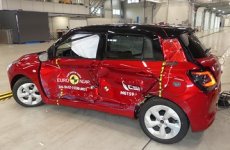
Suzuki Swift 2024

suzuki-swift-2024-1036_md1.jpg

The passenger compartment of the Swift remained stable in the frontal offset test. Dummy numbers showed good protection of the knees and femurs of both the driver and passenger. Some areas of the dashboard were thought to pose a risk a risk to the knees and femurs of occupants of different sizes and to those sitting in different positions and Suzuki did not demonstrate that the same level of protection would be provided to such occupant

The driver’s chest protection was weak; that of the passenger was marginal.


In the full-width rigid barrier test, protection was rated as marginal for the chest of the driver and rear passenger, based on dummy readings of compression. In the side barrier test, protection of the chest was adequate and that of other critical body areas was good

In the more severe side pole impact, protection of all critical body areas was good and the Swift scored maximum points in that test. Suzuki did not provide evidence to demonstrate the degree to which the Swift would control excursion (the extent to which a body is thrown to the other side of the vehicle when it is hit from the far side). In addition, the Swift has no countermeasure to mitigate head to head contact between the front seat occupants, so far-side protection was rated as poor.

Tests on the front seats and head restraints demonstrated good protection against whiplash injuries in the event of a rear-end collision. A geometric analysis of the rear seats also indicated good whiplash protection.

The Swift has an advanced eCall system which alerts the emergency services in the event of a crash, but the system did not fully meet Euro NCAP’s requirements

The Swift has no system to prevent secondary impacts after the car has been in a collision.
 
2024 Hyundai Tucson earns IIHS laurels

https://www.iihs.org/ratings/vehicle/hyundai/tucson-4-door-suv/2024

Rating applies to 2024 models built after March 2024

Tested vehicle: 2024 Hyundai Tucson SE 4-door 4wd

The Hyundai Tucson was redesigned for the 2022 model year.Beginning with 2024 models built after March 2024, rear seat belt pre-tensioners and load limiters were implemented to improve occupant protection in moderate overlap crashes. (Information about when a specific vehicle was manufactured is on the certification label typically affixed to the car on the driver door or adjacent B-pillar.) These ratings do not apply to the Kia Sportage.


6493.jpg6494.jpg6496.jpg
 
Crash Test Auto Motor Und Sport
1990
VW Golf II


Scan0001.jpg

Scan0002.jpg

Scan0003.jpg


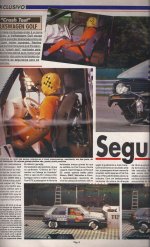
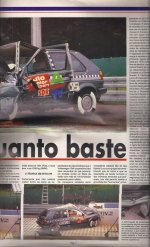
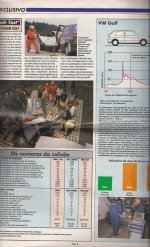
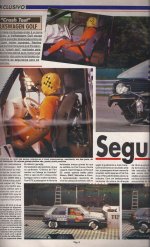
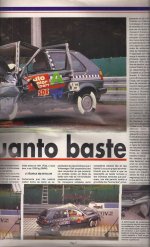
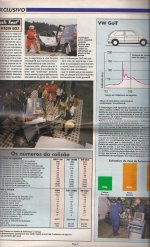
O Golf II no que respeita ao HIC do condutor e passageiro, conseguia resultados semelhantes, ou em alguns casos melhores do que algumas das oito berlinas, testadas em 1989 e de dois segmentos acima. Contudo a fraca resistência da célula de sobrevivência acarreta ferimentos para o tórax e pernas.
 

Anexos

  • Scan0001.jpg
    Scan0001.jpg
    228,6KB · Visualizações: 0
  • Scan0002.jpg
    Scan0002.jpg
    208KB · Visualizações: 0
  • Scan0003.jpg
    Scan0003.jpg
    248,2KB · Visualizações: 0
Three midsize luxury SUVs earn highest award with solid back seat protection

​The 2025 BMW X5, 2024 Lexus NX and 2024 Volvo XC90, all midsize luxury SUVs, qualify for the Top Safety Pick+ award from the Insurance Institute for Highway Safety thanks to solid performance in the updated moderate overlap front test.​

2024 BMW X5 xDrive40i 4-door 4wd

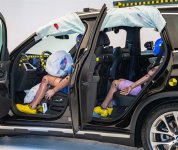
​In the test of the X5, measurements taken from the rear dummy showed no elevated injury risk, and the rear restraints controlled the motion of the dummy relatively well during the crash, though the dummy’s head came closer than desired to the front seatback.

6501.jpg

2024 Volvo XC90 B6 Plus 4-door 4wd
https://www.iihs.org/ratings/vehicle/volvo/xc90-4-door-suv/2024

6508.jpg

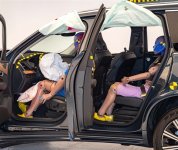
In the test of the XC90, rear dummy measurements showed slightly elevated risk of injuries to the chest and to the head or neck.

2024 Lexus NX 350 4-door 4wd
https://www.iihs.org/ratings/vehicl....org/ratings/vehicle/lexus/nx-4-door-suv/2024

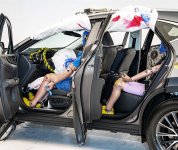
The acceptable-rated NX performed well in terms of injury metrics. However, the rear passenger dummy’s lap belt moved from the ideal position on the pelvis onto the abdomen, which increases the risk of abdominal injuries.

6500.jpg
 
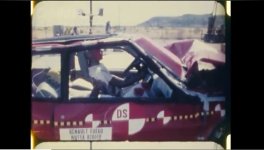
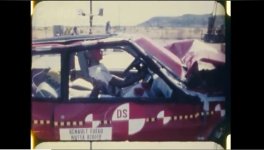
Referente ao crash test do Renault Fogo, perdão Fuego, eis a minha opinião:

1;O tablier mantêm-se no lugar, aparentemente, mas a coluna da direção recua, sobe e no video parece que roda para a direita.
Já no teste do Renault 25 meia duzia de anos depois, verifica-se o mesmo
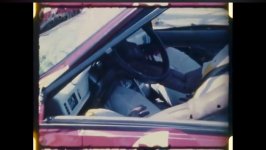
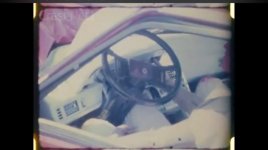
Imagem WhatsApp 2024-08-13 às 12.42.07_47fa3cf3.jpg - Click image for larger version  Name:	Imagem WhatsApp 2024-08-13 às 12.42.07_47fa3cf3.jpg Size:	71.4 KB ID:	14492218


Imagem WhatsApp 2024-08-13 às 12.42.31_1dc27948.jpg - Click image for larger version  Name:	Imagem WhatsApp 2024-08-13 às 12.42.31_1dc27948.jpg Size:	58.1 KB ID:	14492220
2; As deformações da carroçaria parecem, serem mais severas no lado direito. Na zona dos bancos da frente parece que o carro inchou, sendo que como as deformações chegaram à traseira do carro não é de espantar que as portas tenham ficado presas

Quer em cima onde a porta encosta ao teto, quer ao meio onde está a fechadura existem deformações severas.
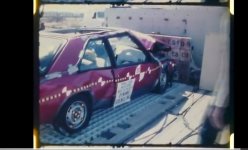
Imagem WhatsApp 2024-08-13 às 12.42.31_1dc27948.jpg - Click image for larger version  Name:	Imagem WhatsApp 2024-08-13 às 12.42.31_1dc27948.jpg Size:	58.1 KB ID:	14492220

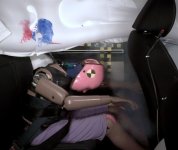
3; Os cintos sem pré tensores e os bancos não conseguem evitar, que o boneco embata com a cabeça no centro do volante e o passageiro no tablier. De notar que pelo menos no lado do condutor não há, falhas visíveis no funcionamento do cinto, pois há uma camara que filmou todo o funcionamento deste dispositivo

As costas do banco do passageiro não aguentam, as forças geradas pelo acidente tendo partido ficando na posição de deitado depois do embate

As deformações da carroçaria são visíveis, ao longo de todo o carro. O teto na zona da porta funda, o pilar ao pé do para brisas avança para cima, e na zona das portas da ideia que a carroçaria "incha"

Da ideia ainda, que com o embate a zona entre as portas e as cavas das rodas traseiras, é comprimida pelas portas e a restante traseira
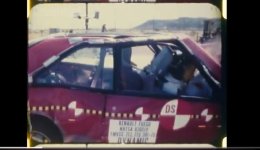
Imagem WhatsApp 2024-08-13 às 12.42.32_17ea9597.jpg - Click image for larger version  Name:	Imagem WhatsApp 2024-08-13 às 12.42.32_17ea9597.jpg Size:	68.5 KB ID:	14492221
 

Anexos

  • Imagem WhatsApp 2024-08-13 às 12.42.32_d5deb584.jpg
    Imagem WhatsApp 2024-08-13 às 12.42.32_d5deb584.jpg
    243,3KB · Visualizações: 0
  • Imagem WhatsApp 2024-08-13 às 12.42.32_5cf601bd.jpg
    Imagem WhatsApp 2024-08-13 às 12.42.32_5cf601bd.jpg
    243,3KB · Visualizações: 0
Última edição:
Interessante o teste que descobri.

Embate frontal descentrado entre um - Honda Accord '84 et Renault Fuego 83' .

Méthode de l'essai
- Choc frontal asymétrique avec 75 cm de chevauchement, à une vitesse totale de 58.7 mph soit 94,7 km/h

Lien vers la page d'où proviennent les photos
eek-1e6fb.gif

http://www.forocoches.com/foro/showt...php?t=2383924#

b1cf0309-2e7b0e6.jpg3af75da5-2e7b14b.jpg

9c5b9705-2e7b16b.jpg


8a57c794-2e7b195.jpg

fb03d290-2e7b1c1.jpg


8758292b-2e7b1db.jpg

1e64f67f-2e7b205.jpg

Verifica-se que o tablier do Fuego recua, mas há uma aproximação do condutor ao volante. Parece não haver deformação do volante, em consequência do impacto do peito.

A deformação da carroçaria do Renault Fuego é maior neste teste, mas a coluna da direção parece ficar no seu lugar, não havendo um movimento para cima e para o lado esquerdo.

fb03d290-2e7b1c1.jpg
 
Esse teste Honda vs. Renault... já antecipa bem a autêntica vergonha que foi também o péssimo comportamento do Civic, vários anos depois, no teste da AMS. Mesmo com airbag (que só havia numa versão e que não estava disponível em todos os países), conseguiu ter pior desempenho que outros rivais sem airbag! [8b] :sh)

Portanto, o vergonhoso atraso da Honda em matéria de protecção dos seus clientes em caso de acidente já era uma tradição de há vários anos! :sh):sh)
 
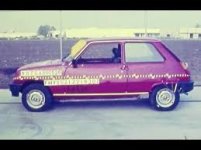
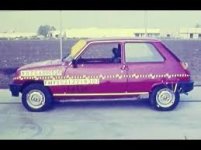
Crash test Reanult 5 /Le Car
NHTSA

https://rutube.ru/video/0571a1ef66a3...b1d3e4465a53d/

Sem título.jpg - Click image for larger version  Name:	Sem título.jpg Size:	39.6 KB ID:	14492540


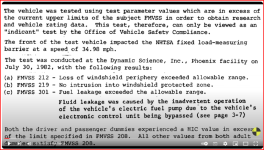
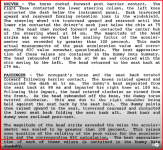
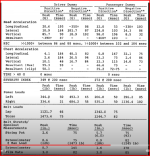
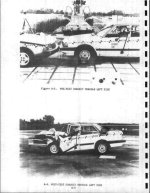
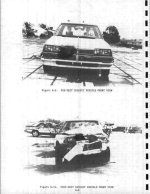
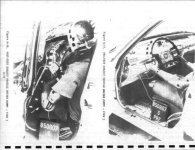
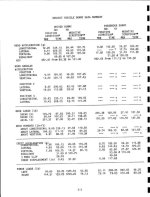
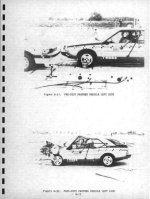
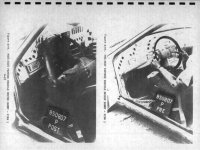
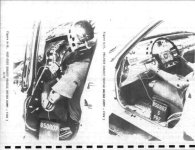
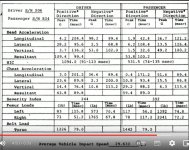
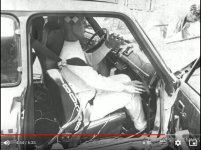
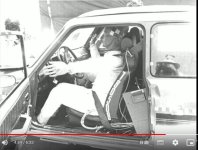
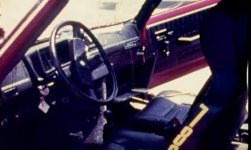
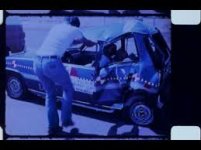
This FMVSS 301 configuration is a 30° angle, Right-Side Oblique Crash Test at 30 mph (48 Km/h). Prior to establishing a finalized FMVSS 208 ruling, FMVSS 301 tests were used to gather dummy injury data to use as guidelines for maximum injury level criteria. Addition of dummies and instrumentation devices do not conflict with FMVSS 301 performance or compliance. This crash test was performed at AETL (Approved Engineering Test Laboratories) , also known as NTS- California on 06/13/1979. The test report excluded FMVSS 301 compliance data. Driver - Passenger HIC 1094!! - 532 (!!Exceeds FMVSS 208 HIC15 requirement of 1000) Head G's 109 - 54 Chest G's 44 - 59 Femur Load (L/R - N) 2549/7851 - 6162/9079​

Sem Título 1.jpg - Click image for larger version  Name:	Sem Título 1.jpg Size:	227.0 KB ID:	14492549

Sem Título 3.jpg - Click image for larger version  Name:	Sem Título 3.jpg Size:	150.6 KB ID:	14492550

Sem Título 4.jpg - Click image for larger version  Name:	Sem Título 4.jpg Size:	134.7 KB ID:	14492551

5..jpg - Click image for larger version  Name:	5..jpg Size:	188.9 KB ID:	14492552


Aqui fica o crash test traseiro...apr:)

1980 35,21MPH (56KM/H)​

https://www.youtube.com/watch?v=z6JxqeSkd20

Sem Título 1.jpg - Click image for larger version  Name:	Sem Título 1.jpg Size:	227.0 KB ID:	14492549
 

Anexos

  • Sem título-1.jpg
    Sem título-1.jpg
    39,6KB · Visualizações: 0
Última edição:
Voltar
Superior