Topico dos Crash-Tests ⚠️Euroncap- 10/10/2026


In this video, we put Chinese electric cars through intense crash tests to see how they perform under real-world safety conditions. From high-speed impacts to side collisions, we examine how modern Chinese EVs protect drivers and passengers. Over the last few years, China’s electric vehicle industry has grown at an incredible pace, gaining global attention not only for affordability and design but also for safety standards. But how well do they really hold up in independent crash tests?​
 
Nova ronda de testes Euro NCAP:

https://www.euroncap.com/en/press-media/press-releases/dongfeng-box-crumples-in-euro-ncap-testing/

Dongfeng BOX crumples in Euro NCAP testing


15th October 2025

LEUVEN, BELGIUM – As demand for EVs grows, the choice in affordable electric cars is increasing – but one new contender in the European car market has performed poorly in Euro NCAP safety testing. The Dongfeng BOX, an affordable small electric hatchback from China’s state-owned Dongfeng Motor Corporation, scored just three stars in Euro NCAP’s rigorous tests.

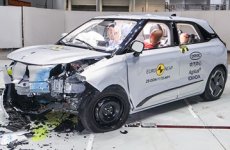
The independent safety organisation found that during its frontal offset crash test – designed to replicate a car-to-car collision – multiple spot-welds failed on part of the vehicle’s body shell, compromising its safety. If spot welds fail during a crash, the structure can lose its integrity — increasing the risk of deformation around the cabin and reducing protection for occupants.

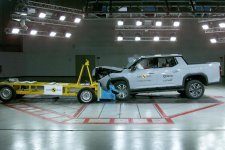
The failure was revealed during Euro NCAP’s Mobile Progressive Deformable Barrier test, where two vehicles collide head-on with a partial overlap. Frontal collisions are responsible for more deaths and serious injuries than any other accident type. It is performed at 50 km/h (31 mph) and with a 50 percent overlap against a deformable barrier on an oncoming 1,400 kg trolley, also travelling at 50 km/h.

For Adult Occupant Protection, the BOX scored 69 percent. The unstable bodyshell raises concerns over the protection it would offer at higher speeds in the event of a similar accident. After the impact, the automatic door locking mechanism of the BOX failed to unlock, potentially hindering first responders’ efforts to get to the occupants of the vehicle.

There were further causes for concern in this test. Insufficient pressure in the steering wheel airbag meant the driver’s head made contact with the wheel, and some parts of the dashboard structure posed a risk of injury to front occupants’ legs. The BOX also lacks any countermeasures to prevent occupant-to-occupant impact between those sitting in the front, in the event of a side-impact collision.

Sales of electric cars are rising across Europe and the UK, and with the growth in the market comes new and affordable products – cutting the costs for consumers who want to switch to electric.

However, the Dongfeng BOX doesn’t match the safety performance of other small EVs tested by Euro NCAP. Other affordable EVs, such as the BYD DOLPHIN SURF, firefly, MINI Cooper e, Lynk & Co 02, and Renault 4 and 5 have achieved four or five stars, highlighting the safety gap for Dongfeng’s BOX.

It was a concern that the spot welds were compromised during our tests and could be further compromised in higher-speed accidents. Such a failure must be addressed to match competitor vehicles in what’s a fast-growing part of the EV market.

— Dr. Aled Williams, Programme Director Euro NCAP

The Dongfeng BOX was just one of the latest new cars to be tested by Euro NCAP. One of those is the Cadillac OPTIQ, an electric, compact SUV that challenges the likes of Audi, BMW, Land Rover, Lexus, and Mercedes-Benz.

In the past, American brands haven’t always performed well in Euro NCAP testing, with high-profile models including the Ford Mustang (two stars, 2017), Jeep Wrangler (one star, 2018), and Chrysler Voyager (one and a half stars, 2007) trailing European cars for safety standards.

By contrast, the Cadillac OPTIQ achieved a five-star Euro NCAP rating. For Adult Occupant Protection, it achieved an 83 percent score; Child Occupant Protection was 81 percent; Vulnerable Road User at 76 percent, and the Safety Assist score was 74 percent.

There have been times in the past when US vehicles have fallen well short of the safety standards European consumers take for granted. But the performance of the Cadillac shows that America’s car makers can hold their own against the establishment from Europe and Asia.

— Dr. Aled Williams, Programme Director Euro NCAP

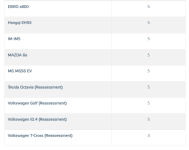
The latest tests saw the Volkswagen Group submit several well-known, combustion-powered models for assessment. The Audi Q3 was newly tested, whilst the Škoda Octavia, Volkswagen Golf, ID.4, and T-Cross were all submitted for reassessment according to 2025 protocols, ahead of Euro NCAP introducing new, enhanced protocols in 2026.

These popular models are a small selection of passenger cars built on VW’s MQB Evo platform, which underpins a range of combustion-powered vehicles. With the transition to EVs taking longer than anticipated, the likelihood is that the lifecycle of these models is being extended further than planned. The Q3, Octavia, ID.4, and Golf all scored a maximum five-star rating; the VW T-Cross fell behind with a three-star rating.

In July, Euro NCAP highlighted a flaw with the rear curtain airbag of the CHERY TIGGO 7 and 8 models. The pair of SUVs suffered poor results, failing to adequately protect a child’s head in the event of a side-impact. The fault was identified, and a retest was performed, but the problem remained. Subsequently, at Euro NCAP’s suggestion, CHERY has redesigned the system, and in the latest tests, the issue was found to be resolved. The TIGGOs were awarded a five-star rating.

It is pleasing for Euro NCAP to highlight yet another example of a car manufacturer responding positively to the findings of our rigorous, independent safety tests.

CHERY acted swiftly to address the fault we identified, and the resulting fix has raised the TIGGO to a five-star rating.

Striving toward the highest possible safety rating is in the consumer’s best interest.

— Dr. Aled Williams, Programme Director Euro NCAP
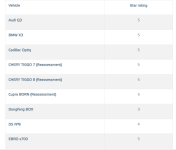
image.png

image.png
 
Citroen Basalt
Latim Ncap

Citroën Basalt obteve desempenho ruim no teste de colisão realizado no Latin NCap, entidade independente responsável por análises de segurança veicular. Com ocorreu com outros carros da Stellantis, o SUV cupê não obteve nenhuma estrela no crash test realizado, mesmo contando com quatro airbags e ESC de série.

Segundo o Latin NCap, o Basalt obteve 39,7% de proteção a ocupantes adultos, 58,35% para crianças, 53,38% para pedestres e 34,88% em assistentes de segurança.

Uma das reclamações da entidade é de que o Basalt não possui airbags laterais para cabeça ou tecnologia ADAS, mesmo como opcionais. Outro ponto é que o teste de impacto lateral de poste foi classificado como zero ponto pelo fato de que o veículo não conta com proteção lateral para cabeça em todas as fileiras

Latin NCap ainda relata que o Basalt teria apresentado estrutura instável no teste de colisão frontal e que o pretensor do cinto de segurança do passageiro dianteiro não funcionou como o esperado, resultando em proteção fraca para cabeça e peito.

Por fim, os testes indicaram que a proteção da criança não conseguiu evitar o contato da cabeça do boneco utilizado no impacto lateral.

A Stellantis, por outro lado, continua tomando decisões que comprometem diretamente a segurança de quem viaja em seus veículos na América Latina. Dez modelos testados desde 2020 — incluindo o Citroën Basalt, com estrutura instável, proteção lateral deficiente e sem ADAS — evidenciam uma política que mant… - Veja mais em https://www.uol.com.br/carros/notic...tin-ncap-veja-resultados.htm?cmpid=copiaecola

143e38be2461f251ea4ac873dbf3a14e.jpg
e4a30c647ee85c8003fe5698e07d499b.jpg


Enviado do meu Pixel 9 Pro XL através do Tapatalk
 
Hyundai Tucson 2025 Latim Ncap
https://www.latinncap.com/es/resultado/200/hyundai-tucson-+-6-airbags

Latin NCAP comenta que la generación actual del Tucson fue evaluada por primera vez en 2022, cuando ofrecía solo dos airbags de serie, y fue calificado con cero estrellas, mientras que ese mismo año se incluyeron los airbags laterales y de cortina y el ESP, resultando en tres estrellas. Ahora, con la última actualización del modelo, que sumó equipamiento de seguridad, recibió la máxima puntuación.

La version evaluada fue el híbrido, y las conclusiones a las que Latin NCAP llegó son las siguientes:

en la prueba de impacto frontal, la estructura mostró un desempeño inestable
la puntuación y el resto del desempeño fueron lo suficientemente robustos como para asegurar las cinco estrellas
el desempeño estructural se explica por la condición más pesada en la prueba frontal debido a los elementos adicionales de la versión híbrida
el vehículo mostró desempeño robusto en AEB ciudad e interurbano.
los "LSS" y "BSD" lograron la puntuación máxima.
03a92eb3874a67df5e44f00b7bc95dfa.jpg
c0745ff06888389d155cc5067d5b3fe9.jpg


Enviado do meu Pixel 9 Pro XL através do Tapatalk
 
Dongfeng BOX

https://www.euroncap.com/en/results/dongfeng/box/57178

dongfeng-box-2025-1175_mpdb2_1.jpg


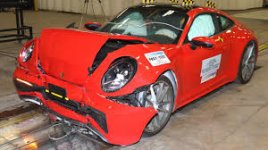
During the vehicle inspection following the frontal offset test, it was seen that multiple spot-welds had failed on the A-pillar, compromising the ability of the bodyshell to withstand further loading. There was also damage evident to the front of the sill and the top of the windscreen pillar to cant rail. The doors remained locked after the test, hindering first responders’ efforts to extricate occupants. There was insufficient pressure in the airbag to prevent the driver’s head from ‘bottoming out’ onto the steering wheel.

Dongfeng did not provide evidence to demonstrate the degree to which the BOX would control excursion (the extent to which a body is thrown to the other side of the vehicle when it is hit from the far side). In addition, the car has no countermeasure to mitigate head to head contact between the front seat occupants, so far-side protection was rated as poor
 
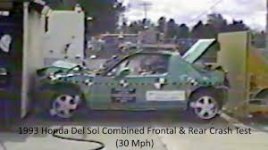
Interessante este teste do Honda Civic Del Sol.
Apesar de não ser um crash test small overlap, verifica-se que o CRX del Sol tem, uma carroçaria mais resistente do que a do Civic EG9

O Del Sol é uma carroçaria diferente do Civic EG9, ou terá recebido os melhoramentos ao nivel da segurança passível como o Civic Eg9 referidos, naquele crash test feito pela Sicurauto onde compararam os resultados dos crash tests realizados pela Auto Motor Und Sport em 93, com os resultados obtidos pelos mesmos modelos mas após 12 anos de utilização?


https://www.youtube.com/watch?v=FYMTgXtEfiY

Sem título.jpg - Click image for larger version  Name:	Sem título.jpg Size:	45.9 KB ID:	14647109

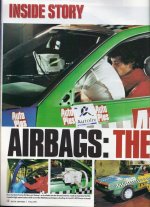
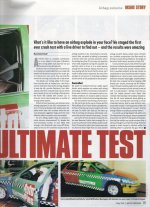
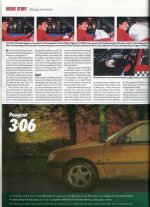
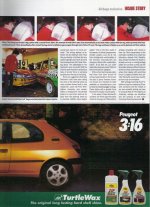
Crash test Honda Civic Eg9 usado, comparativo do crash test realizado em 1993 pela Auto Motor Und Sport com O Opel Astra, VW Golf, HOnda Civic, Ford Escort, Nissan Sunny e o Citreoen ZX

Dynamic Test Center
​Crashtest gebrauchter Fahrzeuge mit Airbag

Auftragsnummer: 214MRR66

https://www.motor-talk.de/forum/aktion/Attachment.html?attachmentId=477929

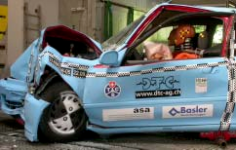
No primeiro estudo abrangente desse tipo, foi examinada a segurança dos ocupantes de carros usados ​​equipados com airbags. O Dynamic Test Center AG, a TCS e seus parceiros – Basler Versicherungen, o Centro Consultivo de Prevenção de Acidentes e a Associação de Autoridades de Trânsito Rodoviário – submeteram seis representantes da classe média baixa a uma colisão frontal. O resultado: três modelos obtiveram resultados comparáveis ​​aos seus carros novos correspondentes de 1993. Os outros apresentaram vários defeitos e todos os seus airbags foram acionados. A segurança veicular melhorou significativamente nos últimos anos. O teste, que incluiu o Fiat Tipo, o Ford Escort, o Honda Civic, o Opel Astra, o Toyota Corolla e o VW Golf, visa demonstrar o desempenho de veículos usados ​​em um impacto frontal a 55 km/h após mais de dez anos de uso rigoroso. Neste estudo abrangente, o primeiro do gênero, as cargas dos ocupantes dos veículos mais antigos foram comparadas com as dos veículos novos de 1993. O objetivo era determinar se os ocupantes desses veículos mais antigos ainda estavam seguros. Os veículos foram conduzidos contra uma barreira rígida de aço de 15° a uma velocidade de 55 km/h com meia sobreposição, exatamente como quando novos, 12 anos atrás.


Com base no teste de proteção ao consumidor realizado há 12 anos, que revelou deficiências na proteção dos ocupantes, a Honda aprimorou a rigidez da carroceria do Civic durante a revisão do modelo. Como resultado, as cargas dos ocupantes para o motorista foram significativamente menores do que no veículo novo testado há 12 anos, sem modificações.


Condição do Veículo
O Civic, com 11 anos de uso, tem 150.000 km de quilometragem. Apresenta sinais de desgaste nos bancos
e cintos. Os bancos pareciam ligeiramente volumosos e macios. Os cintos de segurança apresentam uma superfície rugosa nos
pontos de atrito.
O Civic está equipado com airbag para o motorista. A unidade de controle do airbag está instalada no volante, abaixo do
gerador de gás no módulo do airbag. O sistema de cintos não possui presilhas nem pré-tensionadores nos lados do motorista e do passageiro.​​


Após o fraco desempenho do Civic há 12 anos, a Honda revisou a estrutura do veículo. O Civic testado tinha uma carroceria mais rígida do que o veículo testado há 12 anos. O teste mostra claramente que as modificações foram bem-sucedidas. As deformações do veículo foram reduzidas quase pela metade em certas áreas. O espaço de sobrevivência para o boneco do motorista é, no entanto, menor em comparação com os outros veículos. A carroceria mais rígida também pode ser verificada visualmente por meio da análise de filme. A carroceria ainda apresenta deformações significativas. O pilar do teto se curva e a porta do motorista é forçada a se abrir. A coluna de direção e o painel são forçados para dentro, reduzindo o espaço de sobrevivência do motorista. A coluna de direção é arrancada de sua ancoragem. Há fortes intrusões no espaço para os pés, mas o deslocamento do pedal é moderado. Com uma redução de 150 mm na distância entre os pilares A e B, a maior deformação do compartimento de passageiros foi medida no Civic. O mecanismo de trava só pode ser operado por dentro. Apesar da deformação severa, a porta pode ser aberta manualmente com um solavanco.

imagem.png - Click image for larger version  Name:	imagem.png Size:	84.7 KB ID:	14647115

imagem.png - Click image for larger version  Name:	imagem.png Size:	92.0 KB ID:	14647116

Cargas dos Ocupantes
O desenvolvimento da força do cinto de segurança
está na
faixa média em comparação com os outros sujeitos do teste. A análise do filme mostra que o
deslocamento para a frente da parte superior do corpo não é muito pronunciado devido à
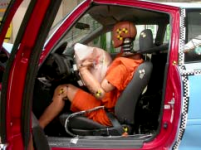
eficácia do sistema de retenção. A parte superior do corpo do manequim do motorista
bateu no volante pressionado. Isso
significa que, como no teste original de 12 anos atrás, os limites biomecânicos foram atingidos. As
acelerações da cabeça, o HIC e as
acelerações do tórax foram significativamente menores para o manequim do motorista do que 12 anos atrás. O
corpo mais rígido do lado do passageiro levou a um ligeiro aumento das cargas dos ocupantes. O veículo
gira para a direita mais cedo durante o impacto, fazendo com que a cabeça do passageiro bata nas capas de plástico rígido dos controles no centro do painel. Isso resulta em um
HIC ligeiramente maior para o manequim do passageiro.
É esperado um risco moderado de lesão nas extremidades inferiores. As acelerações pélvicas não são muito altas, embora tenham sido observados impactos violentos nos joelhos, que no lado do motorista ocorreram até mesmo no interruptor de ignição, que fica um pouco baixo.​

Graças a uma estrutura mais rígida, o Civic alcança resultados significativamente melhores do que há 12 anos. Agora, ele se classifica na faixa intermediária.​

Os limites biomecânicos para acelerações da cabeça, tórax e pélvis foram parcialmente atendidos. Os valores estavam na mesma faixa dos melhores competidores.​
 
Última edição:
Voltar
Superior