Topico dos Crash-Tests ⚠️Euroncap- 10/10/2026

Toyota Rav4


Overall: 25.11 out of 34
star_4.gif
138.jpg
Variant: 5 Dr HatchKerb Weight: 1380 kgYear: 2002Engine: 2 Litre, 4 CylCategory: Compact 4WDAirbags: Dual front airbags
Model_History_%26_Safety::ffffff::FFC300::11.png

The tested model of TOYOTA RAV4 was introduced in July 2000. Knee protection was upgraded in December 2002. This assessment applies to the upgraded model without optional curtain airbags.

Dual front airbags are standard equipment. The front seat belt buckles are mounted on the seats and the upper anchorages are adjustable. These features improve the fit of the seat belt. Pretensioners are fitted to the front seat belts to reduce slack in the event of a crash. These seat belts also have load limiters. A three point seat belt is fitted to the centre rear seat. This provides better protection than a two point seat belt.

Overall_Evaluation::ffffff::FFC300::11.png

The TOYOTA RAV4 scored 10.194 out of 16 in the offset crash test. The passenger compartment held its shape reasonably well. The was a moderate risk of serious chest and leg injury for the driver.

The vehicle scored 14.921 out of 16 in the side impact crash test. There was a slight risk of serious chest injury for the driver.

Frontal_Offset_Crash_Test::ffffff::FFC300::11.png

Body region scores out of 4 points each: Head/neck 4pts, chest 1.643pts, upper legs 2.195pts, lower legs 2.356pts.

The passenger compartment was held its shape reasonably well in the offset crash test. The front part of the driver's floor was pushed rearwards 208mm and was folded. The brake pedal moved rearwards by 121mm and upwards 29mm. The dash moved 67mm towards the driver. The steering wheel hub moved rearwards 61mm, upwards 34mm and sideways 66mm. The front ("A") pillar moved 78mm rearwards. The roof buckled upwards above the driver and the width of the driver's doorway shortened by 72mm. All doors remained closed during the crash. After the crash tools were required to open the driver’s door.

The airbag cushioned the head of the driver. The head started to roll off the side of the airbag but was not sufficient to attract a penalty. The driver's knees hit the steering column and dash. The ignition switch barrel was found to be a potential source of knee injury. Although a recent upgrade to the steering column design has improved the protection a one point penalty for concentrated loading remains. The passenger's head was cushioned by the airbag. The passenger's knees hit the glove box and dash.

Side_Impact_Crash_Test::ffffff::FFC300::11.png

Body region scores out of 4 points each: Head 4pts, chest 2.921pts, abdomen 4pts, pelvis 4pts.

This test simulates a fairly small car striking the driver's door of the vehicle under test. It is based on a regulation test but the regulation does not apply to vehicles with a high seat height like the RAV4. Such vehicles can be expected to perform relatively well in this particular side impact test. There was, however, a slight risk of serious chest injury for the driver.

The vehicle was not eligible for a Pole Impact Test since it did not have head-protecting side airbags. This test can earn eligible vehicles an extra two points, giving a maximum possible overall score of 34 points.
 
Toyota Rav4


Overall: 29.94 out of 37
star_4.gif
230.jpg
Variant: CVKerb Weight: 1620 kgYear: 2007Engine: 2.4 litre autoCategory: Medium 4WDAirbags: Dual front airbags
Model_History_%26_Safety::ffffff::FFC300::11.png

The tested model of Toyta RAV4 was introduced in Australia during 2006.

Dual front airbags and antilock brakes (ABS) with electronic brake distribution (EBD) are standard on the CV variant. Side airbags and head-protecting side curtains are optional on this variant and standard on the Cruiser variants, along with electronic stability control (ESC). Intelligent seat belt reminders are fitted to both front seats.

The front seat belt buckles are mounted on the seats and the upper anchorages are adjustable. These features improve the fit of the seat belt. Pre-tensioners are fitted to the front seat belts to reduce slack in the event of a crash. A three point seat belt is fitted to the centre rear seat. This provides better protection than a two point (lap) seat belt.

Overall_Evaluation::ffffff::FFC300::11.png

The Toyota RAV4 scored 11.94 out of 16 in the offset crash test. The passenger compartment held it shape well. Protection from serious leg injury was weak for the driver.

The vehicle was awarded a default score of 16 out of 16 in the side impact crash test.

Frontal_Offset_Crash_Test::ffffff::FFC300::11.png

Body region scores out of 4 points each: Head/neck 4 pts, chest 3.37 pts, upper legs 1.14 pts, lower legs 3.42 pts.

The passenger compartment held its shape well in the offset crash test. The accelerator pedal moved rearwards by 47 mm and upwards 30 mm. The steering wheel hub moved forwards 36mm, downwards 26mm and sideways 20 mm. The front ("A") pillar moved 37 mm rearwards. All doors remained closed during the crash moderate effort was required to open the driver’s door.

The airbag cushioned the head of the driver and contact was stable. Steering column components were a potential source of injury for the driver's knees. The passenger's head was cushioned by the airbag.

Side_Impact_Crash_Test::ffffff::FFC300::11.png

Default 16 points awarded for side impact test.

The side impact test normally used by ANCAP simulates a small car striking the driver's door of the vehicle under test. It is based on a regulation test but the regulation does not apply to vehicles with a high seat height like the RAV4. Experience shows that such vehicles can be expected to perform well in this test so ANCAP has decided to award full score for these vehicles instead of conducting a crash test.

The vehicle was not eligible for a Pole Impact Test since it did not have head-protecting side airbags. This test can earn eligible vehicles an extra two points.
 
Talvez vão testar o Audi A4, o Mazda 6, Mitsubishi Lancer (?), Subaru Impreza (?).
Não me lembro de mais nenhum que ainda nao tenha sido testado
Segundo o Euroncap ha Large e Small Family cars;

Large F cars: Por exemplo Alfa Romeo 159
Small F cars: Por exemplo Alfa Romeo 147

Alguem se lembra de algum "small family car que ainda não tenha sido testado?
E large family cars alguem se lembra de mais algum?
 
Holden Commodore VE Omega


Overall: 27.41 out of 37
star_4.gif
260.jpg
Variant: UtilityKerb Weight: 1690 kgYear: 2007Engine: 3.6 litre V6 autoCategory: UtilityAirbags: Dual front airbags
Model_History_%26_Safety::ffffff::FFC300::11.png

The tested model of VE Commodore Utility was introduced in Australia during 2007.
Dual front airbags, antilock brakes (ABS) with electronic brake distribution (EBD) and electronic stability control (ESC) are standard. An advanced seat belt reminder is fitted to the driver seat.
The front seat belt buckles are mounted on the seats and the upper anchorages are adjustable. These features improve the fit of the seat belt. Pretensioners are fitted to the front seat belts to reduce slack in the event of a crash.

Overall_Evaluation::ffffff::FFC300::11.png

4 Stars. The Commodore Utility scored 11.57 out of 16 in the offset crash test. The passenger compartment held its shape well. Protection from serious chest and leg injury was marginal for the driver.
The vehicle scored 14.84 out of 16 in the side impact crash test. There was a slight risk of serious chest injury for the driver.

Frontal_Offset_Crash_Test::ffffff::FFC300::11.png

Body region scores out of 4 points each: Head/neck 4 pts, chest 2.50 pts, upper legs 2 pts, lower legs 3.07 pts.
The passenger compartment held its shape well in the offset crash test. The accelerator pedal moved rearwards by 25 mm and downwards 3mm. The steering wheel hub moved 58mm forward, 52mm downward and 5 mm sideways. The front ("A") pillar moved 11 mm rearwards. All doors remained closed during the crash. After the crash the driver’s door could be opened with normal effort.
The airbag cushioned the head of the driver and contact was stable. Steering column components were a potential source of injury for the driver's left knee. The passenger's head was cushioned by the airbag.

Side_Impact_Crash_Test::ffffff::FFC300::11.png

Body region scores out of 4 points each: Head 4 pts, chest 2.84 pts, abdomen 4 pts, pelvis 4 pts.
The vehicle was not eligible for a Pole Impact Test since it did not have head-protecting side airbags. This test can earn eligible vehicles an extra two points.
 
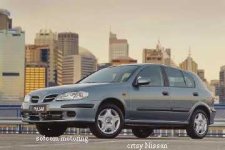
Nissan Pulsar


Overall: 22.34 out of 37
star_3.gif
137.jpg
Variant: 5 Dr HatchKerb Weight: 1210 kgYear: 2004Engine: 1.8 LitreCategory: Small CarAirbags: Dual front airbags
Model_History_%26_Safety::ffffff::FFC300::11.png

The tested model of Nissan Pulsar, with a 1.8 litre engine, was introduced in 2003.

Dual front airbags and ABS brakes are standard equipment.

The front seat belt buckles are mounted on the seats and the upper anchorages are adjustable. These features improve the fit of the seat belt. Pre-tensioners are fitted to the front seat belts to reduce slack in the event of a crash. A three point seat belt is fitted to the centre rear seat. This provides better protection than a two point seat belt.

Overall_Evaluation::ffffff::FFC300::11.png

The Nissan Pulsar scored 7.96 out of 16 in the offset crash test. The passenger compartment held its shape reasonably well except for dash structure. Protection from serious chest and leg injury was marginal for the driver and foot protection was poor.

The vehicle scored 14.38 out of 16 in the side impact crash test. There was a moderate risk of serious chest injury for the driver.

Frontal_Offset_Crash_Test::ffffff::FFC300::11.png

Body region scores out of 4 points each: Head/neck 4pts, chest 1.45pts, upper legs 2.51pts, lower legs zero pts.

The passenger compartment held its shape reasonably well excessive for dash structure. The front part of the driver's floor was pushed rearwards 165mm. The brake pedal moved rearwards by 274mm and upwards 83mm, relative to the driver’s seat. The dash moved 139mm towards the driver and became partially detached from the driver’s side of the vehicle. The steering wheel hub moved rearwards 88mm, upwards 34mm and sideways 38mm, relative to the driver’s seat. The front ("A") pillar moved 71mm rearwards. The width of the driver's doorway shortened by 70mm. All doors remained closed during the crash.
After the crash lock manipulation was required to open the driver’s door.

The airbag cushioned the head of the driver and contact was stable. Steering column components were a potential source of injury for the driver's knees. The passenger's head was cushioned by the airbag. Centre console components were a potential source of injury for the passenger’s right knee.

Side_Impact_Crash_Test::ffffff::FFC300::11.png

Body region scores out of 4 points each: Head 4pts, chest 2.49pts, abdomen 3.97pts, pelvis 3.92pts.

The vehicle was not eligible for a pole impact test since it did not have head-protecting side airbags. This test can earn eligible vehicles an extra two points.


Nissan Pulsar= 200106Pulsar1.jpg
 
Última edição:
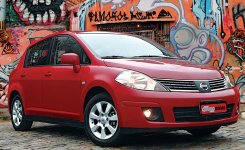
Nissan Tiida


Overall: 25.5 out of 37
star_4.gif
174.jpg
Variant: ST 5 Dr HatchKerb Weight: 1160 kgYear: 2006Engine: 1.8 LitreCategory: Small CarAirbags: Dual front airbags
Model_History_%26_Safety::ffffff::FFC300::11.png

The tested model of Nissan Tiida was introduced in Australia during 2006.

Dual front airbags are standard equipment. Side airbags, head-protecting side curtains and ABS/EBD brakes are standard on the ST-L, Q Hatch and Ti variants.

The front seat belt buckles are mounted on the seats and the upper anchorages are adjustable. These features improve the fit of the seat belt. Pre-tensioners are fitted to the front seat belts to reduce slack in the event of a crash. A two point seat belt is fitted to the centre rear seat. This provides inferior protection compared with a three point seat belt.

Overall_Evaluation::ffffff::FFC300::11.png

The Tiida scored 12.22 out of 16 in the offset crash test. The passenger compartment held its shape well. Protection from serious chest and leg injury was marginal for the driver.

The vehicle scored 13.28 out of 16 in the side impact crash test. There was a moderate risk of serious chest injury for the driver.

Frontal_Offset_Crash_Test::ffffff::FFC300::11.png

Body region scores out of 4 points each: Head/neck 4 pts, chest 2.62 pts, upper legs 2 pts, lower legs 3.6 pts.

The passenger compartment held its shape well in the offset crash test. The brake pedal moved rearwards by106 mm and upwards 28 mm. The steering wheel hub moved rearwards 14 mm, downwards 51mm and sideways 1 mm. The front ("A") pillar moved 32 mm rearwards. All doors remained closed during the crash. After the crash tools were required to open the driver’s door.

The airbag cushioned the head of the driver and contact was stable. Steering column components were a potential source of injury for the driver's knees. The passenger's head was cushioned by the airbag.

Side_Impact_Crash_Test::ffffff::FFC300::11.png

Body region scores out of 4 points each: Head 4 pts, chest 2 pts, abdomen 3.28 pts, pelvis 4 pts.

The vehicle was not eligible for a Pole Impact Test since it did not have head-protecting side airbags. This test can earn eligible vehicles an extra two points.


568_tiida_abre.jpg
 
Mercedes 500 vs Opel Corsa B
Auto Motor Und Sport
http://www.sicurauto.it/crashtest/speciali/corsa_mercedes.php
corsa_mercedes1.JPG

La Corsa e la Mercedes stano per toccarsi, il tachimetro segna 50 km/h...
corsa_mercedes2.JPG

L’impatto è tremendo, le due vetture si toccano con metà del musetto
corsa_mercedes3.JPG

La Mercedes inizia a spingere indietro la piccola Corsa
corsa_mercedes4.JPG

2200kg contro 1100kg… fate voi
corsa_mercedes5.JPG

La Corsa ha subito la forza di un’impatto a 65 km/h
corsa_mercedes6.JPG

Termina la simulazione con la Corsa a 5 metri dal punto iniziale
 
Lo scontro è stato violento e si vede!
corsa_mercedes_impatto.JPG


corsa_mercedes_sopra.JPG


Vediamo come si sono comportate le due vetture...

Opel Corsa
Grazie agli airbag e alla scocca dignitosa i passeggeri della Corsa si salvano… ma le immagini sono molto eloquenti.
corsa_dopo.JPG

Le gambe però sono compromesse dalla riduzione di spazio a livello del cruscotto e della pedaliera, quindi ci sono degli altissimi rischi dal bacino in giù…

E le portiere non si aprono più…


La vettura se l’è cavata, nonostante gli anni che le pesano sulle spalle…

La violenza dell’ impatto è paragonabile a un urto conto un muro a 65 km/h
Zona del corpo
Protezione
TESTA/COLLO Buono
TORACE Buono
BACINO Scarso
GAMBE/PIEDI Scarso​
 
Mercedes Classe S
La costruzione all’insegna della massima rigidezza fa schizzare un po’ in slto le sollecitazioni sulle teste degli occupanti, ma nulla di grave…​
mercedes_dopo.JPG


mercedes_driver.JPG
La ruota anteriore sinistra colpisce la parete parafiamma e crea una deformazione (non grave) nella zona della pedaliera
mercedes_ruota.JPG


mercedes_pedaliera.JPG
La violenza dell’ impatto è paragonabile a un urto conto un muro a 35 km/h

Zona del corpoProtezioneTESTA/COLLOBuonoTORACEBuonoBACINO BuonoGAMBE/PIEDIBuono​
 
VW Polo vs Phaeton
http://www.sicurauto.it/crashtest/speciali/phaeton_polo.php

Vediamo le varie fasi della prova...
phaeton_polo1.jpg

Arriva il momento dell'impatto, la Phaeton fa paura contro quella piccola Polo...
phaeton_polo2.jpg

BOOM! Povere auto!
La Phaeton fa valere i suoi oltre 2000 Kg arrestando la corsa della malcapitata Polo...

phaeton_polo3.jpg

Vai via! Sembra quasi che la Phaeton scacci via la piccola Polo che viene "catapultata" indietro...
phaeton_polo4.jpg

La Phaeton è già ferma mentre la Polo continua ad andare indietro...
Alla fine saranno ben 5 i metri di distanza tra il punto d'impatto e "di arrivo" della Polo.

phaeton_polo5.jpg

Da questa panoramica si nota bene come la Phaeton si sia fatta valere...
 
Volkswagen Polo 1.4 16vLe decelerazioni
Bene, avviciniamoci e analizziamo nel dettaglio i danni delle auto.

03.t05.crashtest.13b.jpg

03.t05.crashtest.16b.jpg

La grande ha spinto parecchio... e si vede... ma è da notare il montante del parabrezza intatto, e non è un lavoro da poco per una piccola vettura
03.t05.crashtest.08b.jpg

Proviamo ad aprire la porta... non ce la si fa... bisogna usare gli attrezzi (piede di porco e vari flessibili).
Nel filmato si nota che la scocca ammortizza solo nel frontale, e quando il musetto "finisce", passa tutto il lavoro alla Phaeton.
03.t05.crashtest.17b.jpg

Una volta aperta la porta analizziamo il posto guida.
Bè, non è come nuova, ma quasi. Il volante e la plancia arretrano poco, anche la pedaliera e la zona d'impatto delle ginocchia è abbastanza libera.
Le lesioni sono basse, incredibilmente basse, solo un pochettino più alte sulla testa e sulla coscia destra.
Concludendo si può notare il passo avanti rispetto ai test vecchi, in un impatto che è iniziato a 50 km/h ed è finito a 60.
03.t05.crashtest.14b.gif

03.t05.crashtest.15b.jpg
 
Volkswagen Phaeton V6Le decelerazioni
Notoriamente le auto grandi sono sicure... infatti questa lo è!
Basta pensare che è stato come se si scontrasse in un muro a 40 kmh.

03.t05.crashtest.19b.jpg

03.t05.crashtest.23b.jpg

Però guardando i filmati noterete che ha aiutato la Polo nell'ammortizzare l'energia dell'impatto. E' stata progettata con dei criteri "giusti", cioè in soldoni, aiuta le auto più deboli nell'ammortizzare gli impatti, però sempre senza compromettere la propria sicurezza. Lodevole!
03.t05.crashtest.18b.jpg

Inutile dire che la porta si apre bene e che i manichini hanno subìto delle forze bassissime. Basta confrontare la decelerazione della testa: 30 G contro i 73 G della Polo. (G è la forza di gravità)
03.t05.crashtest.22b.jpg

Solo qualche piccolissimo problema per il passeggero con il gas dell'airbag che causa qualche danno sulla faccia. Piccole ustioni, niente di più.
03.t05.crashtest.20b.jpg

03.t05.crashtest.21b.jpg

 
Crash test 12 anni dopo, prova di tenuta airbag e scoccaI dettagli delle prove e i video!Della serie: "GLI ESAMI NON FINISCONO MAI!"

amstest.JPG
L'associazione svizzera DTC per verificare l'usura del tempo sugli airbag frontali ha eseguito nel 2005 questo "revival" 12 anni dopo.

Nel 1993 la rivista tedesca Auto Motor und Sport ha provato questo gru
ppo di auto, come usava fare all'epoca. Nella prova vennero distrutte: Fiat Tipo, Ford Escort, Honda Civic, Opel Astra, Toyota Corolla, Volkswagen Golf.

Tutte con almeno un airbag.

amstest2.JPG
Le prove si eseguivano alla velocità di 55km/h contro un muro di cemento inclinato di 15°, come se non bastasse l'impatto avveniva con metà del frontale. All'epoca era molto dura come prova, considerato che l'omologazione richiedeva semplicemente un crash test a 48km/h contro una parete liscia senza dummies all'interno.

Pertanto dopo 12 anni hanno cercato degli esemplari costruiti più o meno nel '93 ed è stata ripetuta la prova.

Tutto ciò per capire se la scocca, gli airbag e tutti i sistemi di ritenuta riescono ancora a svolgere il loro compito: proteggere i passeggeri.

Troviamo questo genere di test molto interessante perchè è bene vedere se le auto mantengono nel tempo la loro sicurezza.

Cercheremo di arricchire questa rubrica di speciali sempre con nuovi test. Per essere sempre aggiornati vi consigliamo di iscrivervi alla newsletter attraverso il box in alto. E' gratuito e semplice!

Ma andiamo a vedere come si sono comportate le "vecchiette" alla verifica della sicurezza...
 
Fiat Tipo Pós-Restyling

Crash test 12 anni dopo: Fiat TipoI dettagli delle prove e i video!
tipoams.JPG
E' stato un po' (troppo) difficoltoso trovare una Tipo con l'airbag. Era disponibile esclusivamente come optional e per il breve periodo del restyling (1993/95).

La macchina non mostra molto l'usura, a parte qualche striatura dei sedili. Il cablaggio del pretensionatore del passeggero era un po' danneggiato.

La Tipo era dotata di un airbag comandato meccanicamente, così come i due tendicintura (pretensionatori). Soluzione un po'inconsueta e non raffinata: ogni componente decide da se se è il caso di attivarsi.

Dopo l'impatto le deformazioni sono notevoli. Notevoli anche le deformazioni di montante e tettino. La portiera si inarca e dopo l'impatto si apre solo con gli attrezzi. La deformazione dell'apertura della porta è di ben 13cm, 1cm in più rispetto al tesi di 12 anni fa - 12cm - vedi foto in alto.

L'energia cinetica viene smaltita in maniera inadeguata, la cellula di sicurezza e l'anteriore non sono in grado di sopportare grossi carichi. Il volante e la plancia vengono spostate verso l'alto e in abbinamento alla grande deformazione della scocca rendono la zona di sopravvivenza molto piccola.

Il collo è a rischio di gravi ferite per lo spostamento dello sterzo (valore rilevato 85 Nm di tensione, limite biomeccanico 57).

Deformazioni notevoli anche per i sedili che causano malfunzionamenti al pretensionatore di entrambi gli occupanti. La fune che tira la fibbia della cintura è stata ostacolata dalle deformazioni delle sedute. Quest'ultima defezione ha causato il contatto fra testa e plancia per il passeggero, che causa accelerazioni gravissime. Violentissimi anche i contatti fra ginocchia e plancia, sia per il pilota che per il navigatore.

L'airbag si apre dopo 49ms, 15ms dopo rispetto 12 anni fa di conseguenza ha meno tempo per dispiegarsi completamente. Infatti il contatto con la testa avviene quando l'airbag non è completamente gonfio.

Criticata anche la piccola ed unica apertura disponibile sul sacco, che fa aumentare eccessivamente la pressione del pallone e assorbe meno energia per la testa.

Video dettaglio 1 - Video dettaglio 2
tipo1.JPG


tipo2.JPG


tipo3.JPG


tipo4.JPG


tipo6.JPG


tipodopo.JPG

La foto sopra è relativa al test di 12 anni prima

tipo7.JPG
 
E' stata trovata una bella Escort ancora nuova fiammante con 11 anni e 81.000km.
escortams.jpg

Dentro sembra appena uscita di fabbrica. La dotazione di sicurezza prevede solamente l'airbag nel volante comandato da una centralina fissata sul pavimento.

La deformazione della carrozzeria è importante, viene interessato anche il sottoscocca e il montante centrale.

Dentro l'abitacolo si fa preoccupante la penetrazione della plancia e del volante, che viene addirittura spostato in avanti dalla pressione del torace del pilota.

Pericolosa anche la situazione della pedaliera: pedali spostati e deformazione del pavimento. La portiera si apre con un poderoso "tirone".

Nonostante la mancanza dei pretensionatori le cinture si tendono in fretta. Questo fa sì che il passeggero non colpisca la plancia con la testa.

Per il pilota qualche rogna in più, piedi gambe e bacino rischiano un po'. Migliorano le cose per il torace e per la testa che se la passano un po' meglio.

Vedendo le immagini dell'airbag si nota che esplode 3 millisecondi in ritardo rispetto a 12 anni fa. Però la testa colpisce il sacco quando è già gonfio, quindi la prova è superata.
 
civicams.jpg

Una stupenda Civic di 11 anni e 150.000km attende il suo turno.

Usurata nella norma è dotata dell'airbag del pilota con una specie di centralina integrata nel generatore di gas del sacco.

12 anni fa la scocca della Civic era oscena (vedi foto sopra), deformazioni enormi, ma veramente tanto!

Honda ha modificato la scocca cercando di rimediare un po' e ce l'ha fatta in parte.

Le deformazioni sono importanti comunque, il montante è stato spinto in alto e la porta si stacca da un ancoraggio.

Lo sterzo, la plancia e i pedali vengono spostati parecchio all'interno. La deformazione dell'apertura della porta è di 15cm.

La serratura funziona solo agendo sulla maniglia interna e con un "tirone" a scatto la porta si apre. Il torace impatta sul volante come fece 12 anni fa, ma in maniera meno violenta.

Tuttavia i valori biomeccanici vengono superati. La testa del passeggero colpisce la consolle centrale. Danni anche per le ginocchia del pilota.

L'airbag funziona, né più né meno, come 12 anni fa.
 
Crash test 12 anni dopo: Opel AstraI dettagli delle prove e i video!
astraams.JPG
Una bella Astra con 100.000km e 12 anni si appresta a sbattere sul muretto...


Sembra ancora immacolata a parte qualche segno d'usura sul sedile.

L'auto è dotata di due airbag e pretensionatori su fibbia, tutto comandato dalla centralina fissata sul pavimento.

L'impatto fa deformare il muso dell'auto, ma l'abitacolo rimane abbastanza integro nella parte alta.

Qualche problema nella zona dei piedi, che comporta qualche rischio per gli ultimi. Il volante si muove di 10 centimetri indietro.

Dopo lo scontro lo sportello si apre con forza, ma dopo un bel tiro si apre senza problemi.

I sistemi di ritenuta si comportano ancora molto bene. Ottima la coordinazione tra pretensionatori ed airbag che proteggono bene sia la testa che il torace.

Grazie ai grandi e vispi cuscini l'Astra protegge i passeggeri esattamente come 12 anni fa (vedi foto in alto).

Le immagini mostrano l'ottimo lavoro dell'airbag dopo 12 anni di riposo.

astra1.JPG


astra2.JPG


astra3.JPG


astradopo.JPG

La foto sopra è relativa al test di 12 anni prima

astra4.JPG


Crash test 12 anni dopo: Toyota CorollaI dettagli delle prove e i video!
corollaams.JPG
Dopo 12 anni e 230.000km di onorato lavoro è arrivato il momento per la rottamazione scientifica della berlina nipponica.

I sedili sono ancora belli morbidi e le cinture sono un po' irruvidite (per info lucacomandini@sicurauto.it) e anche l'arrotolatore è un pochino debole. La Corolla è dotata solamente di un airbag meccanico.

Le deformazioni ci sono tutte e addirittura si rompe, strappandosi, il montante del parabrezza! La portiera deve sopportare grandissimi carichi e la lamiera esterna si stacca.

La serratura funziona e... tira che ti tira... lo sportello si apre.

Grandi deformazioni nella pedaliera e la colonna dello sterzo si strappa dai suoi ancoraggi.

Protezione in calando per le teste, il pilota urta la sua sul volante e il passeggero colpisce e affonda il cruscotto.

Lo spostamento dello sterzo (il più consistente della serie) causa il contatto fra questo e il torace, piegando il volante. Il ginocchio del pilota urta la serratura dell'avviamento. Per fortuna i carichi su torace e bacino sono identici a quelli del primo test.

Del ritardo nell'apertura degli airbag della Toyota se ne era già occupata Auto Motor und Sport 12 anni fa (foto sopra). La testa tocca l'airbag mentre si sta ancora espandendo.

Però, nonostante tutto, le tempistiche di apertura (seppure non corrette) dimostrano che l'airbag era ancora efficace...

 
golfams.jpg

La berlina tedesca con 12 anni sul groppone ha appena finito il rodaggio... ha ben 360.000km!

L'usura dei materiali c'è, ma l'auto è messa ancora bene (nella foto accanto il vecchio test di 12 anni fa).

E' dotata di due airbag comandati da una centralina sul pavimento e le cinture hanno i pretensionatori sull'avvolgitore.

Per il pilota c'è un limitatore di carico, una cucitura particolare che allenta il nastro sopra una certa forza.

Nell'impatto la carrozzeria si comporta bene, le deformazioni non sono preoccupanti. Il volante sta più o meno al suo posto e qualche critica va alla plancia che arretra un po'.

La pedaliera preoccupa, rientra eccessivamente mettendo a rischio i piedi e le caviglie. Dopo l'impatto la portiera del pilota si apre senza problemi.

Per quanto riguarda i sistemi di ritenuta va tutto abbastanza bene per il pilota, qualche rischio minimo per il torace che urta il volante,
ma con poca violenza, le lesioni alle gambe non sono elevate ma come detto prima sono i piedi a preoccupare.

L'airbag e il limitatore hanno fatto un buon lavoro. Il problema più grave è per il passeggero. Il rinvio del nastro sul montante si è rotto creando un bordo tagliente sul quale la cintura si è tagliata di netto. Per fortuna il grande airbag ha evitato contatti con parti rigide, lasciando la soglia delle lesioni sotto il limite di sopravvivenza.

Come mostrano le immagini in sequenza l'apertura dell'airbag è buona e la protezione della testa rimane valida anche dopo 12 anni di servizio silenzioso...


golf1.JPG


golf2.JPG

golf4.JPG

golf3.JPG

golfdopo.JPG

La foto sopra è relativa al test di 12 anni prima

golf5.JPG
 
Última edição:
Voltar
Superior