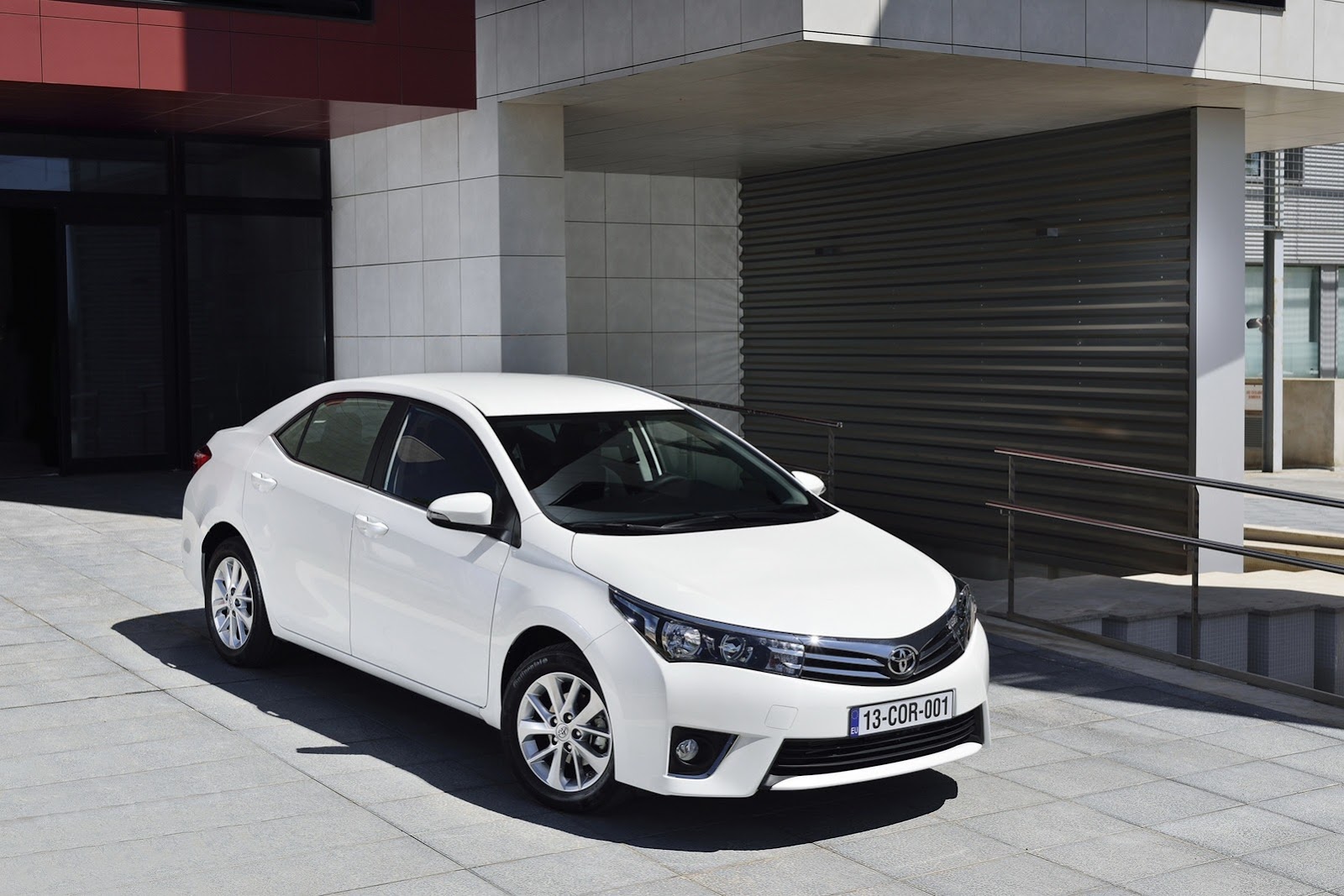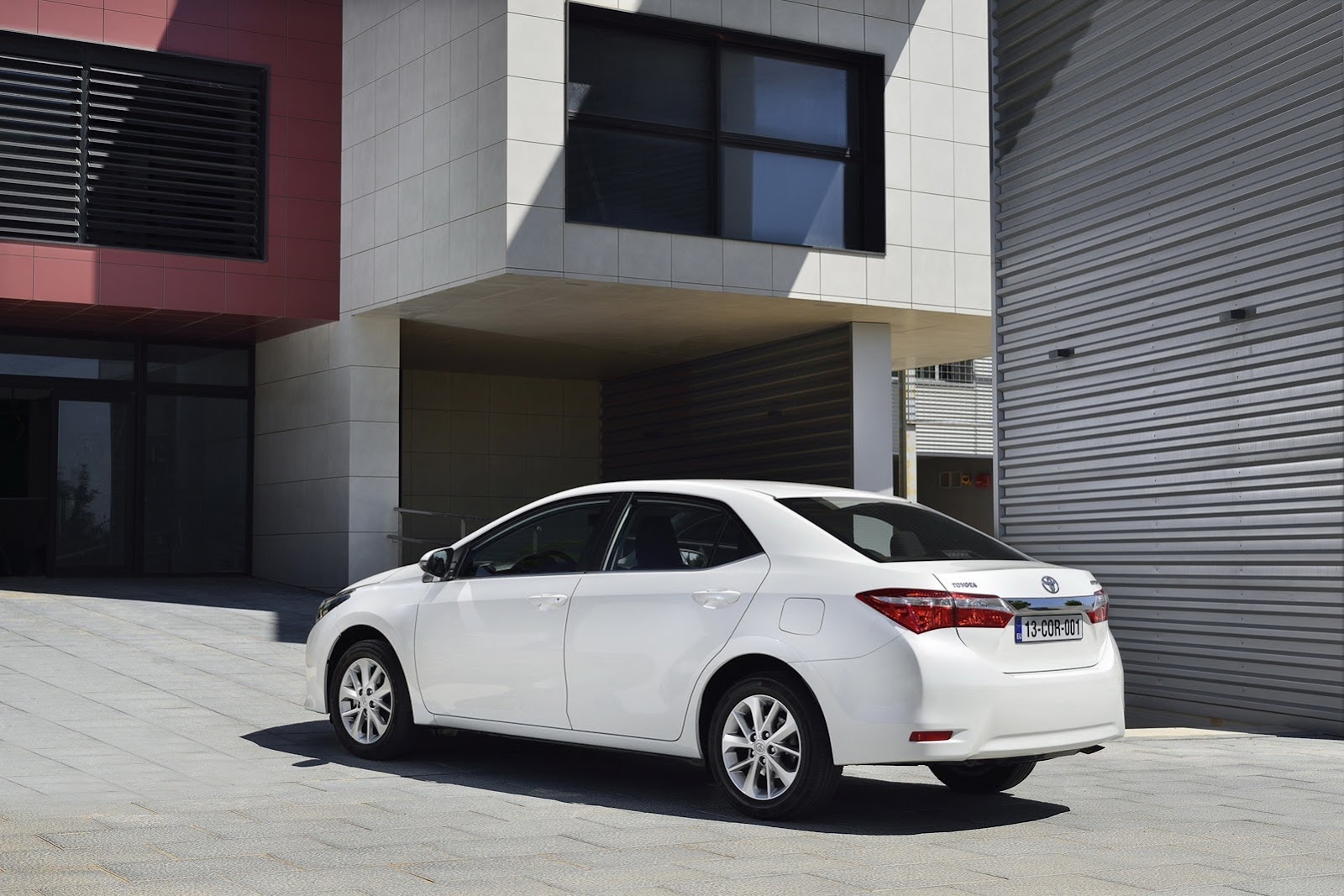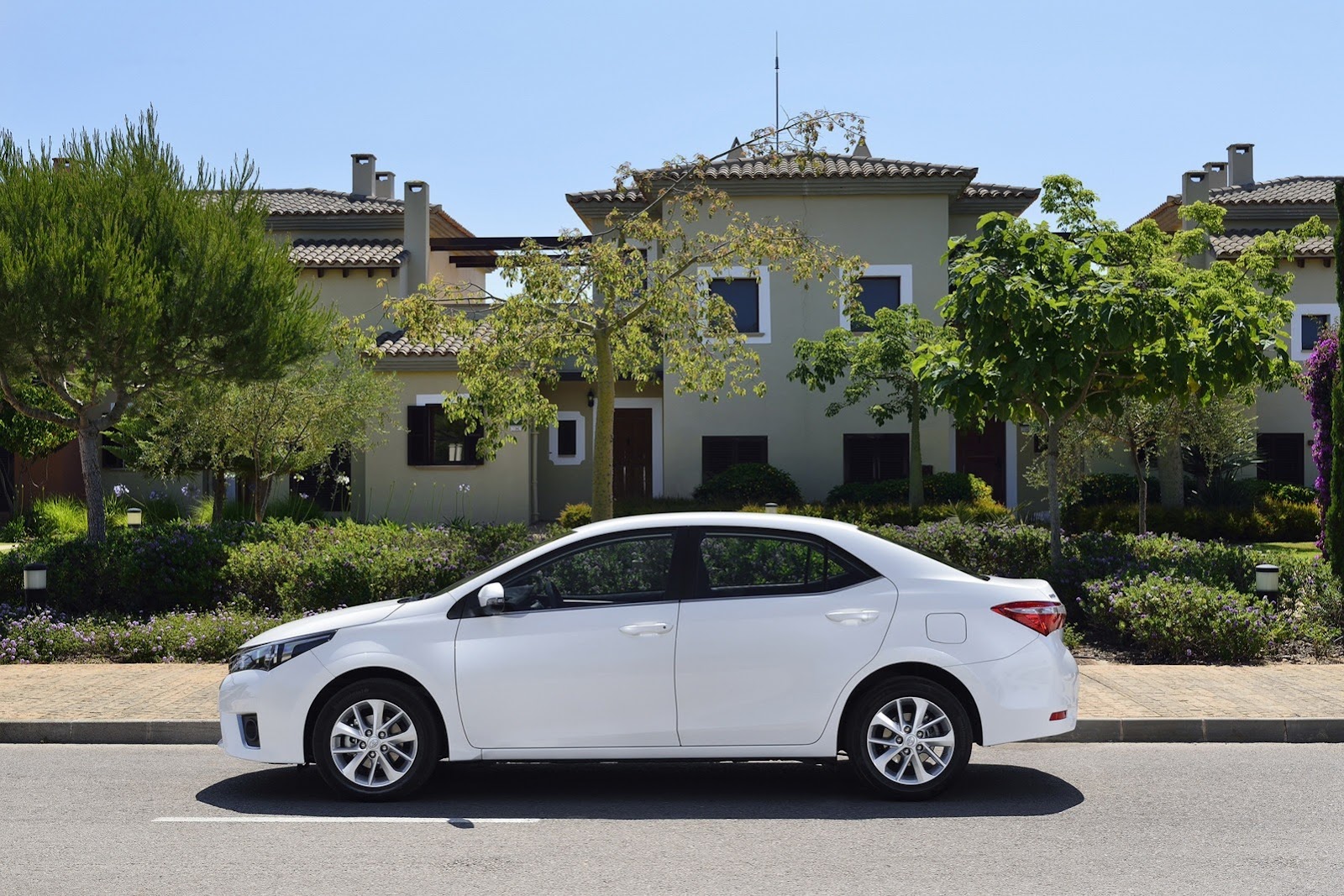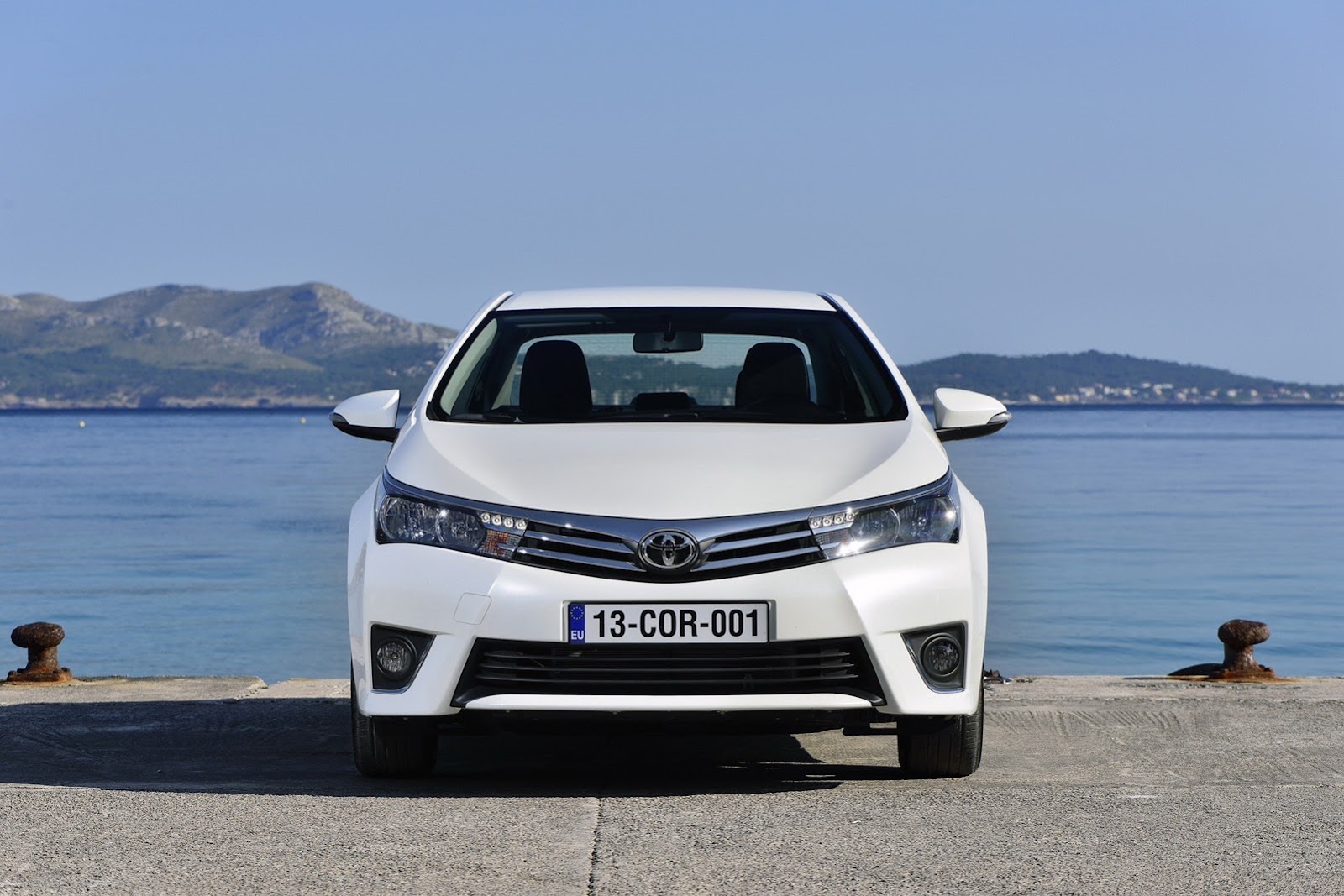
Toyota Corolla 2013

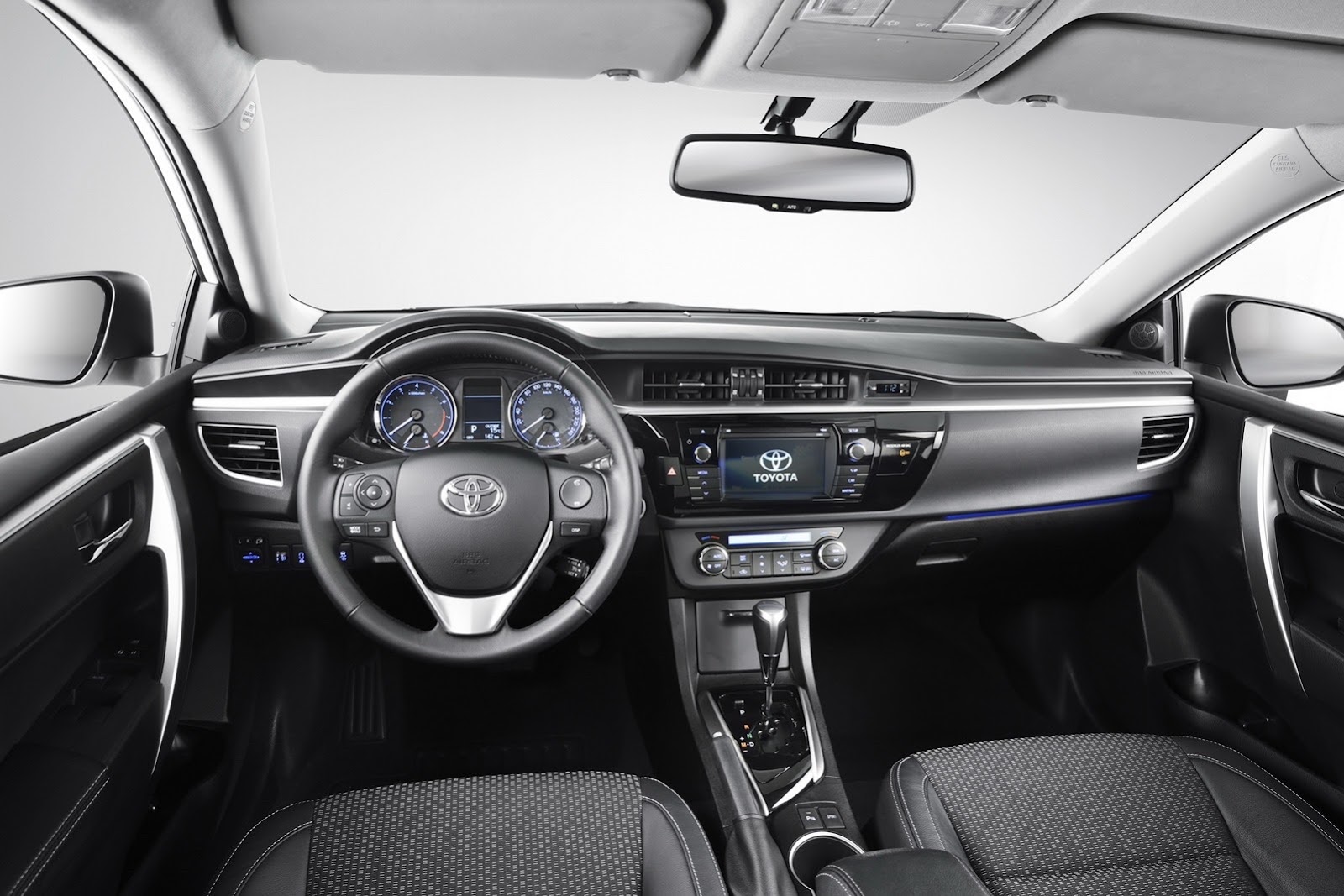
Não é o relógio que vai impedir alguém de comprar um Corolla mas realmente entre esse relógio e um de uma Hiace ou de um Corolla de 1990 a diferença é residual... [:D]

Não existe, ponto. É imagem de marca. Os relógios da Lexus eram iguais a estes. Pelo menos nas úlitmas versões.
 
Não é o relógio que vai impedir alguém de comprar um Corolla mas realmente entre esse relógio e um de uma Hiace ou de um Corolla de 1990 a diferença é residual... [:D]
Claro que não. Pelo menos nunca o deixava de comprar por aquilo. Para mim há coisas piores, como não ter ponteiro de temperatura do motor etc.

Apenas acho graça, até porque tive um Accent de 96 que também tinha aquele relógio[:D].
 
Toyota Details All-New Corolla for Europe, Releases 65 New Photos and Videos

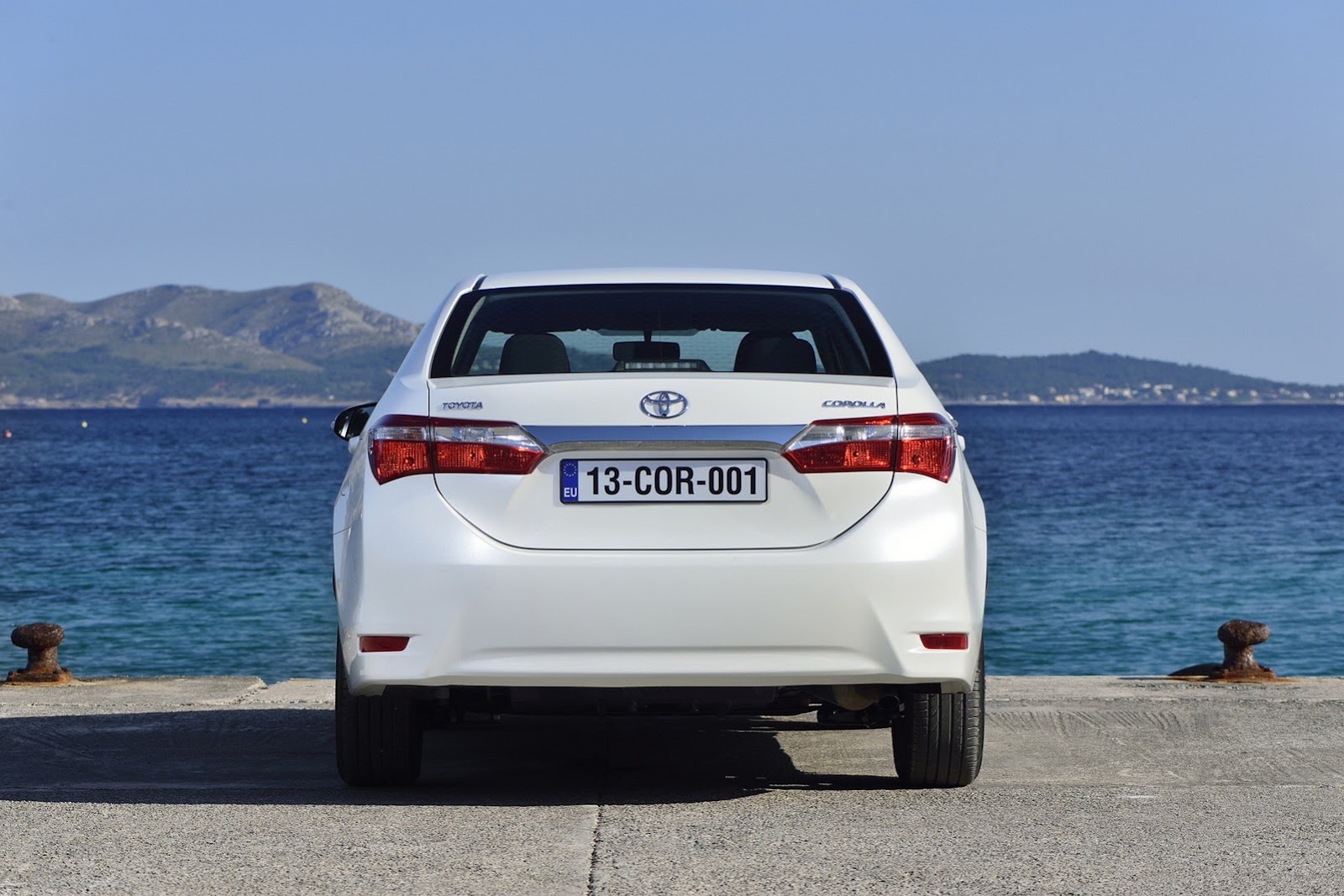
Following the release of the first set of official photos of the new Corolla sedan for Europe and other markets, Toyota has released the full press kit of its compact saloon model.The 11th generation of the Corolla features a roomier interior, especially for rear passengers, thanks to the 100 mm longer wheelbase (2,700 mm) compared to the previous model. At 4,620 mm (181.9 in) long, 1,775 mm (69.9 in) wide and 1,465 mm (57.7 in) high, it is 80 mm longer and 15 mm wider, yet 5 mm lower, than its predecessor. The car also has a bigger boot volume of 452 liters (16 cubic feet), despite a shorter rear overhang.

In Europe, new Corolla will offer a range of one diesel and four gasoline engines. The 1.4 D-4D turbodiesel develops 89hp (90PS) and a peak torque of 205 Nm (151 lb-ft) from 1,800 to 2,800 rpm. Offered as standard with a six-speed manual transmission, the unit returns a combined fuel economy of 3.8 liters/100 km (61.9 US mpg) and emits 99 g of CO2 per kilometer. The engine is also available with a six-speed MultiMode transmission and Stop & Start technology.

The entry-level gasoline engine is the 1.33-liter Dual VVT-i unit, which generates 98hp (99PS) and 128 Nm (94 lb-ft) of torque at 3,800 rpm. Combined fuel economy is rated at 5.6 l/100 km (42 US mpg) for the standard version with a six-speed manual transmission.

Next up is the 1.6-liter Dual VVT-i gasoline engine that develops 120hp (122PS) and 154 Nm (113 lb-ft) of torque at 5,200 rpm. The Corolla averages 6.6 l/100 km (35.6 US mpg) with this engine when equipped with the standard six-speed manual transmission, but fuel consumption drops to 6.3 l/100 km (37.3 US mpg) when mated to the new Multidrive S CVT transmission.

The third gasoline engine is the 1.6-liter Valvematic, a development of Toyota’s Dual Variable Valve Timing-intelligent (Dual VVT-i) system. It develops 130hp (132PS) and 160 Nm (118 lb-ft) of torque at 4,400 rpm. Average fuel economy is 6 l/100 km (39.2 US mpg) with the manual gearbox.
Finally, the most powerful engine on the new Corolla is the 1.8-liter Dual VVT-i, fitted as standard with the Multidrive S automatic transmission. The unit develops 138hp (140PS) and 173 Nm (127 lb-ft) of torque at 4,000 rpm. Average fuel economy is 6.4 l/100 km (36.8 US mpg).

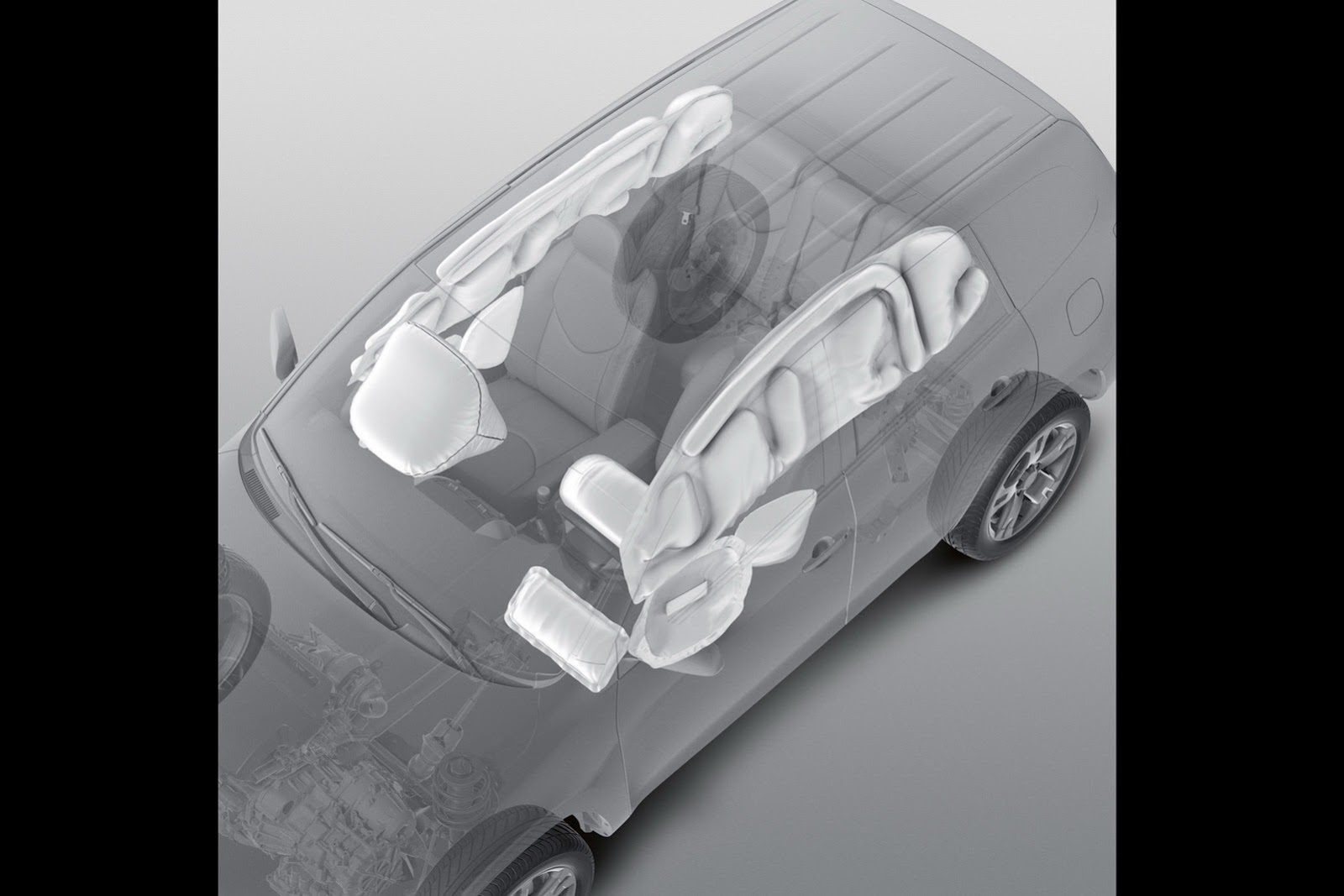
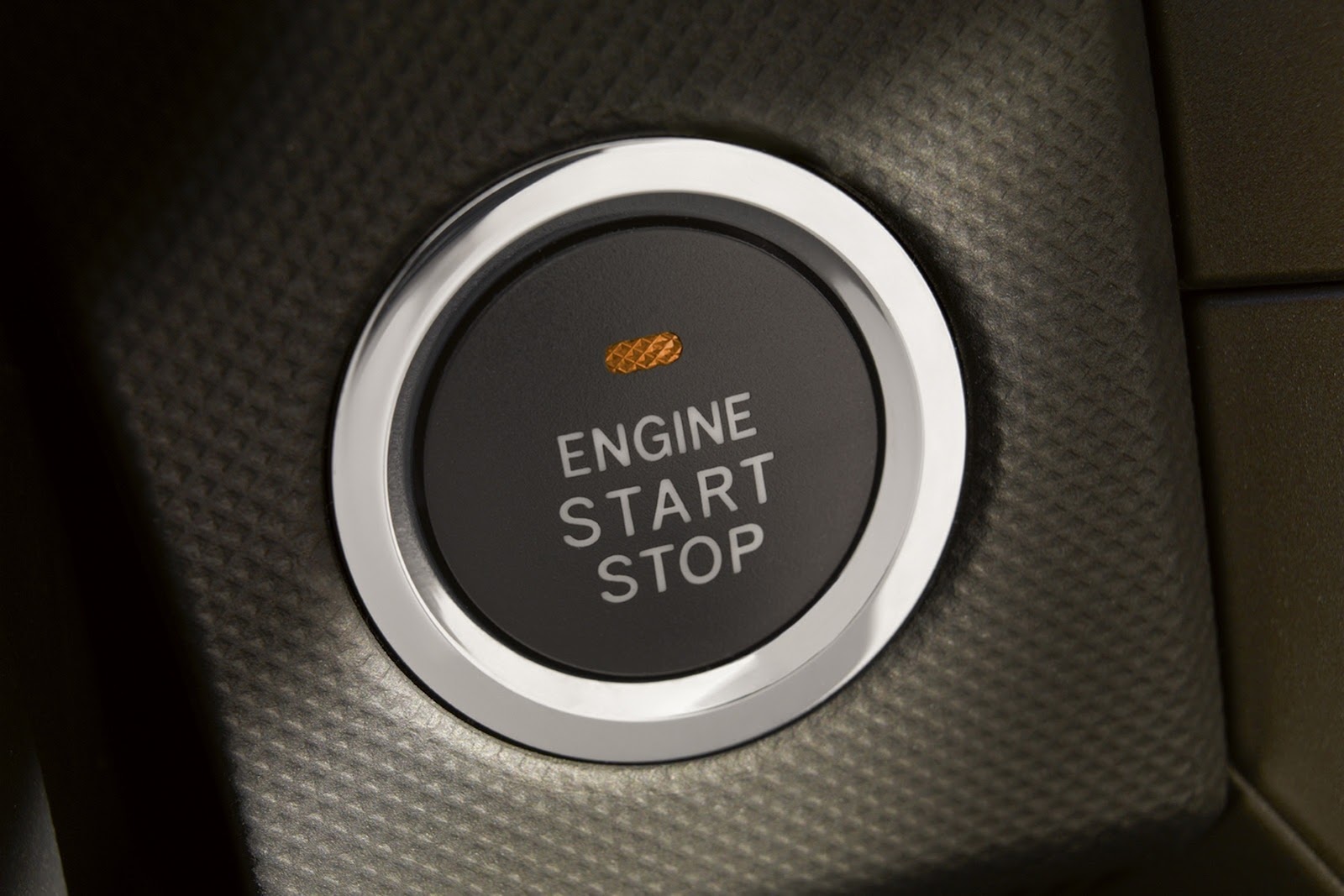
The new Corolla will be available in three trim levels: Live, Active and Lounge. Depending on equipment, available features include the Smart Entry & Start system, dual-zone air conditioning, Simple Intelligent Park Assist (SIPA) system and the Toyota Touch 2 multimedia system, among others.
We'll remind you that besides the different engine range, the European and North American Corolla sedans also slightly differ in appearance, and in particular their front end designs, the tail lamps, instrument panel and dashboard controls.
Toyota-Corolla-36%25255B2%25255D.jpg
Toyota-Corolla-35%25255B2%25255D.jpg
Toyota-Corolla-41%25255B2%25255D.jpg
Toyota-Corolla-47%25255B2%25255D.jpg
Toyota-Corolla-48%25255B2%25255D.jpg
Toyota-Corolla-63%25255B2%25255D.jpg
Toyota-Corolla-58%25255B2%25255D.jpg
Toyota-Corolla-59%25255B2%25255D.jpg
 
Toyota Corolla Review - Autoblog


2014-toyota-corolla-fd.jpg


My toaster broke the other week. Halfway through the process of cooking my gourmet Pop-Tart breakfast, the thing crapped out with a small bang, leaving my delicious morning treats trapped inside. To rectify the situation, I ventured out to a big box store, located the toaster aisle, and ran a couple of questions through my mind. Do I need two slots or four? Do I need to spend more than 20 bucks on this thing? Should I just buy a toaster oven to give me a wider range of bachelor-pad cooking functionality? After no more than two minutes of contemplation, I grabbed the cheapest one on the shelf, paid and left the store. The new toaster works just fine.

This sort of unemotional shopping experience is how I suspect people decide to purchase the Toyota Corolla. It's a perfectly fine appliance, and to a good number of people in the world, the bond between a car and a driver is no more important than the connection I feel to my toaster. Does it seat four people relatively comfortably? Does it get decent fuel economy? Is it easy to drive? Reliable? Safe? The Corolla checks all of these boxes, and because of that, Toyota managed to move just under 300,000 examples of the tenth-generation car in 2012 (though that number does include sales of the Corolla-based, now-deceasedMatrix) – a vehicle that, at the time, was already six years old.

From a business perspective, that means the Corolla is a massive winner, and so to no one's surprise, Toyota hasn't rocked the boat too much in the creation of its eleventh-generation 2014 Corolla. It seats four people comfortably. It gets decent fuel economy. It's easy to drive. It's (predictably) reliable. It's safe. And hey, it sort of looks good now. The new Corolla is actually a whole lot nicer than its predecessor. But it still doesn't, shall we say, toast my bagel.

lead4-2014-toyota-corolla-fd.jpg


The most noticeable shakeup with the new Corolla is how it looks – it's rather handsome, even in base trim. Customers told Toyota that the current model "lacked the excitement" they desired, and the new "Iconic Dynamism" design language (first seen on the company's Furia concept) certainly fixes that. All S models like the car pictured here feature piano black accents on the front fascia and rear lip spoiler, and the optional 17-inch alloy wheels wrapped in P215/45R17 Firestone FR740 tires – available only on S Plus and Premium trims – definitely give off the impression that the new Corolla has a sporting bone or two in its body.

Sticking with the S trim for a moment, this is where Toyota's design work has probably formed the most cohesive overall package. In previous generations, S cars were always set apart by what often looked like bolt-on bodywork – the final package never quite looked as all-of-a-piece and uniform as it should have. This time around, that all changes. The Corolla looks like it was first and foremost designed as an S, and that bits were simply stripped away to create the lower LE, Eco, and L trim levels.

The 2014 Corolla is longer, wider and lower than before. The wheelbase has been stretched by almost four inches, overall length has been increased by 3.3 inches, width is up by half an inch, and height has been reduced by four-tenths of an inch. It's not a very heavy car, either, with a curb weight ranging between 2,800 and 2,865 pounds, depending on trim.

lead2-2014-toyota-corolla-fd.jpg


When the Corolla goes on sale in early September, four versions will be offered, with the L grade starting at a super-low $16,800, not including $810 for destination. A six-speed manual transmission is standard, but a four-speed automatic (yes, four-speed) is optional, bringing the price up to $17,400. Why the ancient transmission? Simply put, it keeps cost down for the base model, and Toyota is only expecting the L grade to account for something like 10 percent of overall Corolla sales. Interestingly, Toyota is offering standard LED lowbeam head- and daytime running lights on all models (the highbeams remain halogen) – a premium touch on a very non-premium car.

All 2014 Corollas are powered by a naturally aspirated, 1.8-liter inline four-cylinder engine, mated to either the aforementioned four-speed slushbox, six-speed manual (L and S Plus trims) or new continuously variable transmission that Toyota calls CVTi-S. This CVT has seven programmed "shift points" that the driver can work through via steering wheel-mounted paddle shifters on S models. The really surprising part? I gave this paddled setup a concerted whirl and, honestly, it's not bad. Frankly, it's hardly noticeable under everyday everyday driving conditions. I dare you to give it a try.

The L, LE, and S trims use a version of the 1.8-liter engine that's tuned to produce 132 horsepower at 6,000 rpm and 128 pound-feet of torque at 4,400 rpm. The Eco model, however, produces 140 hp at 6,100 rpm and 126 lb-ft of twist at 4,000 rpm. If it strikes you as backwards for Toyota not to put the most powerful version of the Corolla's engine in the "I'm sporty, I swear!" S trim, you aren't alone. But there's good reasoning.

Eco models are equipped with Toyota's new Valvematic system that optimizes valve lift and timing to maximize fuel economy, and this technology results in a small increase in horsepower, as well. Toyota says that initial production of the Valvematic engine is limited, and because of this, it's earmarked for use exclusively on the LE Eco, which is expected to account for just 10 percent of Corolla sales.

lead6-2014-toyota-corolla-fd.jpg


Those fuel economy gains are the real deal, too. EPA fuel economy estimates for the LE Eco sit at 30/42 miles per gallon (city/highway) with the base model's 15-inch steel wheels. Moving to the less-aerodynamic 16-inch alloys reduces those figures to 30/40. For contrast, the base Corolla L with a six-speed manual is expected to achieve 28/37 mpg, and the top-end S with 17-inch wheels and CVT will do slightly better with 29/37 mpg.

Even in top-spec, 2,865-pound trim, 132 hp and 128 lb-ft are perfectly adequate, especially considering the Corolla's primary mission as a daily commuter. Around town, it never feels particularly slow accelerating from a stop, and while the inline-four can feel a bit lifeless during freeway passing, the smooth-acting CVT does a nice job of keeping the revs in the powerband without being overly wheezy. Nissan has some fine CVTs in its stable, but Toyota is to be applauded for its application here in the Corolla. Comparatively, I'd say the this car's continuously variable transmission is more refined than what's found in the Sentra.

Corolla S models have a sport mode for the CVT that allows you to rev higher in the range for maximum power delivery, and the Eco models have a "B" setting in the transmission that will make the most use of the car's engine braking capabilities for slowing the car down. There's nothing really exciting about either of these modes, however, and I found it best to just leave the car in "D," as nearly everyone who buys this car surely will.

lead12-2014-toyota-corolla-fd.jpg


There's nothing terribly sophisticated about what lies beneath that new sheetmetal, with the new Corolla maintaining the familiar MacPherson strut suspension in front and solid torsion-beam setup out back. Toyota says that the chassis has been tuned to provide a sportier feel, but allow me to be the first to call shenanigans.

For starters, the electric power steering is pretty terrible. Its on-center numbness carries all the way through to each end of the rack, with very little driver feedback in the process. It's not a very linear steering setup, either – the nose doesn't always exactly go where you point it. Mid-corner corrections are often necessary, but more than anything, some additional feel through the helm would be greatly appreciated.

That "sporty" suspension is another issue, especially on S models with their larger 17-inch wheels. There's a lot of tire noise that comes into the cabin, and the Corolla often felt crashy over San Diego's pretty standard pavement irregularities. Worse, the tires are quick to give up when you're trying to push even semi-enthusiastically through a corner, and the rear suspension can get hoppy at times. Braking feel and execution is fine, but nothing to write home about – remarkably, Toyota still employs rear drums on non-S models.

lead16-2014-toyota-corolla-fd.jpg


The Corolla was designed to have "easy handling," according to the automaker, and that's an incredibly apt descriptor. The car goes, it stops, it turns and it parks. Easily. We can pretty much guarantee the vast majority of Corolla buyers aren't interested in sporty dynamics, and for them, driving this new Toyota is a non-event, just like its predecessors. Want something more involving? Direct your attention to the sleek newMazda3. Or a Ford Focus. Or even a Honda Civic.

The Corolla is easy to live with, though, with a rethought interior that's designed to be functional above all. Despite having a relatively high beltline and tall dash setup, it looks good inside, with totally acceptable plastics and cloths used throughout. The thick, leather-wrapped steering wheel on the S model tilts and telescopes, and behind it is an attractive set of sport-face gauges not available on lesser trim levels. The front Softex cloth seats are perfectly comfortable and decently supportive, and for folks confined to the rear seats, a full 5.1 inches of rear seat legroom have been added for 2014. It's a pretty good place to be.

Unusually and rather impressively, seven different interior color themes are available, ranging from the usual beiges and grays to black materials with attractive amber or steel blue accents. All of the controls are easy to locate and operate, though the center console seems to be positioned in a way that makes it easier for the front passenger to manipulate everything. Depending on your wingspan, there may be occasions when you'll have to lean forward and fully extend your arm to reach buttons on the right side of the infotainment display.

lead5-2014-toyota-corolla-fd.jpg


On the infotainment front, Toyota offers its Entune suite of apps – including optional navigation – housed inside a 6.1-inch touchscreen. Here, too, everything is intuitive and the display is well-organized with modern graphics. It's not as pretty as MyFord Touch, but it's certainly easier to use. That, right there, is what the whole Corolla package comes down to: ease of use. Nothing about this car jumps out as being particularly emotive, and that's by design.

The Corolla lineup's bread and butter will be the LE model, starting at $18,300. From there, an LE Eco model that features different engine tuning (more on that in a moment) starts at $18,700. The range-topping S commands $19,000 and a fully loaded S Premium with optional goodies like a sunroof and navigation tops out just under $24,000. That's inexpensive – in the good way. Toyota believes that the S and LE grades will account for 80 percent of purchases. It even expects a full 60 percent of 2014 Corolla sales to be conquests for the brand, which seems incredibly optimistic given the depth of talent in the segment today and Toyota's already-large slice of the pie.

For folks who buy cars like I buy toasters, they'll find that the 2014 Corolla checks all of the right boxes and serves its intended purpose of providing easy transportation. Toyota estimates it will move something like 330,000 Corollas in the US next year (a 13-percent increase compared to 2012, despite the loss of Matrix sales), and I have no reason to doubt them. The 2014 model doesn't stray too far from a proven formula that still appeals to the masses. It'll get the job done in the same way that it always has, even if it's still no more exciting than turning bread into toast.
 
A versão europeia e americana são, exteriormente, bastante diferentes. Pensei que já não se faziam carros com diferenças tão substanciais.
 
Back
Top