BMW i8

Preços para Espanha: 129,900€

Con la comercialización del BMW i3 ya en marcha en nuestro país, BMW anunció que completaría la gama BMW i en el otro extremo del segmento con el cupé i8. Su comercialización está prevista para este año y hoy se ha hecho público su precio.

El primer vehículo híbrido enchufable de la marca y segundo modelo de la división i debutará en 129.900 euros. El que es también el primer BMW de motor central desde el M1, se sitúa por lo tanto en la misma franja de precio que el Porsche 911 Carrera S PDK de 400 CV (desde 125.226 euros) y más caro que el 911 Carrera de 349 CV (104.400 euros).

El precio cercano al de un Porsche 911 no se justifica tanto por sus prestaciones deportivas, sino por su elevado contenido tecnológico. Recordemos que el i8 es un 2+2 con un habitáculo (módulo Life) de polímero reforzado con fibra de carbono (PRFC) combinado con un conjunto propulsor, baterís, chasis, elementos de absorción de impactos y componentes estructurales integrados en el módulo Drive, de aluminio.

A pesar de ser híbrido, su peso en orden de marcha es inferior a 1.490 kg, un peso muy similar al del 911 que también roza los 1.500 kg. Y es que para el sistema híbrido plug-in, que necesita grandes baterías (de iones de litio y capacidad útil de 5 kWh concretamente), se ha optado por reducir el tamaño del motor de combustión.

Un motor de gasolina de 3 cilindros turbo de 1.5 litros y 231 CV para 320 Nm acciona las ruedas traseras vía un cambio automático de 6 relaciones, mientras que el motor eléctrico síncrono híbrido de 96 kW (o 131 CV) y 250 Nm se encarga de mover las ruedas delanteras a través de una caja automática de dos marchas.

Todo esta tecnología justifica el precio, pero el cliente potencial espera unas prestaciones, al menos similares a las de un 911. Y ahí BMW anuncia un potencia total de 362 CV con 570 Nm de par máximo y una aceleración de 0 a 100 km/h en 4,4 segundos (frente a los 4,6 segundos del 911 Carrera PDK). Claro que donde el i8 retoma la ventaja es en el consumo medio homologado: 2,5 l/100 km. Según BMW, con un depósito lleno y las baterías cargados a tope, la autonomía del i8 sería superior a los 500 km. Sería, en ese caso, superior a la de un 911.

Habida cuenta que de media un cliente de Porsche 911 se gasta algo más de 20.000 euros en opciones (datos de Porsche), el BMW i8 se acaba imponiendo como una alternativa mucho más tecnológica y original al 911. Al menos, en teoría. Ahora falta por ver si la clientela de un deportivo de ese nivel es sensible al concepto.
 
ih8ry0.jpg
 
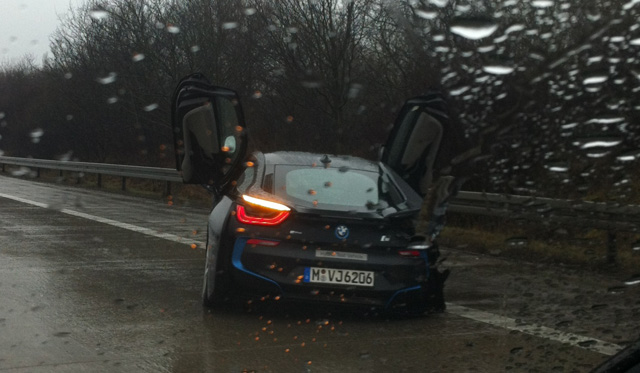
"De acordo com a polícia local, o acidente foi causado devido ao excesso de velocidade do veículo e das condições da pista, que estava molhada e escorregadia. Ao perder o controle do i8, o motorista chocou-se com a barreira lateral que configurou em um forte impacto que, tudo leva a crer, fez com que o esportivo elétrico tivesse perda total (pelo grande estrago causado na suspensão, nas rodas e nos eixos)"


Tecnicamente muito interessante, agora alguém que aproveite as ideias e faça um mas em bonito!

pelos vistos devo ser um dos únicos que não gosta do carro [8b]
 

Loucura... Um Trabant! [:D]

Em relação aos escalões do Belo que podemos aplicar ao i8, dificilmente o poderemos encaixar nas suas definições convencionais.
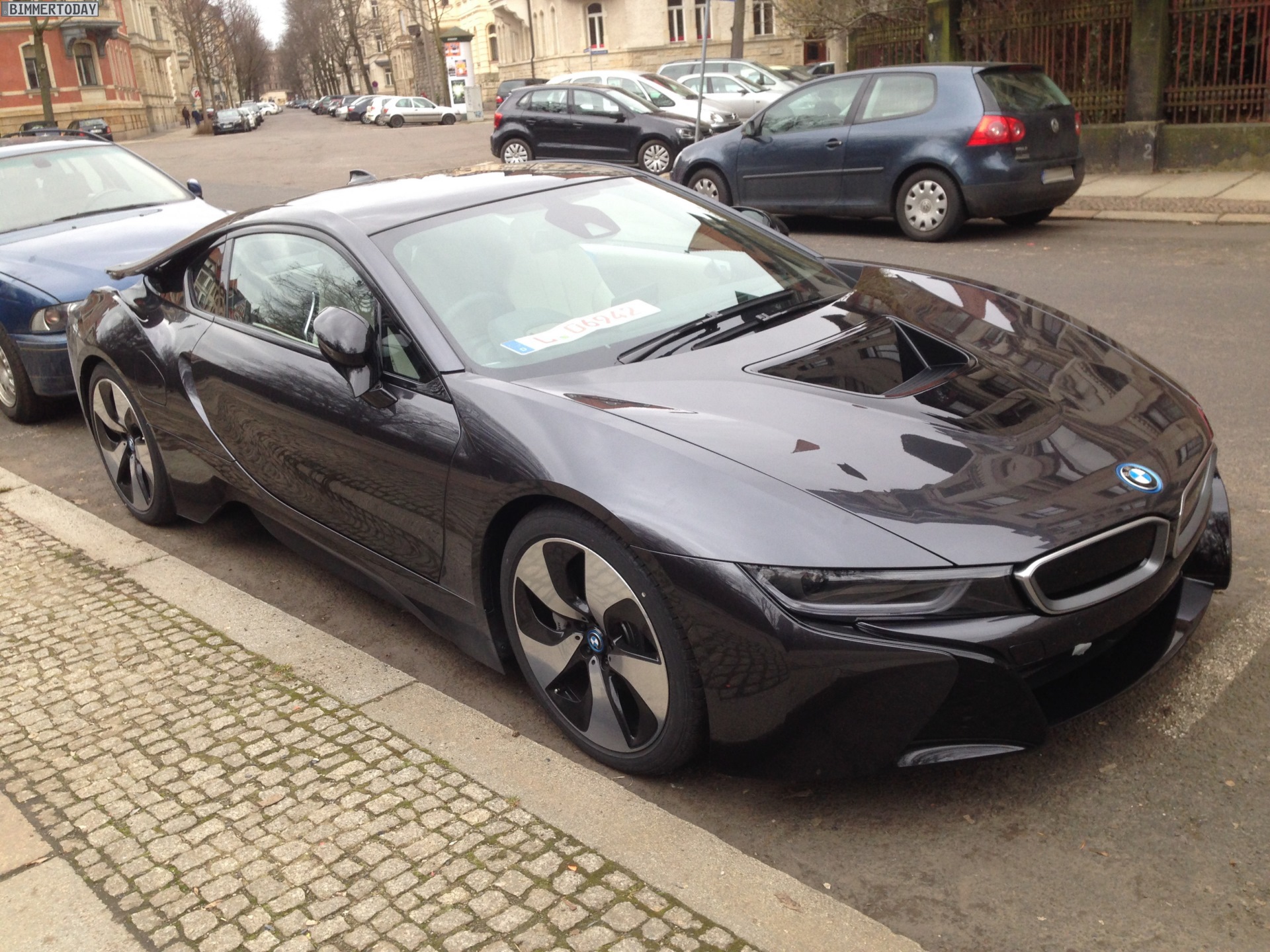
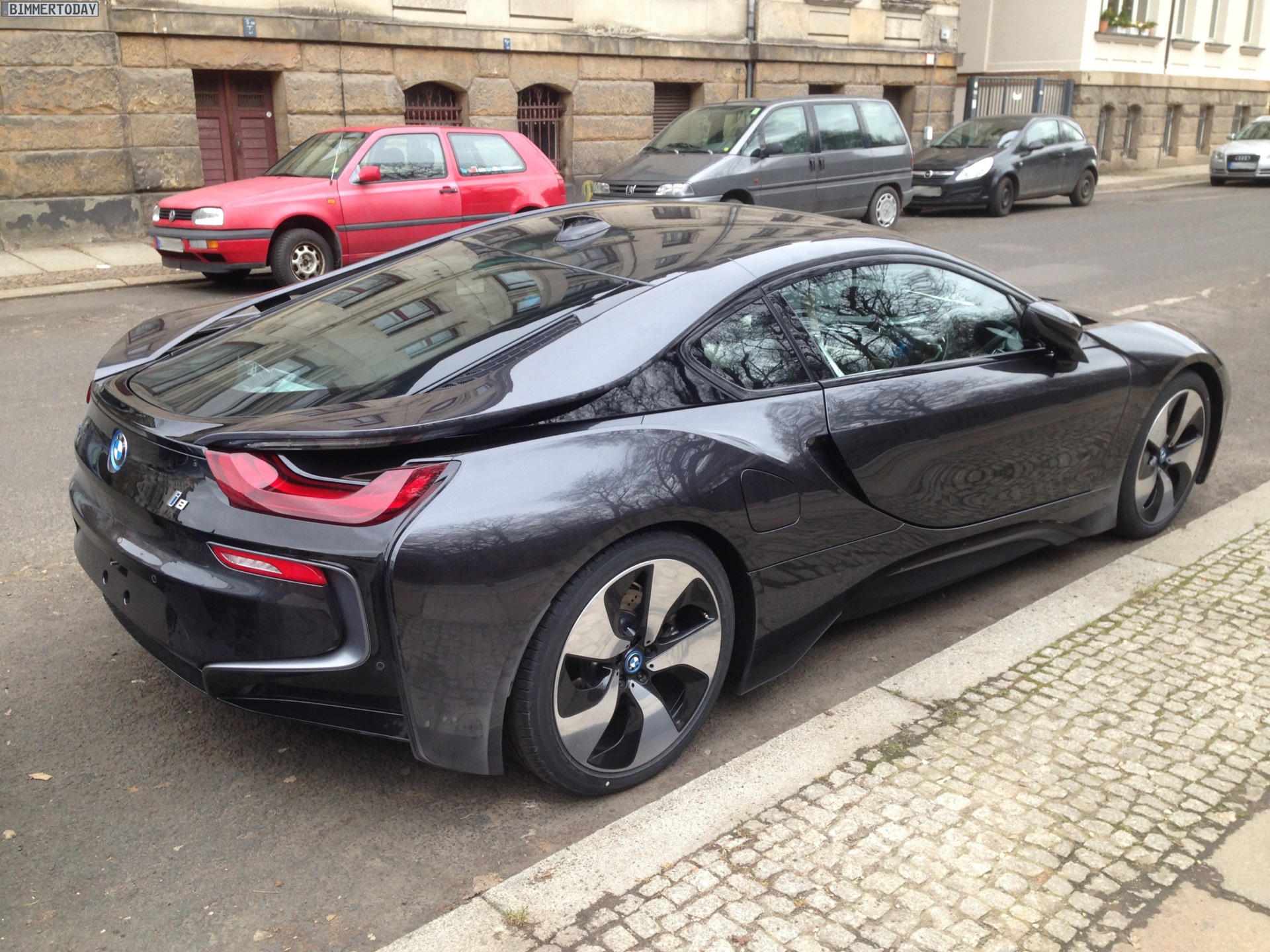
O i8, visualmente, é como se fosse o correspondente moderno de um Citroen DS de 1955. Bizarro, não convencional, em choque com tudo o que o rodeia, mas sempre "magnetizante".
De qualquer forma, o complexo jogo de volumes, superficies e linhas de que goza não são artificiais ou forçadas.
Revelam-se como consequÊncia de um processo, e trabalhadas a garantir um resultado estético deveras marcante e espectactular em perfeita harmonia com os requisitos aerodinâmicos. E isso é díficil. Ter a estética tão definitivamente definida pelo túnel de vento e mesmo assim garantir um resultado estético rico, coeso e proporcional, actualmente, apenas me ocorre algumas máquinas como o Ferrari 458.

Nestas imagens que vão aparecendo com o carro no meio do trânsito, tudo o resto à volta parece definitivamente do século anterior. Revela um novo mundo visual a ser explorado.
O i8 é talvez o passo mais definitivo para um novo paradigma visual, e contendo nos seus traços real substância, contrapondo o conservadorismo consensual que existe actualmente, até na própria BMW.
 
Sempre que olho para este carro, parece-me um protótipo feito exclusivamente para um filme de ficção científica. Só lhe falta voar. Está mesmo "à frente"! apr:)
 
Last edited:
BMW i8 (2014)| Car Magazine Online

The i8 is a BMW like no other. True to the firm’s ultimate driving machine ethos, it’s a sports car with 50:50 weight distribution, but it’s not rear-wheel drive. It skulks low to the ground, has a supercar’s extrovert form and gullwing-style doors, but the i8 sells under BMW’s eco ‘i’ brand. Like a Formula 1 racer, the body is made of carbonfibre and the engine sits behind the driver, but the i8’s mill displaces just 1.5 litres in capacity and is bolstered by an electric motor.Yes, this incredible, plug-in hybrid sports car is a bundle of contradictions. And we’re about to drive a prototype. Concepts have been blazing the i8’s trail since 2009. But five years on, the £99,845 car finally reaches UK customers this July.

Boarding is easy. Thanks to carbonfibre’s stiffness, the cabin aperture can be large enough for those who shop at High & Mighty like yours truly, with the sill low enough not to bar entry. The manually adjustable seat trimmed with biologically tanned leather is comfortable enough for all sizes. Glance backwards though and you’ll spy two tiny seats, barely spacious enough for a couple of corgis. Only oddball mid-engined cars like the Lotus Evora and Ferrari Mondial have tried this 2+2 trick. But you’re more likely to use the rear perches for overspill luggage than humans: the hold beneath that glass rear hatch only swallows 150 litres.

Many cockpit elements are from BMW’s present, not the future: the steering wheel, in-dash colour monitor, iDrive controller and air-con panel are all familiar. But they’re mounted on flowing, multi-layered surfaces that look like they were squeezed as liquid from a tube, before setting rock-hard. In the binnacle, the computerised gauges can change colour and display, but they’re too small and feel a bit Star Wars – the 1977 vintage, not JJ Abrams’ 2015 reboot.
Let’s go for it. One stab at the start button, and the system jumps to a busy amber-over-blue digital life. Next, we push the eDrive button for pure electric driving, and to start molesting the fully-charged battery. The range indicator reads 35km (25 miles) – what a splendid illusion! The i8 takes off with silent verve, accelerating briskly to 50mph and onto its zero-emission top speed of 75mph.

The electric motor, mounted in the nose, sends 184lb ft of instant torque to the front axle via a two-speed automatic. Push the accelerator beyond a detent, and the i8 switches from front-wheel e-drive to four-wheel drive, as the combustion engine automatically cuts in, turning the rear wheels. The turbocharged, three-cylinder unit feels smooth and progressive, and for now appears wrapped in cotton wool it’s so acoustically detached. In eDrive, the i8 is all a bit eco-friendly and measured, more in line with the city car character of its i3 sister car than the sporty soul you’d expect.

On the race track, the projected range was plummeting so fast that the on-board computer kept suggesting new charge points by the minute – high time to engage Eco Pro. This mode coordinates the three-cylinder engine and the e-motor for optimum efficiency. It also reduces the AC output from a breeze to a hiss, or minimises the drain from bum warmers or mirror heaters. Lift off and the i8 slows sharply, and the computer may decide to harvest this energy to charge the battery. Alternatively, the i8 may slip into coasting mode, if your driving style, the traffic density and intelligent sat-nav permit – it calculates when to store up energy on a journey, to guarantee electric drive in an upcoming low emissions zone, for example. Play it right, and Eco Pro can extend the range over the regular Comfort mode, from 310 to 370 miles.

In Comfort, comrade computer unlocks the full potential of both powerplants. The electric motor’s peak output is 129bhp, the 1.5-litre three-cylinder summons a remarkable 228bhp, the highest output per litre of any BMW engine, and 236lb ft of torque. BMW quotes a combined output of 357bhp and 420lb ft. It’s a highly complex powertrain: electric motor and petrol engine, each with distinct transmissions – the threepot is coupled to a six-speed automatic – plus torque vectoring, which varies the torque split not just between axles but across wheels. On slower parts of the track, you can really feel the torque shift around, with the i8 alternately stretching its front and hind legs while cornering in stride.
So far, so enlightening. eDrive is great for silent, socially responsible city cruising; Eco Pro will reward feather-footed, mpg junkies who want to keep going for their highest scores; Comfort is fine for everyday motoring. But to get the best out of the i8, to unearth its true dynamic talent, we’re going into Sport mode.

Flick the gear selector left, to engage Sport mode. The dials switch to a bright red glow, any throttle resistance is replaced by eagerness. The six-speed automatic – already responsive in Eco Pro mode – shifts like lightning in Sport.

There may be a tiny turbocharged three with a balancer shaft behind you, but the petrol engine now snarls as you demand more from the i8. The three-cylinder is redlined at 6500rpm, but it’s no lightweight: it could power the coupe to its 155mph limited top speed without any electric assistance. That said, it needs revs to deliver significant slugs of torque, which is where the e-motor comes in. Its instant grunt fills the low-down gaps in the turbocharged petrol’s torque curve, ensuring relentless acceleration. It’s so continuous, you’d think the i8 has a rapid dual-clutch ’box. Indeed the petrol unit spins so eagerly to the limiter in Sport, that only the quickest fingers can keep up when you’re self-shifting.
The i8’s drivetrain combines the punch of a big-block V8 and the smoothness of a straight six. It can sprint from 0-62mph in 4.4sec, which is only one-tenth slower than the 911 Carrera S PDK. And the mid-engined i8 is said to have the edge over its M4 stablemate when it comes to 50-75mph acceleration. All the while the i8 delivers the goods without ruffling your feathers.

The i8 permits its driver to partly or fully deactivate stability control. This opens up a whole new dynamic experience, where this plug-in hybrid morphs into a flagship M8. On the attack, the car will deliver whiplash-style torque boosts as if a magic wand was briefly doubling the wattage. Through corners, you can step back on the gas unusually early, open the steering up right after the apex and summon enough lift-off oversteer to put a broad smile on your face.

Zig-zagging through those fast esses requires no more than a flick and a counter-flick at the light helm, and the fifth-gear arc at the end of the long straight encourages the car to fade in and out of a subtle four-wheel drift: wonderful. And at the three or four points where you need the brakes big-time, the transition from energy recuperation to deceleration to ABS intervention is absolutely seamless in effort and response.

Although the batteries are almost depleted, we try one last full throttle acceleration manoeuvre, this time with DTC on for just a little bit of slip. The sticky though relatively narrow Bridgestones (195/50 and 215/40) shriek briefly as the car takes off in jump-start fashion, first pulling then pushing, the back chasing the front, relentlessly gaining momentum. Somehow, this feels like riding an accordion as it extends and contracts. And in the background, the tyres intermittently wail, the e-motor hisses, the petrol engine growls, and the computerised brain orchestrates the antics. No, this is definitely not your old man’s BMW.

After no more than 30 minutes in total, the psychedelic plaything suddenly slips into limp-home mode. The range indicator is down to one kilometre, first gear only reluctantly picks up speed, the battery harbours around 10% of capacity, and the display suggests we contact the nearest dealer. What would you do with a complex electronic device at home? Turn it off, then on again, of course. Then select Sport, and two laps at seven-tenths restores the battery. The petrol engine drives the high-voltage generator to replenish the charge, and it’s as hush-quiet as it is free of any coupling or decoupling irritations. But it’s not as efficient as hooking up to a charge point though, cutting economy to around 37mpg.

The i8 has its compromises, especially the poor rear three-quarter visibility and the vast, 12.3m turning circle. Some might question the packaging, but the additional rear seats put it on a par with the 911. A Porsche is one of the few cars that can compete with the i8’s remarkable ride comfort: its damping characteristics range from compliant to pretty firm, depending which mode you’re in. And the BMW displays ultra-sharp handling and cat-like agility, thanks to the chassis engineering with its optimised weight distribution and low centre of gravity.

So where does the i8 fit into the world? It’s not in the same league as those hybrid hypercars, the McLaren P1, La Ferrari and Porsche 918 Spyder. But they pack at least 500bhp more and five extra cylinders, inflated price tags and low production runs. With an annual output of 5000 cars, the i8 won’t be such a rare, shooting star. It’ll offer something different to the Audi R8 and Porsche 911, and appeal to tech-lovers who might not otherwise buy a self-centred sports car.

Innovative, pace-setting, radically different, the i8 is remarkable. In its performance and handling, it feels every inch a typical BMW, despite using technology – carbonfibre, electrification – well outside the company’s comfort zone. It takes something special to hit the bull’s eye in two contrasting areas. But the i8’s green footprint is every bit as impressive as the black tyre tracks the enthusiast driver can also leave behind.

How much?£94,845
On sale in the UK:July 2014
Engine:1499cc 12v in-line three-cyl, turbocharged, 228bhp, 235lb ft @ 3100rpm, plus synchronous electric motor, 129bhp, 184lb ft @ 0rpm, total output: 357bhp, 420lb ft
Transmission:Six-speed auto (engine), two-speed auto (e-motor), all-wheel drive
Performance:4.4sec 0-62mph, 155mph (limited) 113mpg, 59g/km CO2
How heavy / made of?1490kg/carbonfibre, aluminium

CAR's rating
ratingstars_web10.gif


Handling
ratingstars_web10.gif

Performance
ratingstars_web10.gif

Usability
ratingstars_web10.gif

Feelgood factor
ratingstars_web10.gif

Readers' rating
ratingstars_user8.gif
 
Claro que tem um som bom. Tem um sistema de som para o exterior (não desligável) para "auxiliar" o barulho do motor.
Para entrar e sair é preciso alguma acrobacia. Para se ir para os lugares traseiros tem que se ser contorcionista. E a bagageira (na traseira) da para pouco mais que um saco de viagem. Mas é espectacular! E a pagar só 800e de iuc...
 
Não me parece que o cliente alvo deste carro se preocupe com a capacidade da mala...ou com o layout dos lugares traseiros...ou com os 800€ de iuc...[;)]
 
Back
Top