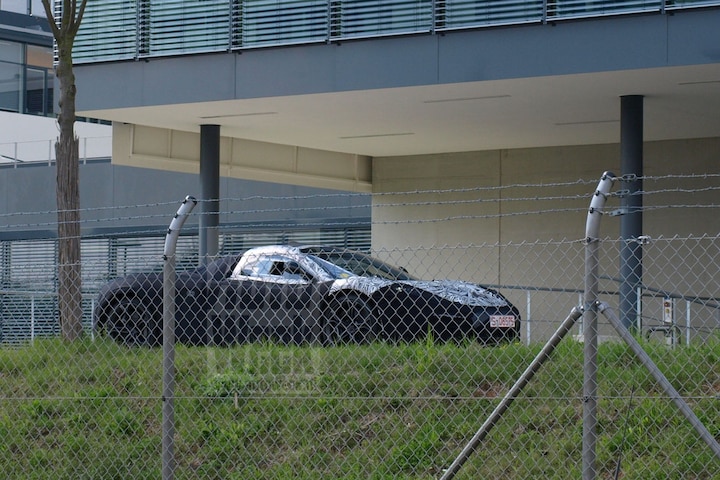
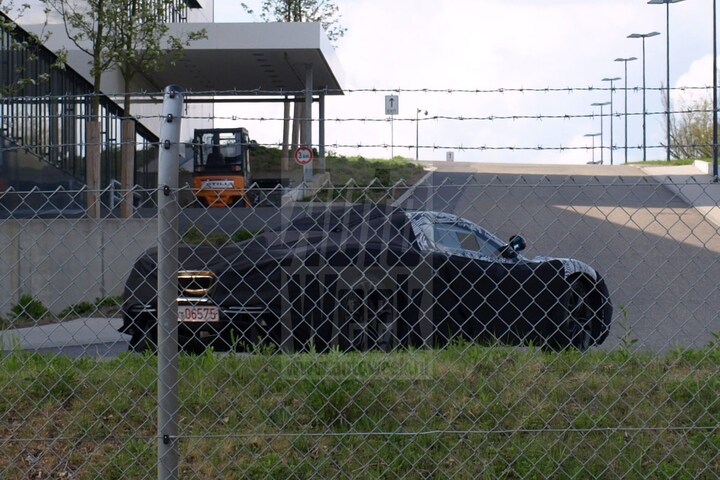
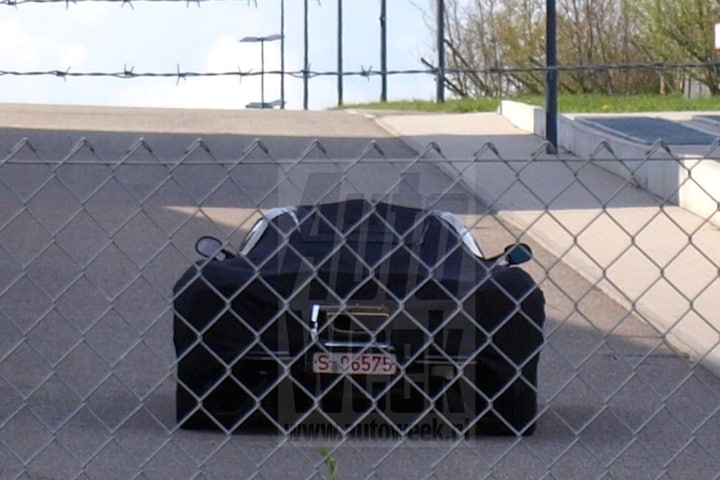
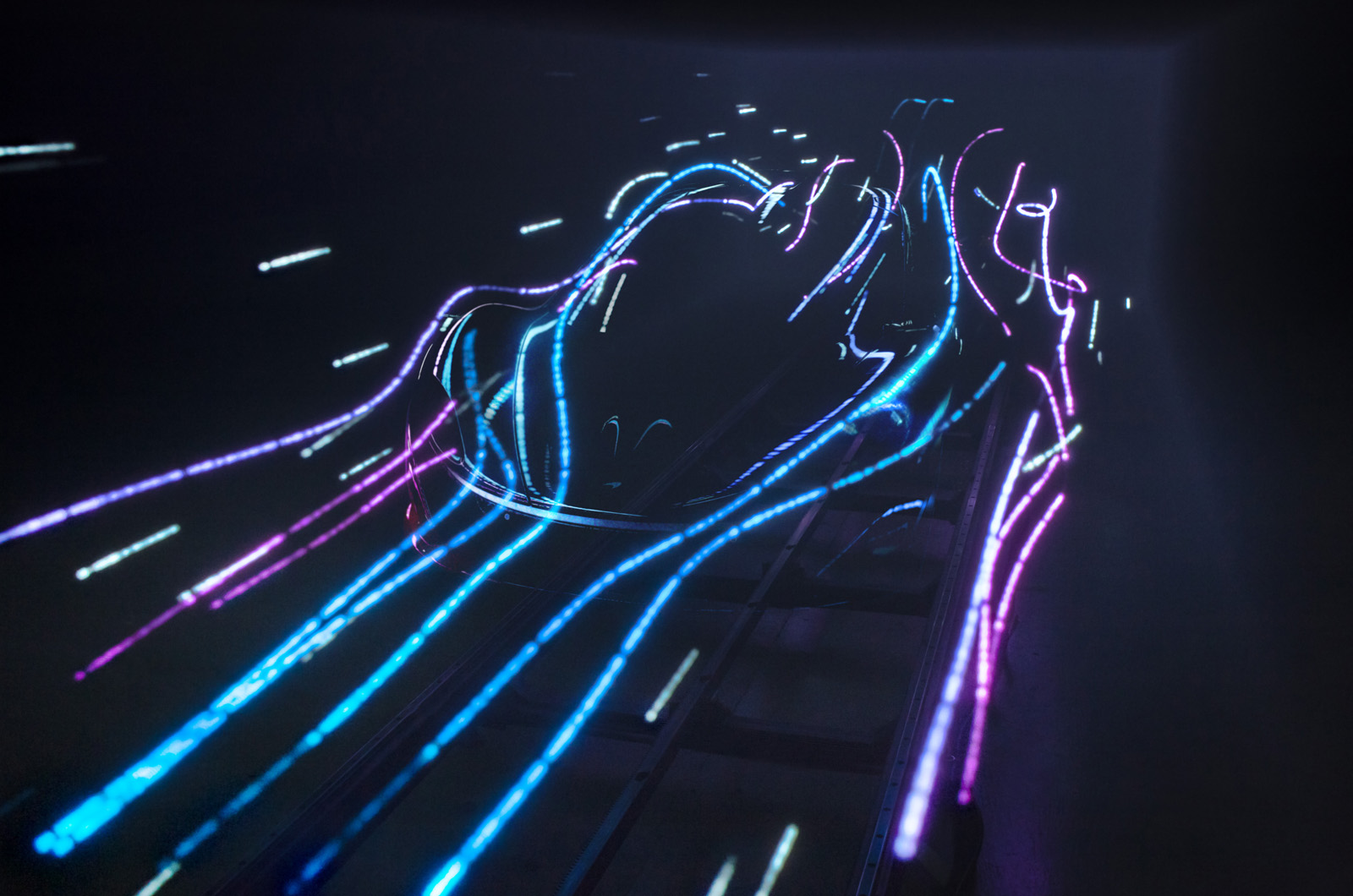
McLaren P1 (2013)

No novo modelo eles vão acrescentar n um aileron extra, mas umas mini asas nas portas a partir dos 350 km/h. Não sei qual é o limite destes tipos, n há estradas (a n ser pistas, e n são todas) para estes bixos circularem, só mesmo para bater records de velocidade. Qq forma, a referência às asas não tava no gozo, acho que devem começar a pensar em incluir isso nos modelos futuros [:D]

É verdade q em tecnologia, são surpreendentes! Qdo se pensa, é pá, chegaram ao limite... os gajos sobem ainda mais a fasquia apr:)
 
A Mclaren não vai ter uma tarefa nada fácil, o maior trunfo do Mclaren F1 era/é o motor mas hoje em dia com as apertadas normas anti poluição vai ser difícil fazerem um motor muito melhor que a concorrência ao ponto de conseguir distinguir-se somente pelo motor. Quanto ao design, deve seguir assim por alto as linhas do mp4-12C mas com soluções aerodinâmicas mais extremas e quanto à mecânica deve também ser uma evolução do MP4-12C já que me parece que a Mclaren desenhou claramente o MP4-12c já a pensar no novo F1.
 
More Details McLaren F1 Successor Revealed

Fonte: More Details McLaren F1 Successor Revealed

McLaren boss Ron Dennis revealed more details about the successor of the iconic F1. The new McLaren supercar dubbed P12 won’t be a fast as the iconic supercar from the nineties ‒ once the world’s fastest production road car ‒ and shall not beat the Bugatti Veyron in terms of top speed.

The McLaren F1 has a top of 372km/h with rev limiter or 391km/h ith rev limiter removed. While speaking to Drive.com.au Dennis said trying to beat the F1′s or Veyron’s top speed is out of the question. He said:

The MP4-12C will go around any circuit in the world faster than an F1. Don’t get fixated by top speed. That’s the first thing you have to discard in today’s society.

Instead of top speed, Dennis regards a complete package of performance to be more important to rival the supercars from Ferrari, Lamborghini and Porsche. Therefore the F1 successor will be the world’s most technologically advanced supercar.

What you’ve got to have is a complete package of performance. You’ve got to embrace technologies that are out there that are accepted, and some that don’t even exist. I can tell you our next car has many things on it that don’t exist at the moment.

The powertrain of the McLaren P12 will be borrowed from the MP4-12C. The output of the 3.8 liter twin-turbo V8 will be upgraded to as much as 800 horsepower. It is likely this engine will be coupled with a hybrid system for more performance and to save fuel. This would suggest the P12 would feature a kinetic energy recovery system (KERS) system, inspired by McLaren’s experience in Formula 1 racing.

Also taken from the MP4-12C is the carbon-fiber monocoque, designated by McLaren as the monocell. This central structure will also be used on a new and cheaper model positioned below the MP4-12C.

The design of the P12 will be more aggressive than the deliberately conservative styled MP4-12C. Dennis said the new supercar will look entirely different. Earlier was reported the British sports car will have dramatic styling, as an insider reportedly said the McLaren P12 looks “like something out of iRobot” and will feature a double-bubble roof and a canopy-like greenhouse.

The new McLaren will be produced in a relatively low volume, between 300 and 500 units. Dennis is also said the new car will be more expensive than the MP4-12C, but he did not disclosed any further information about the estimated price tag. The McLaren CEO said he hopes the next generation supercar will be hailed as the most innovative and creative supercar of its time.

Is it rumored the McLaren P12 will make its official debut during the Formula 1 Grand Prix in Monaco the 27th of May. Stay tuned for more news about the most anticipated supercar of the year.
 
O protótipo de testes aparece pela 1ª vez.

m1fyavabu7ay.jpg
m1fyavbbxdb3.jpg
m1fyavbbvqb4.jpg
m1fyavcbasb5.jpg
 
relacionado com o lançamento deste carro:

"Motores V12 é coisa do passado"
McLaren managing director Antony Sheriff to proclaim, "The V12 engine is a thing of the past. The engine belongs in a museum."

The V12 engine is synonymous with supercars, from classics like the Lamborghini Miura and Countach to modern-day screamers like the Ferrari FF and Pagani Huayra. The McLaren F1 – a car universally considered one of the most lust-worthy machines of all time – made use of a 6.1-liter V12 provided by BMW that pushed out 618 naturally aspirated horsepower.

Though not a true successor to the iconic F1, McLaren's more recent MP4-12C makes 617 horsepower from just eight cylinders displacing 3.8 liters, albeit with the help of twin turbochargers. Such power capabilities have prompted McLaren managing director Antony Sheriff to proclaim, "The V12 engine is a thing of the past. The engine belongs in a museum."

We're not quite ready to archive away all thoughts of V12-powered supercars, but Sheriff has a point. V8 engines, even with turbochargers in tow, are easier to package than V12s and have significantly fewer moving parts, which is good for both power and efficiency. Sheriff suggests that even a V6 would be a possibility for future high-performance applications from McLaren.

in autoblog

e agora em espanhol, do es.autoblog
Cuando McLaren presente finalmente su nuevo superdeportivo, lo hará sin un V12. Mientras que rivales del calibre de Ferrari, Lamborghini o Pagani siguen apostando por el V12 como elemento esencial en un deportivo de muy alta gama, McLaren considera que el V12 es una arquitectura obsoleta; un V8 sobrealimentado pudiendo entregar los mismos niveles de prestaciones.

La información fue revelada por el director ejecutivo de McLaren, Antony Sheriff, a un periodista de Autovisie. "El V12 es una cosa del pasado", decía, "su sitio debería ser en un museo". Sheriff explicó que los V8 turbo ofrecen prestaciones similares a los V12, pero son más ligeros, son menos complejos y tienen menos partes móviles (reduciendo así las fricciones internas), son también más pequeños y pueden posicionarse mejor en un chasis y dan menos problemas de packaging (mayor habitáculo, etc).

Al igual que el MP4-12C, el sucesor del F1 contaría con un V8 sobrealimentado, pero asociado a un sistema híbrido. Sheriff afirmó que todos los futuros McLaren tendrían un V8. También comentó que un V6 sería una posibilidad a considerar. Por último aseguró que seguirían fieles a la arquitectura del motor central trasero.

En una visión fría y aséptica, típica de McLaren, Sheriff tiene razón. Sin embargo, a ese nivel de gama y de coches, los clientes no sólo compran prestaciones puras y duras, compran también espectáculo, algo de teatro. El MP4-12C ya fue criticado por su falta de espectáculo. Sí, es perfecto, pero muchos prefieren el 458 Italia o el Gallardo, porque son más divertidos, más extrovertidos. Un Lamborghini Aventador sin un enorme V12 detrás no sería lo mismo. Y qué me dicen del Pagani Zonda...

e V12 é peça de museu?
 
Paris P12 to be Extreme Example of Bespoke Hyper-car. | Inside Mclaren

The McLaren P12 supercar concept set to star at Paris motor show later this month will go on sale in a limited edition.

The halo concept is being suggested in some media as the successor to Gordon Murray’s legendary McLaren F1, with thoughts the P12 working title may be changed to P1 – a tempting reference to pole position as well as an echo of the F1 nameplate.

McLaren promises it will be something special, and while their regional director for Asia Pacific, Ian Gorsuch, won’t confirm a name he’s happy to talk about numbers. ”Naming is always a highly emotive and difficult topic. But we will release the name — which we believe is right for the car — when we are ready to release the car,” Gorsuch says during a visit to Australia this week.

“We have lots of working titles that we use. And we tend to use alphanumeric working titles and also alphanumeric names.” However he didn’t deny that P1 would be both an emotive and a logical possibility, with its links to the F1 and pole position. “Well, part of our DNA is that we want to win,” he said. Gorsuch says the production run of the P12 will be limited to the demands of market response and bespoke build times – although the limits are flexible.

“We are being deliberately vague, because what we don’t want to do is say there will be 200 cars and then have 250 people who want it and they’re the right people. We don’t want to annoy 50 people by not building them cars, or build an extra 50 and annoy 200 people who were told it was just 200. But it will definitely be no more that 500 cars for the world.

“That’s not to say that everyone who wants one will get one, because we have a very limited build window. There are other complications because this is a unique bespoke car so some might take longer to build than others, depending on what the customers specify.” Gorsuch says the Paris show car will be an “extreme example” of McLaren’s advanced technology, built on the monocell rolling chassis underpinning the MP4-12C, 12C Spider and one-off X-1 concept unveiled at the recent Pebble Beach Concours d’Elegance, sporting the signature dihedral ‘butterfly’ doors and powered by the same 3.8-liter twin-turbo V8 – although it may get a higher-tune.

“We are not revealing the power yet, but we don’t get into the game of competing on numbers,” Gorsuch says. ”This is going to be extreme in technology: how it delivers power, how it handles. Technology is delivering performance with finesse.” Gorsuch says McLaren’s team is well-equipped for that delivery. ”Because we have our own wind tunnel, some of the world’s best aerodynamicists and one of the world’s most sophisticated simulators, we can use all of this technology to create ultimates in automotive engineering,” he says.

“What is being shown in Paris is just a wonderful extreme example of how we can do this. I remember speaking to an engineer when we were looking at it and he said “every molecule of air that touches this car has a job to do”. However Gorsuch says the P12′s “extreme” basis doesn’t resort to bizarre design for the sake of attention.

“What we don’t do is what other manufacturers have done — create a really extreme thing, call it a concept car, get lots of flash bulbs going off and then not go near it again. ”We wouldn’t build extreme looks just to be extreme. A hawk is beautiful, not because it sets out to be beautiful, but because it’s aerodynamic. It’s geared for flying. So that beauty is in aerodynamics and aerodynamics tend to make beautiful things.

“So P12 because of its use of aerodynamics is a beautiful and understated car because with no compromise. ”In a more normal – if I could say that about the 12C – road car, there are various compromises you have to make: price and benchmarking against the competition. That’s the market the 12C is playing in. With the P12 we don’t care what market we are playing in. This is just extreme.

“Whether it’s a spiritual successor to the F1?” he leaves the question floating…
 
Surgem os primeiros (e impressionantes) dados do carro (ainda em inglês).

Some stats from an article on the car.
-It may be called the MP4-24C
-803hp from the 3.8L V8 at 9100 RPM and 160hp from KERS for 963hp total
-2693 lbs (unos 1220kg aproximadamente)
-0-100kph in 2.8 seconds
-0-200kph in 6.9 seconds
-Quarter mile in 9.1 seconds at 161mph
-Top speed of 239mph (384 km/h aproximadamente)
-Use of vacuum formed acrylic, like in jet cockpits, instead of glass. No windshield wipers because the acrylic is so slick it is unnecessary
-Active aero that helps the car pull 2g lateral in the corners on street tires
-After tests at Silverstone it beat the standing production lap record of the Noble M600, 2:22, at 1:58. Beat it by 24 seconds.
-Cost is $1,390,000
Spied: McLaren's New Supercar - The P12 - Page 23 - Teamspeed.com
 
Surgem os primeiros (e impressionantes) dados do carro (ainda em inglês).

Some stats from an article on the car.
-It may be called the MP4-24C
-803hp from the 3.8L V8 at 9100 RPM and 160hp from KERS for 963hp total
-2693 lbs (unos 1220kg aproximadamente)
-0-100kph in 2.8 seconds
-0-200kph in 6.9 seconds
-Quarter mile in 9.1 seconds at 161mph

-Top speed of 239mph (384 km/h aproximadamente)
-Use of vacuum formed acrylic, like in jet cockpits, instead of glass. No windshield wipers because the acrylic is so slick it is unnecessary
-Active aero that helps the car pull 2g lateral in the corners on street tires
-After tests at Silverstone it beat the standing production lap record of the Noble M600, 2:22, at 1:58. Beat it by 24 seconds.
-Cost is $1,390,000
Spied: McLaren's New Supercar - The P12 - Page 23 - Teamspeed.com

Posso estar enganado - até o espero - mas....não acredito que esses dados se reflictam na realidade. então esse 161mph de "trap speed" é quase cómico.
 
Voltar
Superior