O tópico Volvo (agora todos com vel. máx. limitada)

Volvo detalha a sua nova linha de motores Drive-E

18941477911506427286.jpg

Chegam este outono

Volvo has announced plans to introduce a new range of engines called Drive-E which will first be available in Europe starting this fall.
The Drive-E range encompasses two four-cylinder engines, one common-rail diesel and a direct-injected gasoline mill. Diesel family output varies from 120 bhp (90 kW) to 230 bhp (170 kW), while gasoline engines kick off at 140 bhp (104 kW) and end at more than 300 bhp (225 kW).

S60, V60 and XC60 will be the first models to get some of these new engines, such as the gasoline turbocharged T6 with 306 bhp (228 kW), the T5 with 245 bhp (182 kW) and the D4 turbodiesel outputting 181 bhp (135 kW). These power units will be mated to a newly developed eight-speed automatic transmission promising to deliver improved fuel economy and a refined drive. A tweaked six-speed manual gearbox will also be available.

Volvo's new diesels will feature i-Art technology which has the ability of obtaining pressure feedback from all of the fuel injectors to continuously monitor and adapt fuel injection per combustion in each of the four cylinders. This is done by installing a small computer on top of it which can monitor the injection pressure and with the information obtained the i-Art self-adapting system will figure out the optimal amount of fuel necessary to be injected during the combustion cycle.
The Drive-E lineup will serve as a replacement for eight engine arhitectures across three platforms.
Further details can be obtained from the attached press release.


Source: Volvo
Press Release
Volvo's new Drive-E powertrains - efficient driving pleasure with world-first technology

Volvo Cars' new Drive-E range of powertrains takes efficient driving pleasure to a new dimension in which the number of cylinders is no longer important to describe power and drivability.
The first three engines from the two-litre, four-cylinder Drive-E powertrain family will be launched in Europe in autumn 2013. The diesel version features world-first i-Art technology, and the most powerful petrol version comes with a class-leading combination of a compressor and a turbocharger.
"We have created smaller, more intelligent engines with power curves that give exciting driveability compared with engines with more cylinders yet deliver the fuel economy of only four cylinders," says Derek Crabb, Vice President Powertrain Engineering at Volvo Car Group.
"In addition, by adding electrification such as plug-in hybrid technology, we will reach power figures in the V8 territory."
The whole Drive-E engine range, which, during the development phase, was called Volvo Engine Architecture (VEA), consists of two four-cylinder engines, one common-rail diesel and one direct-injected petrol version. They replace eight engine architectures on three platforms.
Drive-E diesels will range from 120 to 230bhp (90kW to 170kW). Petrol versions will start at 140bhp (104kW) and go to 300-plus bhp (225+kW).
Several levels of turbo charging open up the flexibility to cover the whole range, from fuelefficient derivatives through to high power and torque variants. In order to cover all customer requirements, some engines will also gain added performance via electrification or other spearhead technology.

Three Drive-E engines

Initially in Europe, the new S60, V60 and XC60 will be available with three engines from the new engine family: the 306bhp (228kW) petrol turbo T6, the 245bhp (182kW) T5 and the turbo diesel D4 with 181bhp (135kW). A new 8-speed automatic gearbox contributes to a refined drive and excellent fuel economy. The T5 and the D4 are also available in the new Volvo V70, XC70 and S80.

Volvo Cars' powertrain experts have developed the engines in-house - they are being built at Volvo Car Group's high-tech engine plant in Skövde, Sweden.

New eight-speed automatic gearbox

To deliver the desired responsive, smooth and fuel-efficient drivability, the engines are teamed either with a new eight-speed automatic gearbox or an enhanced six-speed manual, tuned for improved fuel economy.

"The sophisticated Drive-E technologies give the customer high performance, improved fuel economy, considerably lower emissions and a powerful sound character," says Derek Crabb.
"Our four-cylinder engines will offer higher performance than today's six-cylinder units and lower fuel consumption than the current four-cylinder generation.
"If you take a four-cylinder Drive-E engine versus any six-cylinder engine, there's a massive weight and size reduction for the same power. Fuel economy savings are anything from 10 to 30 percent, depending on which engine you're comparing it to."

Diesels with world-first i-Art technology

The diesels feature world-first i-Art technology. By featuring pressure feedback from each fuel injector instead of using a traditional single pressure sensor in the common rail, i-Art makes it possible to continuously monitor and adapt fuel injection per combustion in each of the four cylinders.

"Increasing the rail pressure to an exceptionally high 2,500 bar, while adding the i-Art technology, can be described as the second step in the diesel revolution. It is a breakthrough comparable to our invention of the lambda sensor for the catalytic converter in 1976. It's another world first in passenger cars for Volvo," says Derek Crabb.
Each injector has a small computer on top of it that monitors injection pressure. Using this information, the self-adapting i-Art system makes sure that the ideal amount of fuel is injected during each combustion cycle.
The combination of higher injection pressure and i-Art technology gives the customer an engine with improved fuel economy, considerably lower emissions and high performance output as well as a powerful sound character.
The diesels also feature refinements such as state-of-the-art twin-turbo, reduced friction and a smart valve solution on the cooling system for a more rapid heat-up phase after a cold start.

Petrol engine with compressor and turbo

Using the supercharger to fill in the bottom end torque gives the petrol engine a big, naturally aspirated feel. The mechanically linked compressor starts to function immediately at low revs, while the turbocharger kicks in when the airflow builds up.

Other improvements to the Drive-E petrol engines include friction-reduction measures such as ball bearings on the camshaft, high-speed continuous variable valve timing and intelligent heat management with a fully variable electric water pump.

Prepared for electrification
The Drive-E engines are prepared for future electrification from the start. Key components, such as the Integrated Starter Generator, can be connected easily - and the compact size of the four-cylinder engines means that the electric motor can be fitted in the front or rear of the vehicle. The battery pack will be located in the centre of the car.


Downsizing without compromises

Volvo Car Group is highly confident that the focus on four-cylinder Drive-E powertrains is the right way to create the desirable blend of power, drivability and fuel efficiency.

"The power you get from an engine has nothing to do with its size; it is about the amount of air that you can get to flow through it. You can also make an engine more efficient if you make it smaller. So, if you can get more air through a smaller engine, you can still get the same power but at better efficiency," says Derek Crabb.
"When I was involved in Formula One engines, they were producing 1.5-litre turbocharged engines capable of over 900bhp. And these new Volvo Drive-E engines have in fact been tested on the racetrack already. The engine we used in Volvo's WTCC car in 2011 was a Drive-E prototype and by the last race we set a new track record."
The local roll-out schedule of the new Drive-E engines in Australia will be confirmed in due course.
101245871216940727.jpg
1346828371583595075.jpg
1514798681262327230.jpg

1818501940132334204.jpg

Motores de 4 cilindros com melhor desempenho do que os de 6 cilindros e com menor consumo que os atuais de 4 cilindros:

Motores a diesel de 120 a 230cv
Motores a gasolina de 140 a 310cv

Caixas manuais de 6 velocidades e automáticas de 8 velocidades

Os primeiros modelos a serem beneficiados serão os S60, V60 e XC60 com os seguintes novos motores de 4 cilindros.
T6 de 310cv
T5 de 248cv
D4 de 184cv
 
Última edição:
Volvo detalha a sua nova linha de motores Drive-E

18941477911506427286.jpg

Chegam este outono

Volvo has announced plans to introduce a new range of engines called Drive-E which will first be available in Europe starting this fall.
The Drive-E range encompasses two four-cylinder engines, one common-rail diesel and a direct-injected gasoline mill. Diesel family output varies from 120 bhp (90 kW) to 230 bhp (170 kW), while gasoline engines kick off at 140 bhp (104 kW) and end at more than 300 bhp (225 kW).

S60, V60 and XC60 will be the first models to get some of these new engines, such as the gasoline turbocharged T6 with 306 bhp (228 kW), the T5 with 245 bhp (182 kW) and the D4 turbodiesel outputting 181 bhp (135 kW). These power units will be mated to a newly developed eight-speed automatic transmission promising to deliver improved fuel economy and a refined drive. A tweaked six-speed manual gearbox will also be available.

Volvo's new diesels will feature i-Art technology which has the ability of obtaining pressure feedback from all of the fuel injectors to continuously monitor and adapt fuel injection per combustion in each of the four cylinders. This is done by installing a small computer on top of it which can monitor the injection pressure and with the information obtained the i-Art self-adapting system will figure out the optimal amount of fuel necessary to be injected during the combustion cycle.
The Drive-E lineup will serve as a replacement for eight engine arhitectures across three platforms.
Further details can be obtained from the attached press release.


Source: Volvo
101245871216940727.jpg
1346828371583595075.jpg
1514798681262327230.jpg

1818501940132334204.jpg

Motores de 4 cilindros com melhor desempenho do que os de 6 cilindros e com menor consumo que os atuais de 4 cilindros:

Motores a diesel de 120 a 230cv
Motores a gasolina de 140 a 310cv

Caixas manuais de 6 velocidades e automáticas de 8 velocidades

Os primeiros modelos a serem beneficiados serão os S60, V60 e XC60 com os seguintes novos motores de 4 cilindros.
T6 de 310cv
T5 de 248cv
D4 de 184cv

Esperemos para ver. Eu acho uma pena acabarem com os motores de 5 cilindros...
 
Volvo revela uma avançada tecnologia de armazenamento de energia

Fundação da União Europeia desenvolveu um projeto da próxima geração de material de armazenamento elétrico, o qual pode remover a necessidade de uso de pesadas baterias
volvo-s80-001.jpg

Volvo has co-developed a new system of storing energy in cars which could negate the use of heavy batteries in the future.

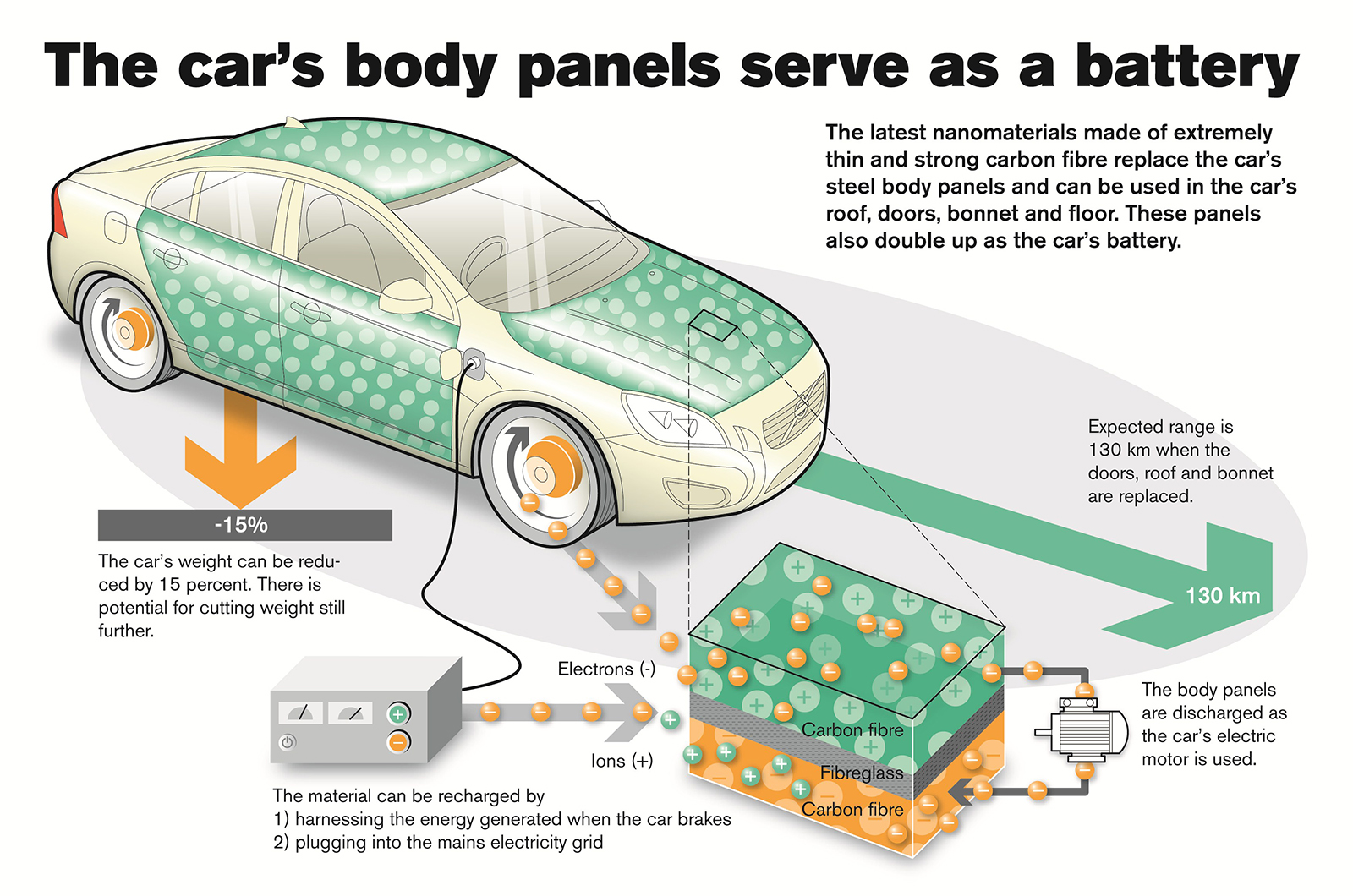
A new material consisting of carbonfibre, polymer resins and 'nanostructured batteries and supercapacitors' could allow body panels and structural components within the car to function as storage units for electrical energy.


The material can be moulded and formed to replace different parts. So far the composite has been used to form a boot lid and spare wheel well, reducing the size and weight of the batteries required in the vehicle, as well as maximising space and reducing overall weight.


Volvo claims that the boot lid alone could potentially supply enough energy to allow for the removal of the the standard batteries found in today's car, while also being faster to charge than a conventional battery.


An intake plenum cover has also been formed from the material, and is reputed to be powerful enough to 'supply energy to the car's 12-volt system'. Its strength permitted the integration of a strut brace, and its energy capacity allowed for the removal of the dedicated stop/start battery, saving 50 per cent in weight compared to the standard items.


After three years of testing, the experimental storage material has been fitted to a Volvo S80 test car. The company believes that substituting the components of an electric car with its new material could reduce overall weight by more than 15 per cent. On a current standard entry-level S80, the 1585kg kerb weight would be reduced to around 1348kg

Like conventional hybrid and electric vehicles, the car is charged by plugging into a power source and also by using brake energy regeneration.

The project, funded through the EU, includes nine other participants - of which Volvo is the only vehicle manufacturer. Its purpose has been to find alternative solutions to the large, heavy and expensive batteries used by today's hybrid and electric vehicles.


Volvo says electric cars will play "an important role" in its future product portfolio.

35027_1_5.jpg
134241_1_5.jpg
 
Já faz uns 2 anos que tinha lido sobre esta tecnologia.
Resolve vários problemas de uma só vez como peso e packaging
Esperemos que consigam torná-la em algo viável. Pelo menos no mundo dos hibridos e eléctricos já deverá ser concorrencial no que toca a custos.
 
Volvo interessada nos recarregamentos elétricos sem fios

134701_5_6.jpg

Si l’autonomie est régulièrement citée comme étant le principal défaut des véhicules, le deuxième défaut qui en découle est le fait de devoir brancher fréquemment son véhicule pour le recharger. A ce sujet, Volvo vient d’achever une première phase d’un projet-recherche visant à recharger un véhicule électrique sans l’aide de câble.

La recharge par induction pourrait être une avancée considérable pour les véhicules électriques. Au lieu de brancher le câble électrique, le conducteur n’aurait plus qu’à stationner son véhicule à son emplacement habituel sans aucune intervention supplémentaire pour que les batteries se rechargent.


Volvo s’est associé à un projet de recherche mené par Flanders DRIVE. Il s’agit d’une association à but non lucratif basée à Lommel (Belgique), non loin du centre d’essais de Ford. Elle se veut un centre de connaissances de l’industrie
automobile en Flandre, partie de la Belgique qui rassemble de nombreuses usines (Volvo à Gand, Ford à Genk, Opel à Anvers,…).


Le projet a été mené en collaboration avec 9 entreprises et 2 universités. Volvo a fourni une C30 électrique pour la mise en oeuvre du projet. Selon les derniers tests, il a été possible de recharger complètement les batteries d’une capacité de 24 kWh en 2 heures et demie dans le cadre d’une charge rapide.

La recharge par induction consiste en une bobine placée dans l’émetteur (la borne de recharge) qui crée un champ électromagnétique. Une seconde bobine à induction, placée sous le véhicule, convertit ce champ en énergie électrique apte à recharger la batterie du véhicule.

Les différents essais menés dans le cadre de ce projet semblent démontrer que les champs électromagnétiques n’ont qu’un impact très limité sur l’environnement et les personnes à proximité du véhicule. A ce jour, il n’a pas été établi quel était le rendement de ce type de recharge dans le cadre d’un véhicule électrique (le rendement d’une recharge par induction étant intrinsèquement plus faible qu’une recharge par câble).

S’il n’est pas encore question de commercialisation, Volvo continuera durant les prochaines années à faire des recherches sur ce type de solution afin d’évaluer la faisabilité et la viabilité dans le cadre d’une production en série.

Source: Volvo
 
Volvo S60, les nouveaux moteurs Drive-E arrivent


Volvo-S60-D4.jpg


Volvo va peu à peu se dégager de ses liens avec Ford en implantant sa nouvelle famille de moteurs dans ses différents modèles. Une nouvelle génération qui permet par exemple à la S60 de passer sous les 100 g/km avec un diesel de 181 ch.

Développés sous le code VEA (Volvo Engine Architecture), ces moteurs sont à présent déployés dans la gamme sous l’appellation Drive-E. Une nouvelle famille de moteurs pour lesquels Volvoa cherché à maximiser les composants communs entre essence et diesel, et qui remplacera prochainement l’ensemble des moteurs de la gamme. Adieu 5 et 6 cylindres, tous les modèles recevront un 2,0l turbo, jusqu’à 230 ch en diesel, et jusqu’à 306 ch en essence.

Pour débuter, ce sont les S60, V60, V70, XC70 et S80 qui vont profiter d’ici la fin de l’année des différentes motorisations, puis le nouveau XC90 début 2014. La première du lot sera donc la S60, avec les moteurs 76, T5 et D4.

En essence, le T6 développe donc 306 ch. Volvo indique qu’elle sera la première de son segment à proposer un rapport puissance / émissions de CO2 de 2 ch/ g. Soit une valeur d’émissions à 149 g/km. Le T5 avec ses avec ses 245 ch réclame 5,9 l/100 km et se voit donc homologué à 137 g/km.

Pour le diesel, avant de développer la gamme, le constructeur suédois met en avant une version conciliant performances et émissions. Le D4 développe 181 ch, et se voit homologué à 3,8 l/100 km et 99 g/km d’émissions de CO2.


Volvo-Drive-E.jpg


in: Volvo S60, les nouveaux moteurs Drive-E arrivent | le blog auto
 
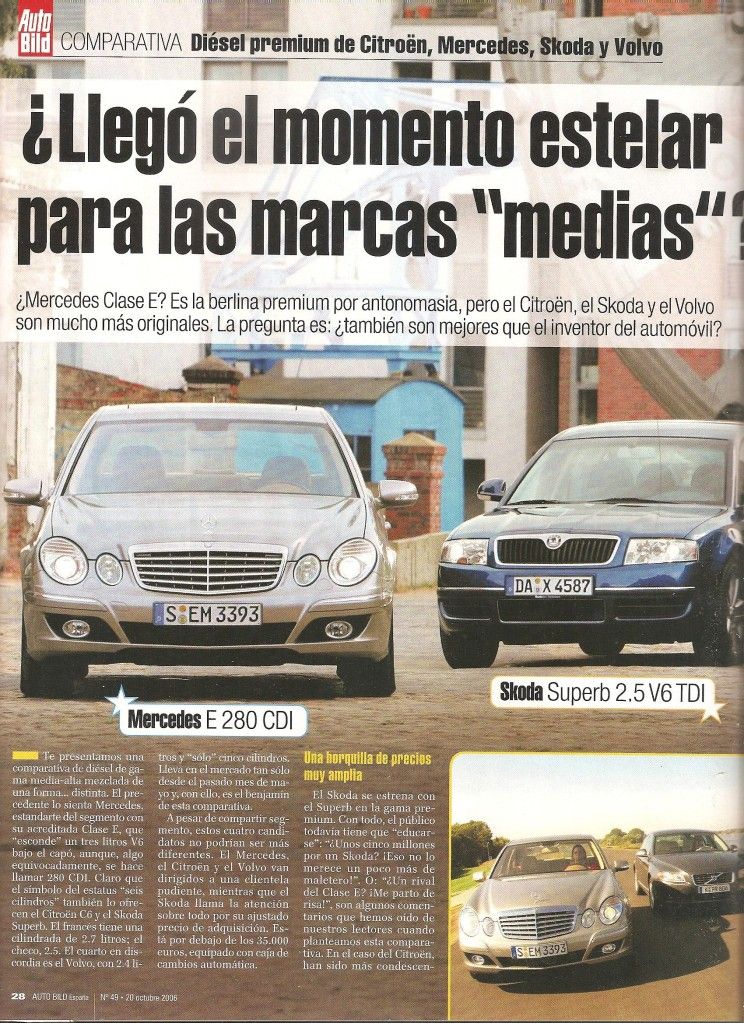
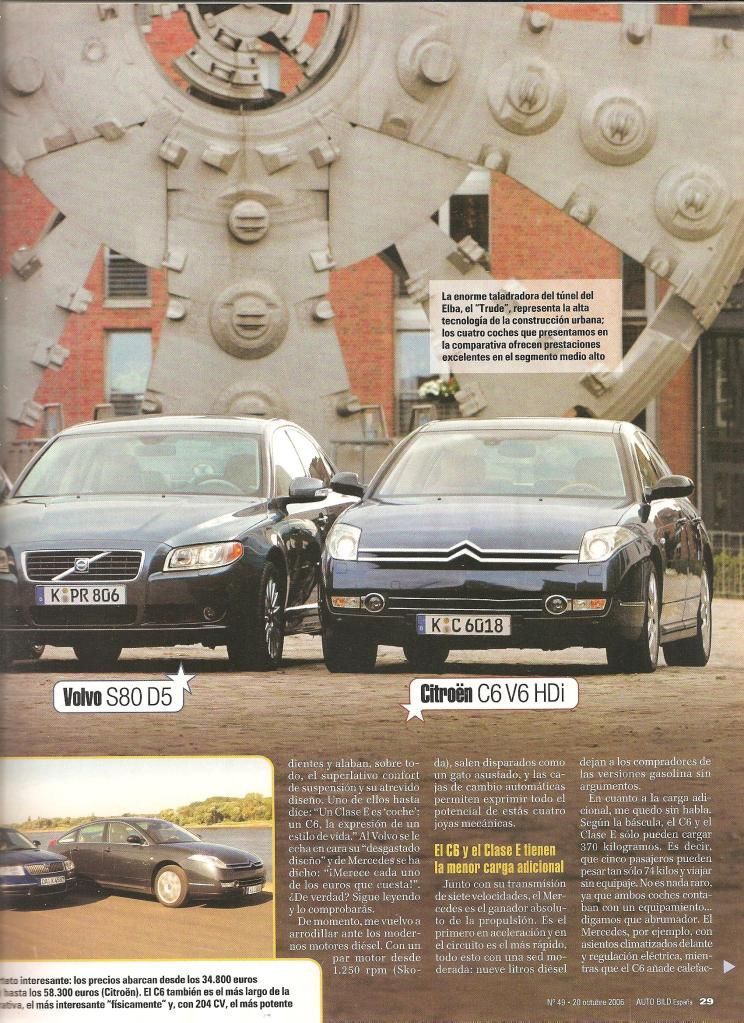
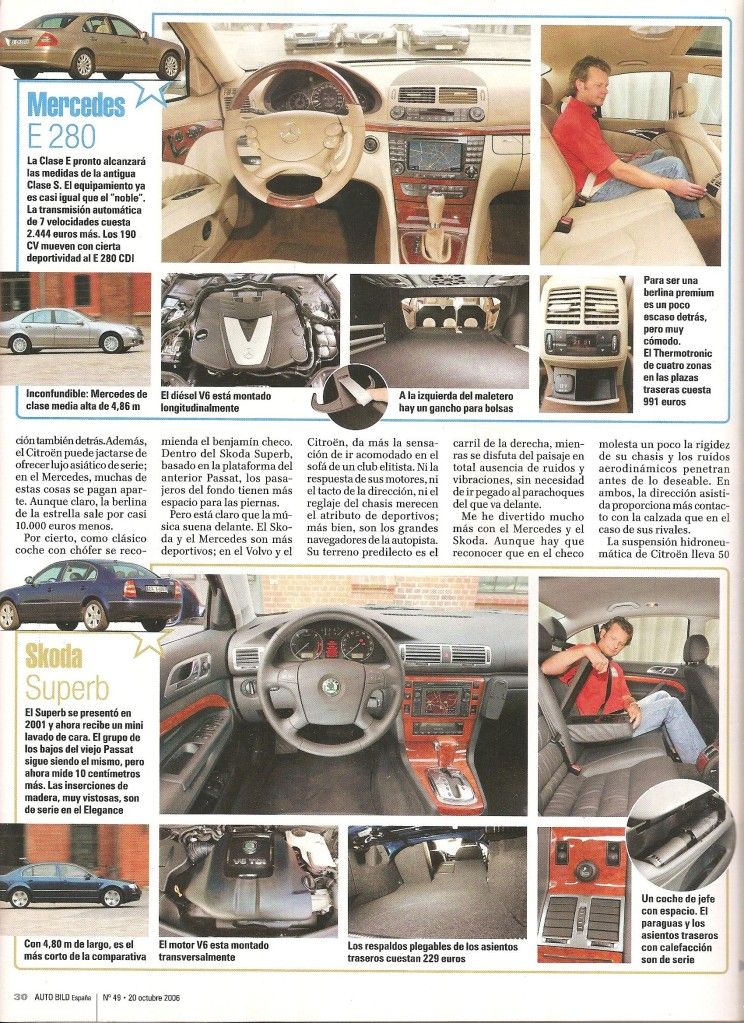
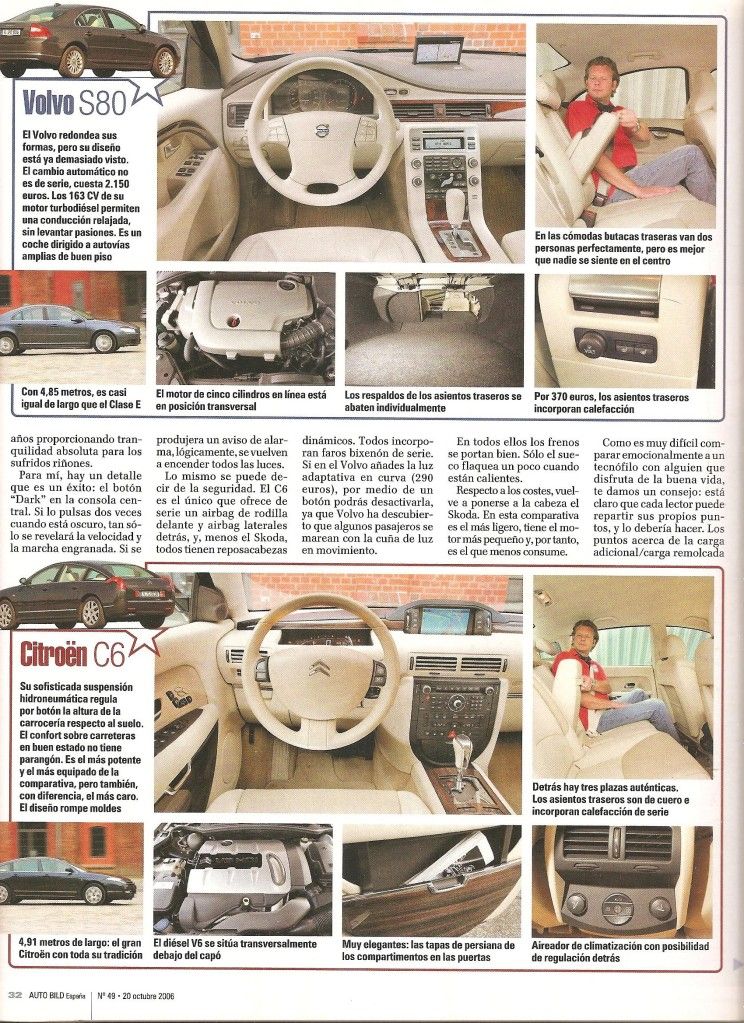
Está para chegar, novos motores a 4 cilindros, tanto gasolina como a diesel.

Sendo um deles, será o novo 2.0 D de 120cv, sendo que é pressuposto, o mesmo tomar o lugar do 1.6.


De nouveaux moteurs chez Volvo


Volvo vient de présenter une toute nouvelle gamme de moteurs. Il s'agit de 4 cylindres d'ores et déjà conformes aux nomes d'émissions Euro 6.


Avec ces nouvelles motorisations, le constructeur suédois ambitionne surtout de diminuer les émissions de CO2. Toutes ces mécaniques sont des 2 litres 4 cylindres, qui utilisent tous la même architecture de base - comprenez le même bloc cylindres - que ce soit en essence ou en diesel. Le nouveau 2.0 diesel se décline en plusieurs niveaux de puissance, compris entre 120 et 184 ch. Volvo utilise sur ces moteurs des injecteurs d'un type particulier qui permettent de contrôler la combustion. On peut ainsi optimiser le fonctionnement du moteur ce qui simplifie la dépollution. Les émissions sont ainsi revues à la baisse et le coûteux filtre à particules dure plus longtemps. Quant aux 2.0 essence, il est aussi proposé en plusieurs puissances. La version la plus musclée, dopée par un turbo et un compresseur, est annoncée pour 300 ch. Ces nouveaux 4 cylindres Volvo sont construits sur les mêmes lignes de production et remplacent aussi bien les anciens 5 cylindres diesel que les 6 cylindres essence. A terme, Volvo prévoit une version hybride du 2.0 essence qui sera suffisamment puissante pour prendre la succession du 8 cylindres. Ces nouveaux moteurs vont faire leurs débuts dans les Série 60 (S60, V60, XC 60).


in: De nouveaux moteurs chez Volvo - Auto - Actualité - LeVif.be
 
800 millones de euros públicos para Volvo en China
2015-volvo-xc90-001-1377766306.jpg

Volvo anunció ayer que se ha asegurado una línea de crédito por valor de nada menos que 800 millones de euros, que le proporcionará el Banco de Desarrollo de China, entidad gubernamental. El objetivo de este préstamo es ayudar a la firma sueca al desarrollo de productos dirigidos al mercado chino, que se ha convertido ya desde hace un par de meses en el principal motor comercial de la firma.

Estas ayudas, obtenidas gracias a que Volvo forma parte de Geely, servirán para consolidar el desarrollo de la nueva plataforma modular y motores modulares de los suecos, que se transformarán en productos comerciales arrancando por el XC90 de nuevo cuño.

El gran SUV de la marca debería tener su principal foco de ventas en el gigante asiático y en Estados Unidos.
 
Volvo irá lançar o 1º teste à escala mundial de carros autónomos

Volvo is to begin field trials of self-driving cars in order for its cars to handle real-world situations without the input of a driver

volvo-autonomous-driving.jpg

100 cars will be involved in the trial in Sweden

Volvo says it is to launch a real world test of 100 self-driving cars in Gothenburg in 2017.

The project is called ‘Drive Me’ and is a joint initiative between Volvo, the Swedish Transportation Administration, the Swedish Transport Agency, Lindholmen Science Park and Gothenburg local government.

The cars will be used on ‘public roads in everyday driving conditions’ on 50 kilometers of ‘typical commuter arteries, including motorways and frequent queues.’
The project kicks off in 2014 with ‘customer research and technology development’ and will then move into designing a ‘user interface and cloud functionality’ before the first prototype cars are used by members of public.

“Our aim is for the car to be able to handle all possible traffic scenarios by itself, including leaving the traffic flow and finding a safe ‘harbour’ if the driver for any reason is unable to regain control,” said Erik Coelingh, Technical Specialist at Volvo Car Group.

Volvo says the vehicles in the pilot project are defined as ‘Highly Autonomous Cars’, which means that the ‘vehicle can handle all driving functions at the driver's discretion. The driver is expected to be available for occasional control but with a sufficiently comfortable transition time.’

The project also includes fully automated parking, without a driver in the car. The intention is that the driver can walk away from the car and the vehicle will then find a vacant spot and park itself. The prototype Volvo cars will be based on the brand’s new Scalable Product Architecture(SPA).
 
As tecnologias de segurança da volvo estão aí para ficar e durar.
A nova plataforma ultra-leve e resistente poderá admitir sistemas de segurança e motorizações diferentes sem grandes problemas nem encargos.

Se o atual XC90 continua a dar provas de ser um dos mais seguros carros do mundo e recorreu a apenas 7% de aço formatado a altas temperaturas, então o que se irá dizer da nova geração que subiu a sua utilização para 40%?

Os dados oficiais referem que dos acidentes de viação envolvendo Volvos modernos resultam 60% menos de lesões do que noutros carros a circular nas estradas suecas.
Para uma parte dos aficionados pelo mundo automóvel, isto pouco ou nada lhes diz, porque andam demasiado ocupados a medir pilinhas a ver se um carro tem mais um cavalo do que o outro ou se consegue 1 décima de segundo a menos de aceleração dos 0 aos 100km/h ou no circuito de Nurburgring, mas para mim e para muitas outras pessoas, o fator "segurança" é cada vez mais importante.
Acho notável, não só o que a Volvo tem feito ao longo dos anos, mas também o recente reforço ao nível da aposta na segurança. (e isto sem clubismos, porque nunca sequer tive um Volvo)
Novos sistemas tecnológicos da Volvo à prova do futuro

Volvo claims the electrical systems in its new SPA-based models will allow the quick integration of new technologies

volvo-spa.jpg

Volvo's Scalable Product Architecture is made from a strong and light mix of steels

Volvo’s new Scalable Product Architecture will feature a new “ground-breaking” electrical system that allows the firm to take advantage of the latest safety technology without the need for significant reengineering.

SPA-based Volvo models will have an electrical architecture that has four “domains”, connected to each other. Each control vehicle dynamics, safety, car body or infotainment functions.
It is designed to allow the integration of new technology, future-proofing SPA-based vehicles from the fast-paces development of microprocessor, sensor and camera technology.

R&D boss, Peter Mertens said: “Each master can be connected to every single unit in the whole architecture. This means that we have one single nerve system with full control over all the connections in the vehicle. This is unique in the industry.”

The new, patented SPA safety cage, with its mix of different steel grades – including boron steel – has been made stronger and smarter.
Volvo says its standard safety technology, such as airbags and seatbelts, continue to be enhanced. In SPA-based cars, for example, rear-mounted sensors will be used to activate the seatbelt pre-tensioners. Existing camera technology will be adapted to monitor lane departure and detect large animals and pedestrians in the dark.

A combination of adaptive cruise control with steer assist and front-mounted cameras will allow the next-generation XC90 to automatically follow the car ahead in queues and will form the basis of more advanced autonomous technologies in the future.

Volvo’s strategy boss, Jan Ivarsson said: “We retain our uncompromising attitude to offering superior crash protection. The new architecture opens up for further improvements. Seven per cent of the safety cage in the original XC90 was made of hot-formed boron steel. The structure in the upcoming all-new XC90 features over 40 per cent hot-formed steel, which translates into significantly improved strength but without adding mass or weight.”

The development of SPA is to be a crucial element in the firm’s commitment that no one should be killed or seriously injured in a new Volvo by 2020.
Already the Swedish Traffic Accident Data Acquisition services say that modern Volvos have a 60 per cent lower injury rate compared to the average modern vehicle in Sweden.
 
Última edição:
Voltar
Superior