Topico dos Crash-Tests ⚠️Euroncap- 10/10/2026

Com um ângulo tão pronunciado entre o pilar A e o tejadilho (já não se usa), é convidar ao desastre.

Acho que não é uma questão de "geometria".

Parte do problema foi o airbag não ter conseguido evitar o contacto da cabeça com o volante.
Aparentemente, não encheu devidamente.

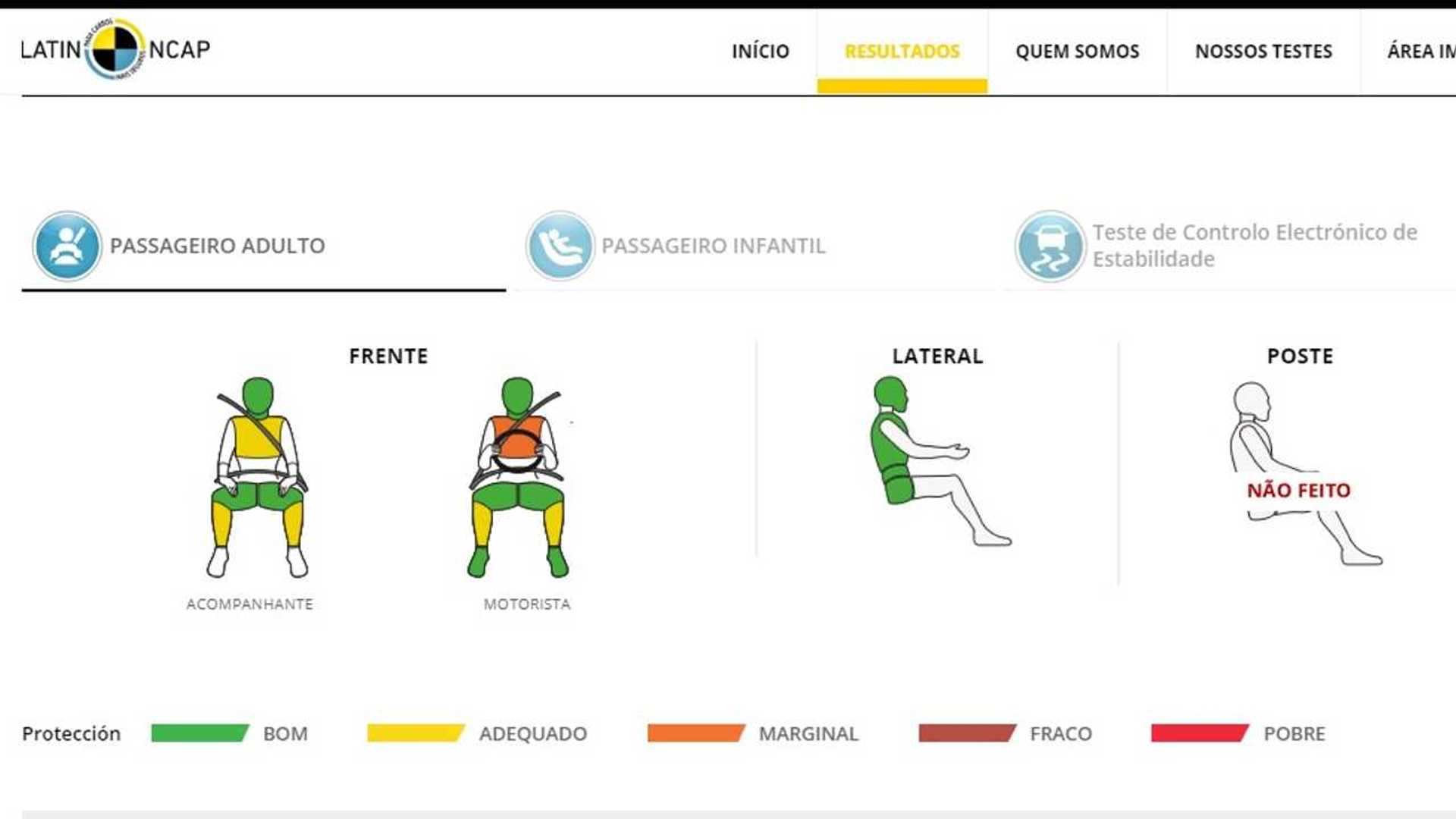
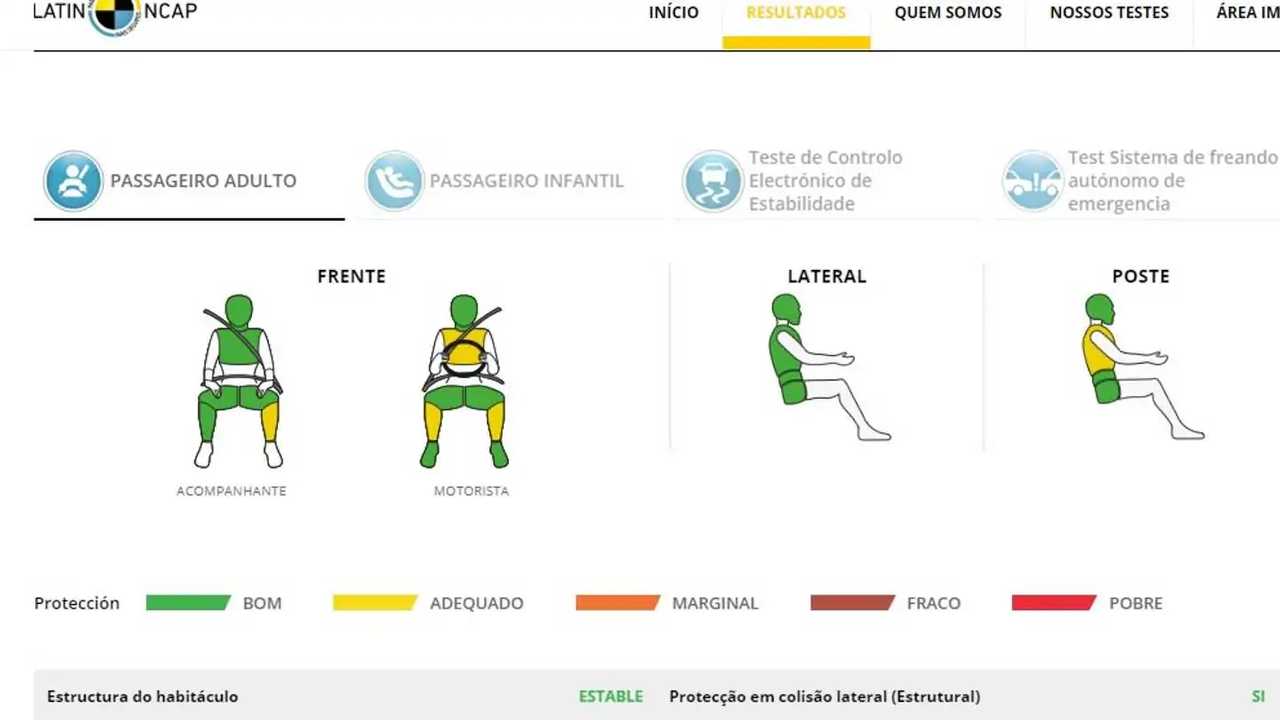
Mas mesmo assim, olhando para as cores nos "bonecos", tanto condutor como passageiro, há muito trabalho a fazer no Jimny além do problema no airbag.

Do meu ponto de vista, sem ter dados nenhuns que o corroborem, o facto de ser um chassis de longarinas, temos também um "aríete" que é o motor colocado longitudinalmente. Excelente para o propósito do carro, talvez não a melhor solução para crash-tests, sobretudo considerando as dimensões do Jimny, que, não esqueçamos, é um kei car.
Os centímetros a mais do Jimny europeu resumem-se a uns para-choques mais volumosos e vias mais largas. A carroçaria em si mantém as mesmas dimensões mínimas.
 
Tens a certeza? Os key car só podem ter até 3,30 m, salvo erro. Muitas vezes as versões que se vendem para fora do Japão são mesmo modelos à parte, consideravelmente maiores, apesar de manterem a estética e muitas vezes até a designação. Um exemplo era o Pajero Pinin. O key car japonês era ainda consideravelmente mais pequeno que a versão vendida um pouco por todo o mundo.
 
Tens a certeza? Os key car só podem ter até 3,30 m, salvo erro. Muitas vezes as versões que se vendem para fora do Japão são mesmo modelos à parte, consideravelmente maiores, apesar de manterem a estética e muitas vezes até a designação. Um exemplo era o Pajero Pinin. O key car japonês era ainda consideravelmente mais pequeno que a versão vendida um pouco por todo o mundo.


Sim, são 3,30m o tamanho máximo e os motores só podem ser até 660cm3.
 
Tens a certeza? Os key car só podem ter até 3,30 m, salvo erro. Muitas vezes as versões que se vendem para fora do Japão são mesmo modelos à parte, consideravelmente maiores, apesar de manterem a estética e muitas vezes até a designação. Um exemplo era o Pajero Pinin. O key car japonês era ainda consideravelmente mais pequeno que a versão vendida um pouco por todo o mundo.

Certezinha absoluta. [:D]
Os mais de 3,6 m do Jimny refletem-se nos para-choques mais volumosos e no pneu montado na bagageira.
Retira o pneu atrás, e o Jimny "europeu" tem apenas 3,48 m de comprimento, o que são apenas 8 cm mais relativamente aos 3,40 m obrigatórios dos kei cars.
A largura extra é justificada pelos alargamentos em plástico nas cavas das rodas que adicionam +/-16 cm à largura total do jimny e também permitem vias mais largas.

É fácil ver a diferença quando colocamos lado a lado o Jimny e o Jimny Sierra (a versão vendida na Europa). A carroçaria mantém-se igual nos dois, só temos é mais plásticos.

12.jpg
 
Global Ncap-2/11/2018
Trio of Three Stars but shocking Zero for the Nissan ‘Hardbody’

Nissan-NP300-web.jpg


Nissan NP300 ‘Hardbody’


The NP300 ‘Hardbody’ achieved an alarming zero star rating for its poor adult occupant protection mainly in the driver head and chest areas in the frontal crash test at 64km/h. The vehicle structure collapsed during the crash test and it was rated as unstable. The steering wheel column did not collapse penetrating the passengers’ compartment, creating an additional risk for the driver as it moved straight into the dummy chest. This performance showed a significant risk of injuries for the driver despite the car being equipped with double frontal airbags. The high probability of life threatening injuries to the driver’s head and chest resulted in the zero star adult occupant protection rating. Even with an airbag the driver’s head and chest showed high biomechanical readings. The NP300 ‘Hardbody’ achieved two stars for child occupant protection, the low result is mainly explained by the decision of the car manufacturer to install one of the Child seats without following Child seat manufacturer clear instructions

http://globalncap.org/wp-content/uploads/2018/11/NissanNP300.pdf

Toyota Yaris
The Yaris achieved a three star rating for adult occupant protection in the frontal crash test at 64km/h. The vehicle structure was rated as unstable and offered marginal to good general adult occupant protection. The car provides seat belt reminders for both frontal positions. The car included seatbelts with pretensioners for both front passengers. Using the child seats recommended by Toyota, the Yaris achieved a three star rating for child occupant protection.

http://globalncap.org/wp-content/uploads/2018/11/ToyotaYaris.pdf

Hyundai i20
The i20 achieved a three star rating for adult occupant protection in the frontal crash test at 64km/h. The vehicle structure was rated as unstable as well as the footwell area. The protection levels ranged from marginal to good in adult occupant protection. The car offers seatbelt pretensioners for both front passengers and seatbelt reminder for the driver. Using the child seats recommended by Hyundai, the i20 achieved a two star rating for child occupant protection explained by the limited protection offered to the 3 year old dummy and lack of ISOFIX anchorages. The i20 structure is different to that of the European model. Safety equipment in South Africa does not offer Electronic Stability Control (ESC), side body airbags and side curtain airbags which are standard in Europe

http://globalncap.org/wp-content/uploads/2018/11/Hyundaii20.pdf

Kia Picanto
The Picanto achieved a three star rating for adult occupant protection in the frontal crash test at 64km/h. The vehicle structure was rated as stable while the footwell area was rated as unstable. The car offers seatbelt pretensioners for both front passengers and seat belt reminder for the driver only. Using the child seats recommended by Kia the Picanto achieved a two star rating for child protection. The detachment of the ISOFIX anchorages for the 3 years old CRS during the test explains the low score for child occupant protection. The manufacturer did not yet offer an explanation to this problem, but the child seat manufacturer which is also investigating, took immediate action and removed the Picanto from their recommended list of cars for this CRS model.
Global NCAP awards a separate child safety rating to each car in order to highlight the different levels of protection vehicles provide to passengers on the rear seats. Because the only safe way for young children to travel is properly restrained in a child seat, the assessment checks how compatible the car is with the child seats recommended by the manufacturer, as well as the protection provided in the crash test. Airbags are not a substitute for seatbelts, passengers must always wear seatbelts.
Only the Yaris and Picanto offered standard ISOFIX anchorages for child restraint systems (CRS). The NP300 Hardbody showed incompatibilities with the recommended CRS. Only the Yaris offered three-point seatbelt for all passengers facilitating the required conditions to safely install a child seat in all seating positions, while all the others offered a lap belt in the middle position which makes it impossible to properly install a CRS.

http://globalncap.org/wp-content/uploads/2018/11/KiaPicanto.pdf
 
Acho que não é uma questão de "geometria".

Parte do problema foi o airbag não ter conseguido evitar o contacto da cabeça com o volante.
Aparentemente, não encheu devidamente.

Mas mesmo assim, olhando para as cores nos "bonecos", tanto condutor como passageiro, há muito trabalho a fazer no Jimny além do problema no airbag.

Do meu ponto de vista, sem ter dados nenhuns que o corroborem, o facto de ser um chassis de longarinas, temos também um "aríete" que é o motor colocado longitudinalmente. Excelente para o propósito do carro, talvez não a melhor solução para crash-tests, sobretudo considerando as dimensões do Jimny, que, não esqueçamos, é um kei car.
Os centímetros a mais do Jimny europeu resumem-se a uns para-choques mais volumosos e vias mais largas. A carroçaria em si mantém as mesmas dimensões mínimas.

A questão é que se a junção entre o pilar A e o tejadilho não aguentar as cargas, não há airbag que o valha. E não há carro no mercado (que eu esteja a ver) com um ângulo semelhante.
Forma acima da função. Em segurança já não se usa.
 
A questão é que se a junção entre o pilar A e o tejadilho não aguentar as cargas, não há airbag que o valha. E não há carro no mercado (que eu esteja a ver) com um ângulo semelhante.
Forma acima da função. Em segurança já não se usa.

Os tipos do Euro NCAP nunca referem a questão do pilar A.
In the frontal offset test, there was insufficient pressure in the driver's airbag to prevent it from 'bottoming out', allowing the head to contact the steering wheel.
The score for the head was penalised for the behaviour of the airbag and the displacement of the steering wheel, and protection for this part of the body was rated as marginal.
The passenger compartment was extensively deformed in the offset test, especially around the door-frame and the score for the driver's chest was penalised for this unstable collapse. Combined with marginal dummy readings, protection for this body area was rated as weak.
Although dummy readings indicated good protection of the knees and femurs of both driver and passenger, structures in the instrument panel and dashboard were thought to pose a risk of injury to occupants of different sizes, and protection was rated as marginal.

In the full-width, rigid-barrier impact protection of the head of the rear passenger dummy was rated as weak, based on dummy readings during the test and protection of the chest of both driver and rear passenger was marginal.
Tests on the front seats and head restraints showed marginal protection against whiplash injury in a rear impact. A geometric assessment of the rear seats indicated good protection.

The standard-fit autonomous emergency braking (AEB) system performed well in tests of its functionality at the low speeds, typical of city driving, at which many whiplash injuries are caused. However, the Jimny did not qualify for these points as Euro NCAP requires good head restraint performance as a pre-requisite for AEB points.

De acordo com o que se lê aqui não me parece que o problema esteja na verticalidade do pilar A.
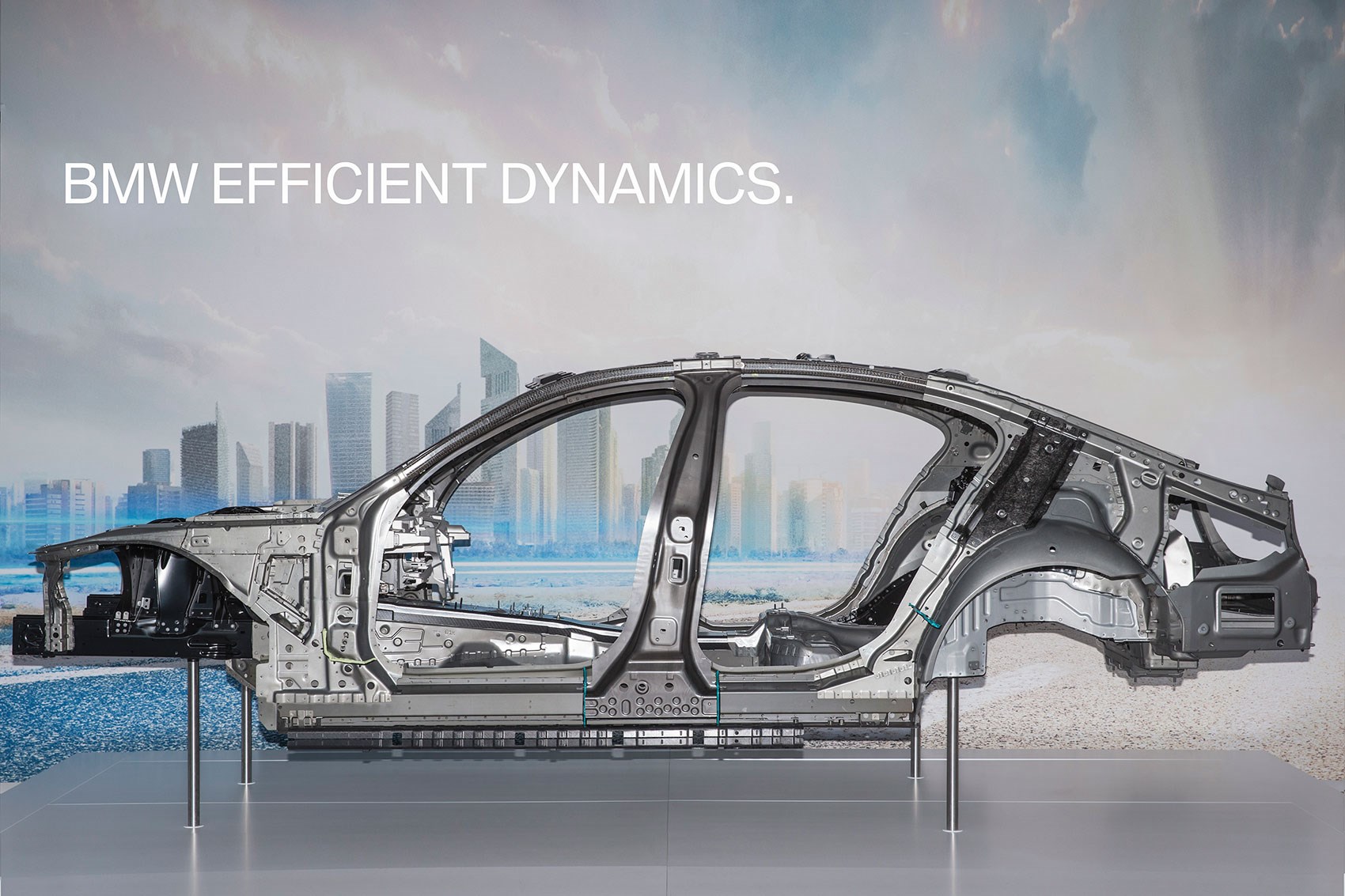
E mesmo numa carroçaria monobloco, a inclinação do pilar A é só mesmo na sua parte superior.

bmw7-series_14.jpg


Interessa, realmente, que o pilar A aguente os esforços, mas não só na junção com o tejadilho, mas sobretudo na base do pára-brisas, onde este se une com o término da "crash-box", que é onde o Jimny cede, como dá para ver nos vídeos. É para onde a energia do embate é maioritariamente canalizada nos crash-test com desfasamento frontal.

O Jimny tem muito contra ele: motor longitudinal, chassis de longarinas e travessas (carroçaria separada do chassis) e é muito curto. A verticalidade do pilar A não me parece o problema.

E alguns dos problemas reportados acho que podem ser "facilmente" corrigidos. Melhores bancos; tablier, ou melhor, as estruturas que o suportam, redesenhados para reduzir possíveis contactos com membros inferiores; e a questão do airbag pode ser corrigida com outro de maior volume ou então pode ser apenas uma questão de calibração para que encha devidamente na altura certa.


[h=1]Nissan NP300 Hardbody Gets Terrifying Zero-Star Crash Rating[/h]
[h=2]The steering column didn't move out of the way and struck the crash test dummy in the chest.[/h] Global NCAP and the Automobile Association South Africa want to improve auto safety in Africa. As part of this campaign, they recently crash tested the South African market's NP300 Hardbody pickup, and the truck received a woeful zero-star rating in the evaluation. Global NCAP predicted adults riding in the truck were at risk for "a high probability of life-threatening injury in a crash."


If the NP300 Hardbody stirs a confusing sense of nostalgia in you, it might be because of the truck's absolutely ancient underpinnings. This pickup arrived as the Frontier in the United States in 1997, and Nissan launched a replacement in 2004. In other parts of the world, the truck carried the Navara model name. In South Africa, Nissan introduced later generations of the Navara while also keeping this old vehicle on the road.
The Global NCAP frontal crash test launched the pickup going 64 kilometers per hour (40 miles per hour) into a barrier. The truck's structure collapsed in the collision, and the steering column collided with the driver dummy's chest. The safety agency rated Poor protection to the driver's head, chest, and feet. It also gave passenger safety at Marginal for the chest and left leg, in addition to Weak for the right leg.

"The NP300 Hardbody is ridiculously misnamed as its body shell has collapsed," David Ward, Secretary General of Global NCAP said in the results' announcement. "Nissan also claims the car benefits from a so-called safety shield but this is grossly misleading. Our test shows that the occupant compartment completely fails to absorb the energy of the crash resulting in a high risk of fatality or serious injury."
As part of this round of tests, Global NCAP and the Automobile Association South Africa also tested the Hyundai i20, Kia Picanto, and Toyota Yaris. All three of them received three-star ratings.


in: https://www.motor1.com/news/275482/nissan-np300-hardbody-crash-test/
 
Pelo que se pode observar por este video, do NHTSA o Jeep Wrangler também sofre do mesmo mal, que o novo Suzuki Jimmy


O carro dobra ao meio na zona do pilar central, e imediatamente à frente do parabrisas

Até no teste do IIHS a carroçaria denota estar, no limite

api-rating-image.ashx


api-rating-image.ashx
 
Última edição:
Voltar
Superior