[h=1]Good ratings for 5 small SUVs in passenger-side small overlap crash test[/h]http://www.iihs.org/iihs/news/desktopnews/good-ratings-for-5-small-suvs-in-passenger-side-small-overlap-crash-test
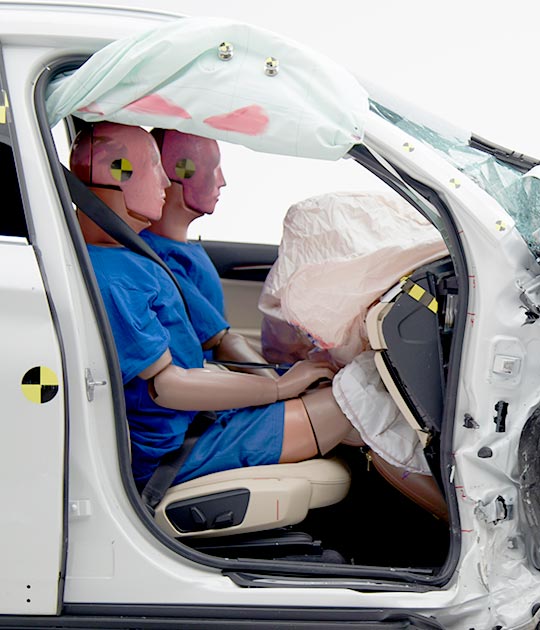
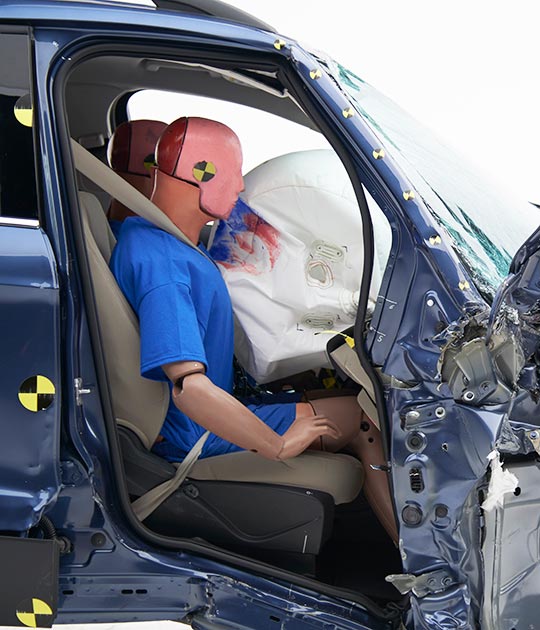
The passenger's survival space was maintained reasonably well in the BMW X1 (left) test. In contrast, the Ford Escape's (right) occupant compartment allowed too much intrusion.
None of the newly rated 2018 models earns better than acceptable marks for structure. (The Honda CR-V and Mazda CX-5 are the only small SUVs evaluated so far to earn good ratings for structure in the passenger-side small overlap front test.) The Outlander Sport is marginal, and the Escape is rated poor. Both the Outlander Sport and Escape allowed too much intrusion into the occupant compartment on the right side.
The Escape struggled in the test, as intruding structure seriously compromised space for the right-front passenger. Intrusion measured 10 inches at the upper door-hinge pillar, compared with 5 inches in the driver-side test. The passenger-side door sill was pushed 4 inches laterally into the occupant compartment. Measures taken from the dummy indicate that right hip injuries would be likely in a real-world crash of this severity.
Starting with 2017 models, Ford reinforced the structure on the driver side of the Escape to improve occupant protection in a small overlap front crash but didn't make the same change to the passenger side. The Escape earns an acceptable rating in the driver-side small overlap front test.
"Disparities like this one are why we decided to formally rate the passenger side in the small overlap test after five years of evaluating only the driver side," says Becky Mueller, a senior research engineer with the Institute who helped develop the passenger-side small overlap front test. "Manufacturers shouldn't shortchange protection for front-seat passengers."
The X1's structure resisted intrusion reasonably well to maintain the passenger space. The safety belt and front and side curtain airbags worked together to keep the dummy in place, and measures taken from the dummy showed there would be a low risk of injury in a similar real-world crash.


]