
You are using an out of date browser. It may not display this or other websites correctly.
You should upgrade or use an alternative browser.
You should upgrade or use an alternative browser.
Tópico Fiat
- Thread starter GTJTD
- Start date


reckoner00
New member
Já é conhecido o novo nome do Grupo Fiat-Chrysler
Fiat Chrysler Automobiles NV se llama, y su domicilio está en Holanda
Fiat Chrysler Automobiles NV se llama, y su domicilio está en Holanda
Se acabaron las conjeturas. Siguiendo un camino similar al ya recorrido por la división industrial de Fiat, CNH Industrial NV, separada de la de automóviles de turismo, hace unos meses, Fiat ha decidido que, tras su fusión con Chrysler, la sede social de la compañía conjunta pase a estar en Holanda, aunque pagando sus impuestos en Gran Bretaña.
Además, la nueva sociedad, que se denominará Fiat Chrysler Automobiles NV, cotizará en la NYSE (la bolsa de Nueva York), aunque tendrá cotización secundaria en Milán.
La compañía ha asegurado en un comunicado que, a pesar de esta decisión, no habrá despidos en las sedes de Detroit o Turín de ambas firmas, quedando la gestión "convencional" de las firmas tal y como estaba hasta ahora. Situarse en Holanda y declarar impuestos en Gran Bretaña permitirá maximizar el rendimiento de sus resultados económicos, de acuerdo con los analistas.
reckoner00
New member
reckoner00
New member
Fiat poderá comprar tecnologia hibrída à Toyota

Despite being a market in a deep crisis, the car is still an important part in many Italian lives. This was proven by the imposing ‘Quattroruote Day’, a yearly happening of the 58 year old Italian car magazine. Important people in the industry from over the entire world get honored and even give a speech. It was a friendly Italian-Japanese gathering earlier this week, as Toyota-boss Takeshi Uchiyamada was key speaker. The foreman of the world’s biggest automotive group turned out to be impressed by the resilience of the Italian company Fiat, which is – as everybody knows by now – in the meantime the owner of Chrysler.
Uchiyamada even called Fiat some kind of strategic partner and mentioned the willingness to sell strategically important hybrid technique, something in which the Japanese have been excelling the past few years. This would not be the first cooperation for Toyota, as they’re doing the same with BMW right now. All three are common competitors of that big group from Wolfsburg

gtabarth
New member
Tanta tanta treta e a Europa é uma treta.
Moedas únicas, Impostos diferentes.
Uma fantochada esta União Europeia.
Eu parece-me que o UK nunca esteve na Europa, LOL
Sede na Holanda, Impostos no UK, bolsa nos EUA.
Enfim.
Porque é que Portugal nunca apanha uns tubarões assim?
São Holandeses, Ingleses... tipo como... como no tempo dos Piratas dos 7 Mares. Já nessa altura Ingleses e Holandeses em maioria.
Moedas únicas, Impostos diferentes.
Uma fantochada esta União Europeia.
Eu parece-me que o UK nunca esteve na Europa, LOL
Sede na Holanda, Impostos no UK, bolsa nos EUA.
Enfim.
Porque é que Portugal nunca apanha uns tubarões assim?
São Holandeses, Ingleses... tipo como... como no tempo dos Piratas dos 7 Mares. Já nessa altura Ingleses e Holandeses em maioria.

ASAS
New member
Tanta tanta treta e a Europa é uma treta.
Moedas únicas, Impostos diferentes.
Uma fantochada esta União Europeia.
Eu parece-me que o UK nunca esteve na Europa, LOL
Sede na Holanda, Impostos no UK, bolsa nos EUA.
Enfim.
Porque é que Portugal nunca apanha uns tubarões assim?
São Holandeses, Ingleses... tipo como... como no tempo dos Piratas dos 7 Mares. Já nessa altura Ingleses e Holandeses em maioria.
Realmente...[:vm)][:vm)][:vm)]
Os grandes grupos, não pagam os impostos onde são devidos, mas sim onde lhes convém mais...
E não é por acaso que o RU faz parte da EU, embora sejam sempre do "contra"...
Se não fossem estas "manhas" financeiras, coitada da economia inglesa... mas há outros, como a Holanda, Luxemburgo, etc; tudo a "viver" à custa dos impostos pagos por terceiros (nós)!!!
Mais tarde ou mais cedo, terá que haver uma revolução fiscal a nível global (ou pelo menos, europeu!) senão uns vão continuar a viver à custa do "roubo" aos outros, e, qualquer dia, as coisas dão para o torto...:sh)
reckoner00
New member
[h=1]Maserati boom signals Fiat saying 'arrivederci' to its Italian past[/h]

Remember Fiat? It made its name building millions of modest cars like the tiny 500 and 600 hatchbacks in the 1960s and '70s.Sergio Marchionne wants you to forget that Fiat. With the automaker now the full owner of U.S.-based Chrysler, Marchionne -- the CEO of the group -- is shifting away from the European mass market and, in the process, reshaping Italian industry.
To understand his vision, travel to Grugliasco, a suburb of Fiat's hometown of Turin. There, in a plant Fiat bought in 2009 from Bertone, a bankrupt design shop and contract manufacturer, workers in trim blue uniforms turn out about 150 Maserati sedans a day.
The sumptuous speedsters swathed in acres of soft leather bear little resemblance to a classic 500 or 600. "These models are a big step forward," Paolo Rapana, head of the final inspection team at Grugliasco, said as a line of sedans in colors such as Siena Bronze and Blue Passion paraded slowly by behind him. "We're the only plant in Italy working at full speed."
The same can't be said for Fiat's mainstay Mirafiori plant in Turin, a sprawling complex that in the 1970s churned out 600,000 autos a year. Today, it's almost abandoned, a vast zone of dilapidated buildings and weed-choked parking lots, as Fiat shifts its Italian operations from basic transport to upscale cars for wealthy Americans, Chinese and Europeans. For Mirafiori, that means production of a new Maserati crossover.
Ferrari margins
The change was sealed yesterday as the company said it will rename itself Fiat Chrysler Automobiles NV, with the parent holding company based in the Netherlands. The primary share listing will be on the New York Stock Exchange.
"The first encouraging signs of the potential of the premium strategy have now become visible with Maserati," Marchionne said on a conference call with reporters yesterday. The brand "had higher operating margins than Ferrari." It's said that every Italian has an opinion on two things: the "Azzuri" -- the national soccer team -- and Fiat. That means everyone from ministers to line workers feels entitled to second-guess Marchionne's plan, and across Italy there's a sense that it threatens the industrial heart of the country where Fiat was founded 115 years ago.
Fiat's production in Italy peaked in 1970, when it employed well over 100,000 people there and made 1.4 million cars. As recently as 2002, Italy accounted for more than a third of Fiat's revenue, and the company built more than 1 million vehicles at six plants in the country.
50,000 Maseratis
By 2013, Fiat's production in Italy had dropped below 400,000 autos and the country accounted for just 7 percent of global revenue. Less than 10 percent of the cars sold last year by the company, including Chrysler, were Italian-made as the bulk of the group's production has shifted to the U.S., Brazil, Poland and Serbia.
"We need a reality check," said Federico Bellono, the Turin chief of FIOM, Italy's biggest union, which represents thousands of Fiat workers. Marchionne pledged earlier this month to provide full employment to all of Fiat's 31,000 line workers in Italy by mid-decade. Last year, two thirds of them were furloughed for an average of four months.
Bellono doesn't discount the possibility of Fiat Group gaining traction in the luxury market after some initial success. Maserati, which targets selling some 50,000 autos next year, more than doubled deliveries to 15,400 in 2013. The brand's fourth-quarter profit surged to 123 million euros ($168 million) from 13 million euros a year earlier.
Lamborghini tires
Still, the labor leader questions whether Marchionne can bring back the kind of employment the company once offered and do much to dent Italy's jobless rate of 12.7 percent. "The notion that their upscale plan will fill all of the manufacturing capacity in Italy isn't possible," Bellono said.
Fiat's problems are emblematic of those faced by companies across Italy. In 2012, more than 1.6 million Italians were put on Cassa Integrazione Guadagni, a temporary layoff scheme partly funded by the government. That's three times the number in 2008. And Italian companies have to operate in a place that's notoriously difficult for doing business. Italy is placed 30th of 31 high-income countries in a 2012 World Bank ranking that accounts for factors such as the difficulty of enforcing contracts, getting credit and obtaining electricity.
Retro-cool
"For Italian manufacturers the only way to remain competitive and absorb higher costs is to go upscale," said Giuseppe Berta, a professor at Bocconi University in Milan and former head of Fiat's archive, pointing to tiremaker Pirelli, which equips high-end cars such as Porsche and Lamborghini, as a company that's made the shift. "It's clearly a long process that will leave Italy with a smaller, but more competitive, industrial sector."
If Marchionne is to reach his goal of making the new company one of the globe's top five automakers, he can't afford to abandon Fiat's Made-in-Italy cachet. The plan is to woo buyers from BMW, Audi and Mercedes-Benz with sporty models that represent Italian style. Maserati's high-end sedans, starting from $66,000 to $142,000, will attack the top of the Germans' lineups, while a rejuvenated Alfa Romeo will take on their mid-level offerings. Ferrari will continue to make its supercar racers, and Fiat's new 500 will round out the mix with small cars featuring the same combination of retro-cool as BMW's Mini.
'Very angry'
Silvia Fioretti is a believer in Marchionne's vision. The 47-year-old started at the Maserati factory in Grugliasco in November 2012 just as production was gearing up. Last May, she was promoted to team leader and now oversees seven workers. "I was really happy to get this job," Fioretti said, keeping a watchful eye on her team members as they inserted protective coverings into wheel wells and put on tires. "It would have been just as easy for Marchionne to go to America to build these cars."
For every worker like Fioretti, though, Fiat has two like Alessandro Lo Cascio. He made cars at Mirafiori for 15 years and was put on a Cassa Integrazione furlough in 2012. Mirafiori produced some 30,000 cars last year, less than 5 percent of the factory's output at its peak. It operated only a few days each month in 2013, calling up laid-off workers -- but not Lo Cascio. "I'm angry, very angry," said the 39-year-old, who hasn't worked in the past 18 months. "Fiat is leaving Italy, and I have serious doubt that we will all be rehired with the upscale plan," Lo Cascio said.
Italian Jeep
Fiat's problems extend far beyond Mirafiori. At Cassino, an hour and a half south of Rome by car, about 90 percent of Fiat's 3,900 workers spent more than 100 days on Cassa Integrazione, and new Alfa Romeos aren't expected to boost output before 2016. In Pomigliano, almost a third of Fiat's 4,800 workers were furloughed last year, for nearly 200 days, union data show. The 5,600 workers at Melfi, a two-hour drive east of Naples, are more fortunate. This year, they'll start producing an SUV variant of the new 500 and a small Jeep to be exported to the U.S. and elsewhere.
Marchionne has said he'll present a new business plan in May detailing his vision for Fiat's Italian factories. The company ended up on its knees through years of missteps. Fiat relied too heavily on Europe and, especially, Italy. It was burdened by rigid union contracts and a stiff corporate culture that saw its competitive edge erode.
Loyal to the brand
"Back when I started, you could really make a career at Fiat," said Fioretti's father, Elio, a former Fiat line worker who played saxophone in a company jazz band in the 1950s and drove a green 500 on his honeymoon in 1963. He spent 28 years at the company and remained loyal to the brand, owning some 30 Fiats over the years, until his latest car, when he bought an Opel because Fiat didn't offer the kind of vehicle he wanted.
Few would deny that Marchionne has revived Fiat. When the Italian-born manager, who grew up in Canada, took the helm in 2004, Fiat had lost more than 6 billion euros in the previous three years and was close to bankruptcy.
Marchionne, the fifth CEO in two years at the time, returned the company to profit in 2005 after wringing $2 billion from General Motors to end a failed alliance. To limit Fiat's dependence on Europe, which accounted for some 90 percent of revenue in 2004, Marchionne looked for an international partner, finally teaming up with Chrysler. Fiat, though, still lost 470 million euros in Europe last year.
"Fiat has managed to free itself from Italy, but Italy hasn't freed itself from Fiat," said Ugo Arrigo, a professor of public finance at Bicocca University in Milan. "Marchionne managed to transform a local producer into a global player at the expense of its roots in Italy."
Still, the transformation of Fiat into a more global and upscale carmaker also offers hope for workers like Fioretti at Maserati's Grugliasco plant. That in turn could be good news for the Italian economy
VitorPatricio
Banido
Com o custo da mão de obra europeia, só compensa produzir cá um produto premium. Produtos de margens esmagadas vão para a China. Nada de estranho, portanto.
Pois,... essas verdades custam a ouvir/ler

ClioII
Well-known member
Pois,... essas verdades custam a ouvir/ler
Não sei se custam... Repara: as fábricas antigas em Itália ficam a produzir Maserattis e/ou Alfas "dos bons". Menos carros por dia (dão mais trabalho) mas maior margem de lucro. Os carros mais baratuchos vão com produção para a Europa de Leste, Turquia, África, América do Sul ou China.
O importante é que as vendas sustentem o grupo! Se o produto de luxo ficar na Europa, até cria um certo élan. [
 ]
]VitorPatricio
Banido
Não sei se custam... Repara: as fábricas antigas em Itália ficam a produzir Maserattis e/ou Alfas "dos bons". Menos carros por dia (dão mais trabalho) mas maior margem de lucro. Os carros mais baratuchos vão com produção para a Europa de Leste, Turquia, África, América do Sul ou China.
O importante é que as vendas sustentem o grupo! Se o produto de luxo ficar na Europa, até cria um certo élan. [
Eu respondi na perspectiva do emprego, do numero de funcionários, actualmente muitos funcionarios italianos estão em Lay-off.

LIC
New member
reckoner00
New member
Fiat - Novos investimentos para a Alfa Romeo e Maserati

The day he announced that the new holding will be called Fiat Chrysler Automobiles LLC (FCA) is a historical one to Sergio Marchionne and one of the most important days of his career. The wish to operate on an international level was already there ten years ago, but the CEO yesterday admitted he only really started believing in it about five years ago. FCA is the result of a tireless attitude of everyone within the company and the faith that national barriers can be overcome.
Investment plans were still kept rather secret. “We have cleaned up – so to say – in terms of platforms and technique and will continue doing so in the next few years. Our plan especially focusses on Alfa Romeo and Maserati. The latter will soon get an SUV and also a new coupé at the end of 2015. This will be the successor to the GranTurismo. Analysts should not suppose there will be a constant growth because of these investments, though, as there are major costs involved. We are still working on the expansion of our current capacity. We will be telling you more on this matter in the next few months.”
Fiat’s investments for 2014 amount to a total of around 8 billion euros. That is half a million more than in 2013. Last year was ended with a slight increase of the global sales; +3% with 4,352 million cars. These results are mainly due to the sales in North-America and South-America (despite a small decrease on the latter) and growth in Asia. Marchionne hopes everything will go as well in 2014 as it did last year in Brazil, but especially looks forward to a turning point in 2015 when the new factory in Pernambuco will turn operational. Europe of course showed a decrease of 4% with 776.000 sold vehicles. The operating results of 3,4 billion euros turned out to be lower than the expected 3,6 billion.
Maserati is the strongest growing brand with + 148% and a record of 15.400 sold units. The new Quattroporte has found 7.800 owners already, while 2.900 people already have a Ghibli in only three months’ time. Around 13.000 orders have been received for both models so far. Ferrari did very well again, too, with a profit increase of no less than 31%.
reckoner00
New member

Fonte: Quattroruote

cloverleaf
New member
Fiat moving tax base to UK to woo U.S. investors, chairman says
MILAN (Reuters) -- Fiat wants to establish the tax domicile of the new Fiat Chrysler Automobiles group in the United Kingdom to help woo American investors, the carmaker's chairman, John Elkann, told Italian daily La Stampa in an interview published today.
The Italian automaker, which this month bought out the minority investor in its U.S. Chrysler unit in a $4.35 billion deal, said on Wednesday the holding group would be registered in the Netherlands and have its tax domicile in Britain, cementing a politically sensitive shift away from Italy.
"The advantage to [move our tax domicile] to London is linked to the more favorable rules for American investors, which we hope to attract with the merger," John Elkann was quoted as saying, without being more specific about what rules he was referring to.
Elkann told the paper that Fiat would not pay less tax as a consequence of these changes. But some experts say registering the group in the Netherlands with a UK tax domicile could ultimately deprive the United States and Italy of tax revenue on some of the company's overseas earnings.
Central role for Italy
Elkann reiterated that the new group would not move its 115-year-old headquarters out of Italy.
"The merged company will have more than one headquarters ... with Turin at the center of a huge market that covers Europe, Middle East and Africa," Elkann said.
Elkann said plans to relaunch the group's Alfa Romeo brand were at an advanced stage and fitted within a strategy of betting on high-end market segments that had proved very successful with Maserati.
"The time to relaunch Alfa Romeo has come ... and our country will be playing a key role," he said.
MILAN (Reuters) -- Fiat wants to establish the tax domicile of the new Fiat Chrysler Automobiles group in the United Kingdom to help woo American investors, the carmaker's chairman, John Elkann, told Italian daily La Stampa in an interview published today.
The Italian automaker, which this month bought out the minority investor in its U.S. Chrysler unit in a $4.35 billion deal, said on Wednesday the holding group would be registered in the Netherlands and have its tax domicile in Britain, cementing a politically sensitive shift away from Italy.
"The advantage to [move our tax domicile] to London is linked to the more favorable rules for American investors, which we hope to attract with the merger," John Elkann was quoted as saying, without being more specific about what rules he was referring to.
Elkann told the paper that Fiat would not pay less tax as a consequence of these changes. But some experts say registering the group in the Netherlands with a UK tax domicile could ultimately deprive the United States and Italy of tax revenue on some of the company's overseas earnings.
Central role for Italy
Elkann reiterated that the new group would not move its 115-year-old headquarters out of Italy.
"The merged company will have more than one headquarters ... with Turin at the center of a huge market that covers Europe, Middle East and Africa," Elkann said.
Elkann said plans to relaunch the group's Alfa Romeo brand were at an advanced stage and fitted within a strategy of betting on high-end market segments that had proved very successful with Maserati.
"The time to relaunch Alfa Romeo has come ... and our country will be playing a key role," he said.
reckoner00
New member


reckoner00
New member
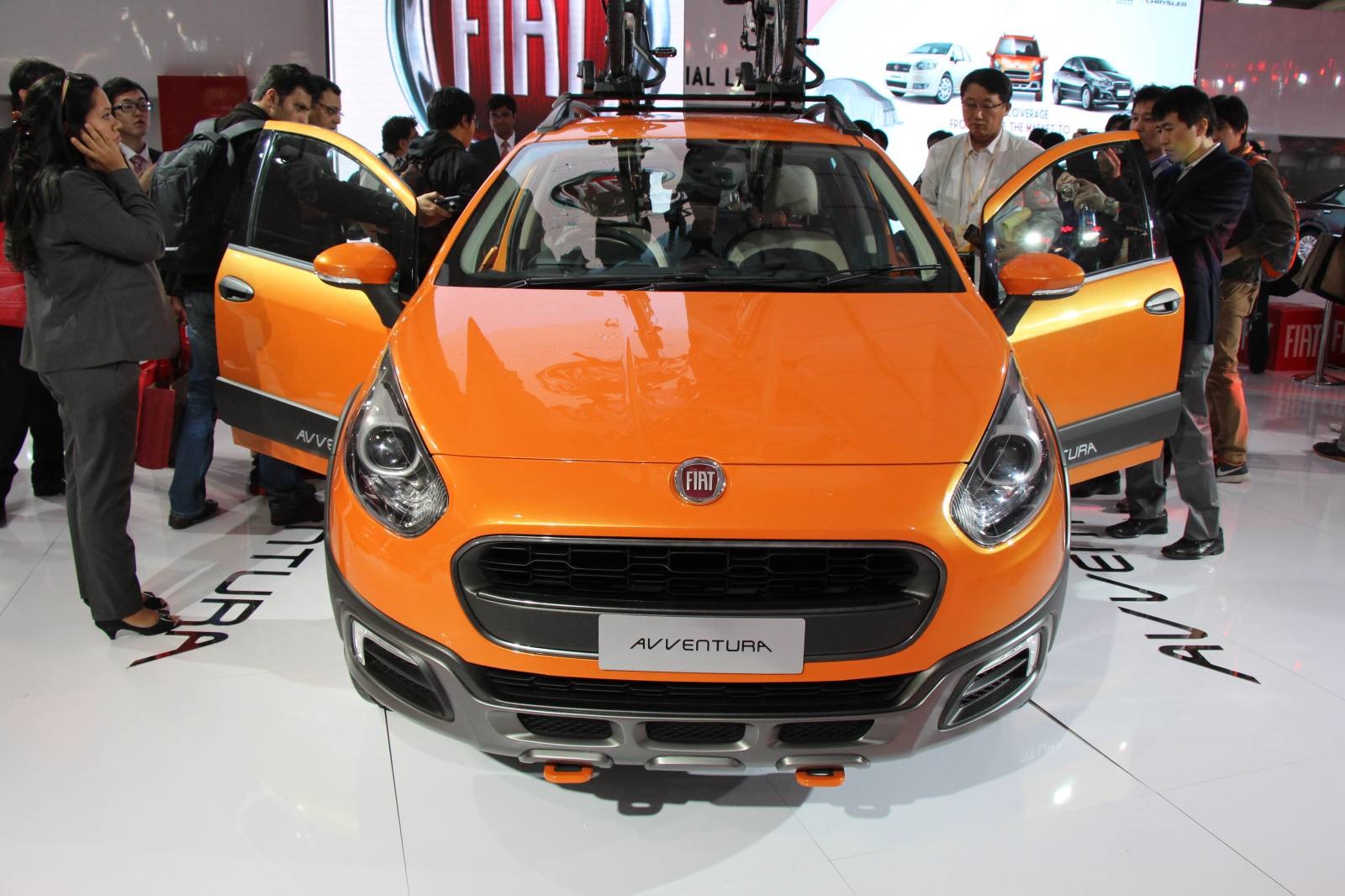
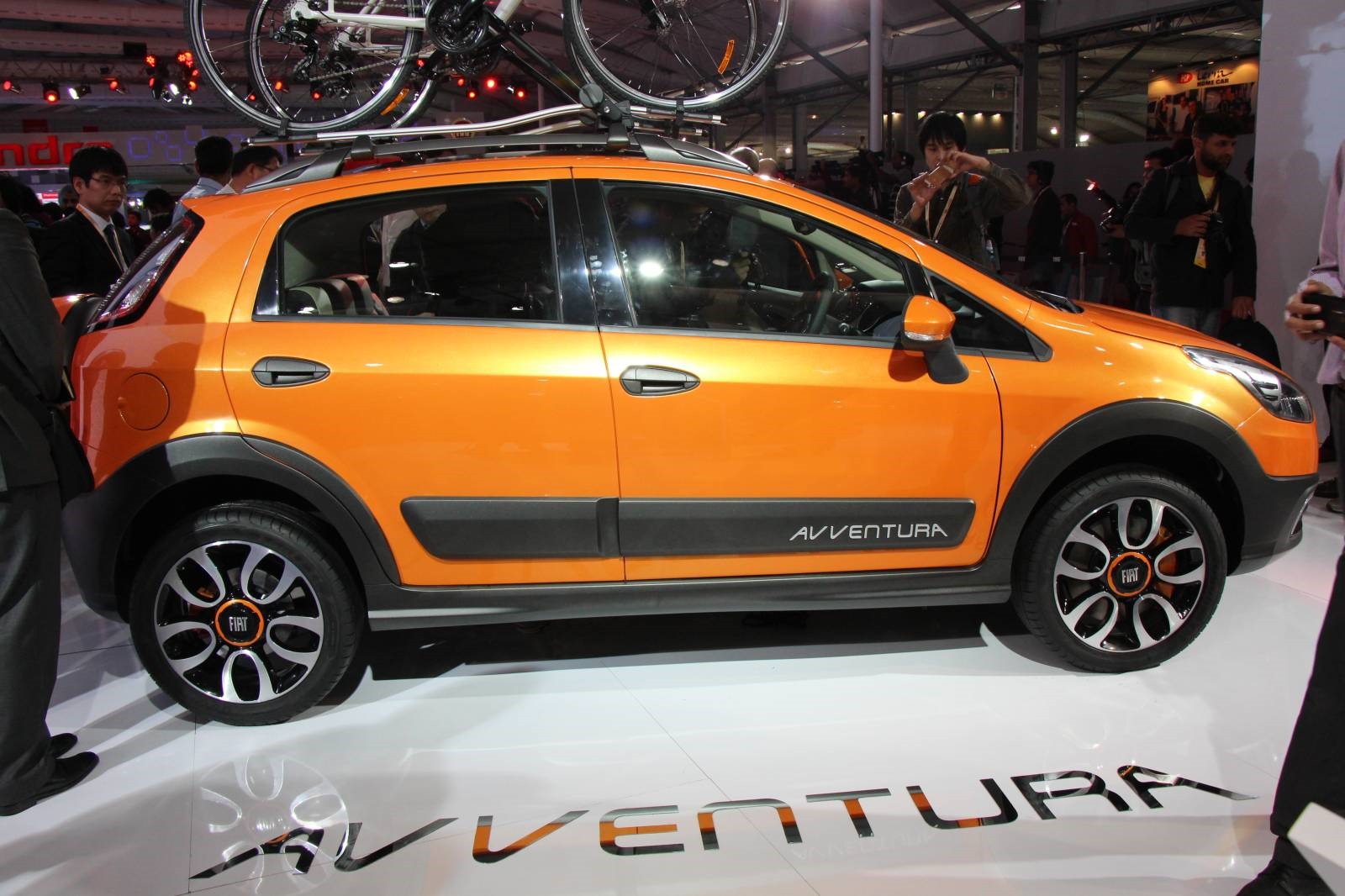
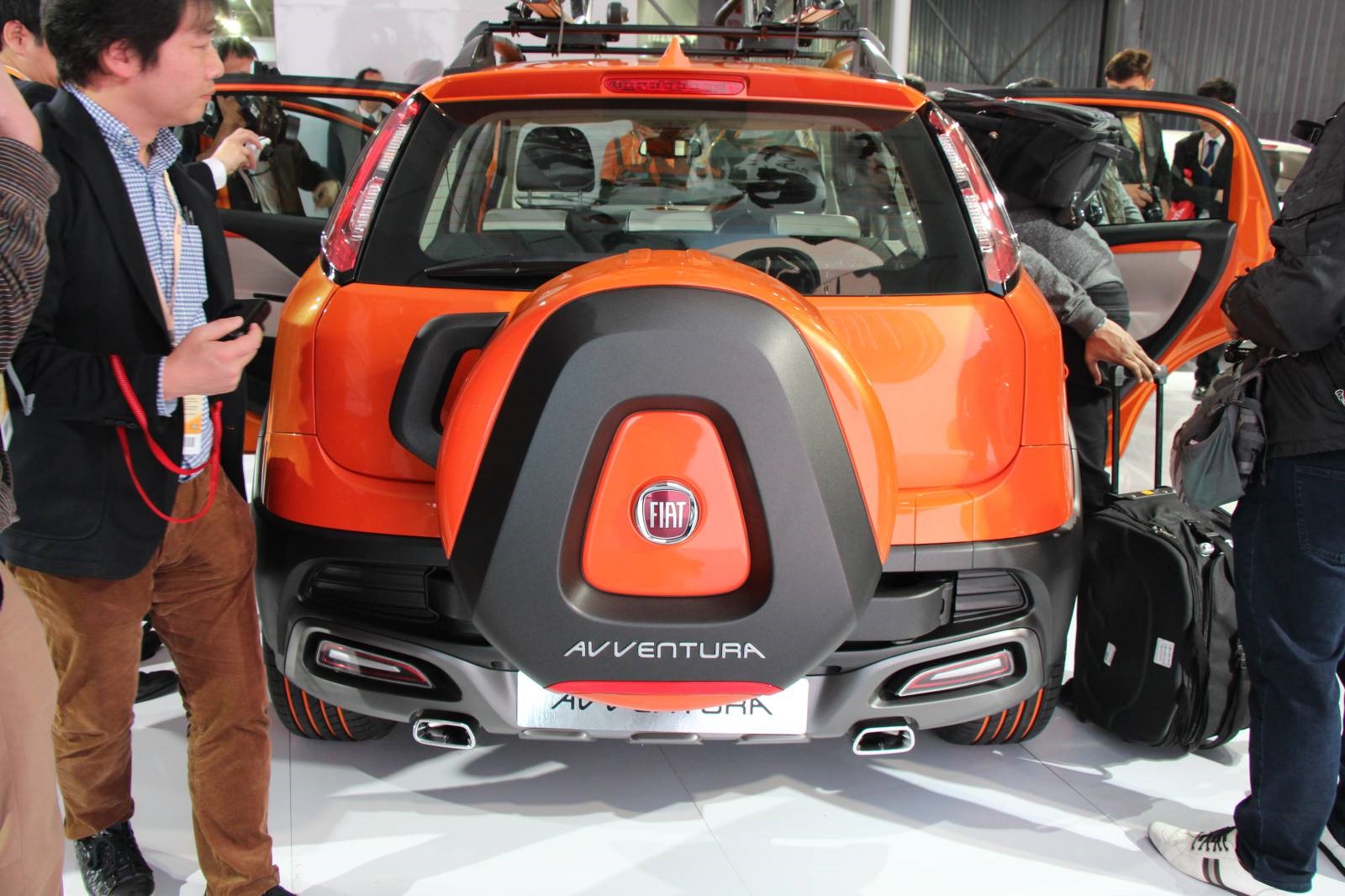
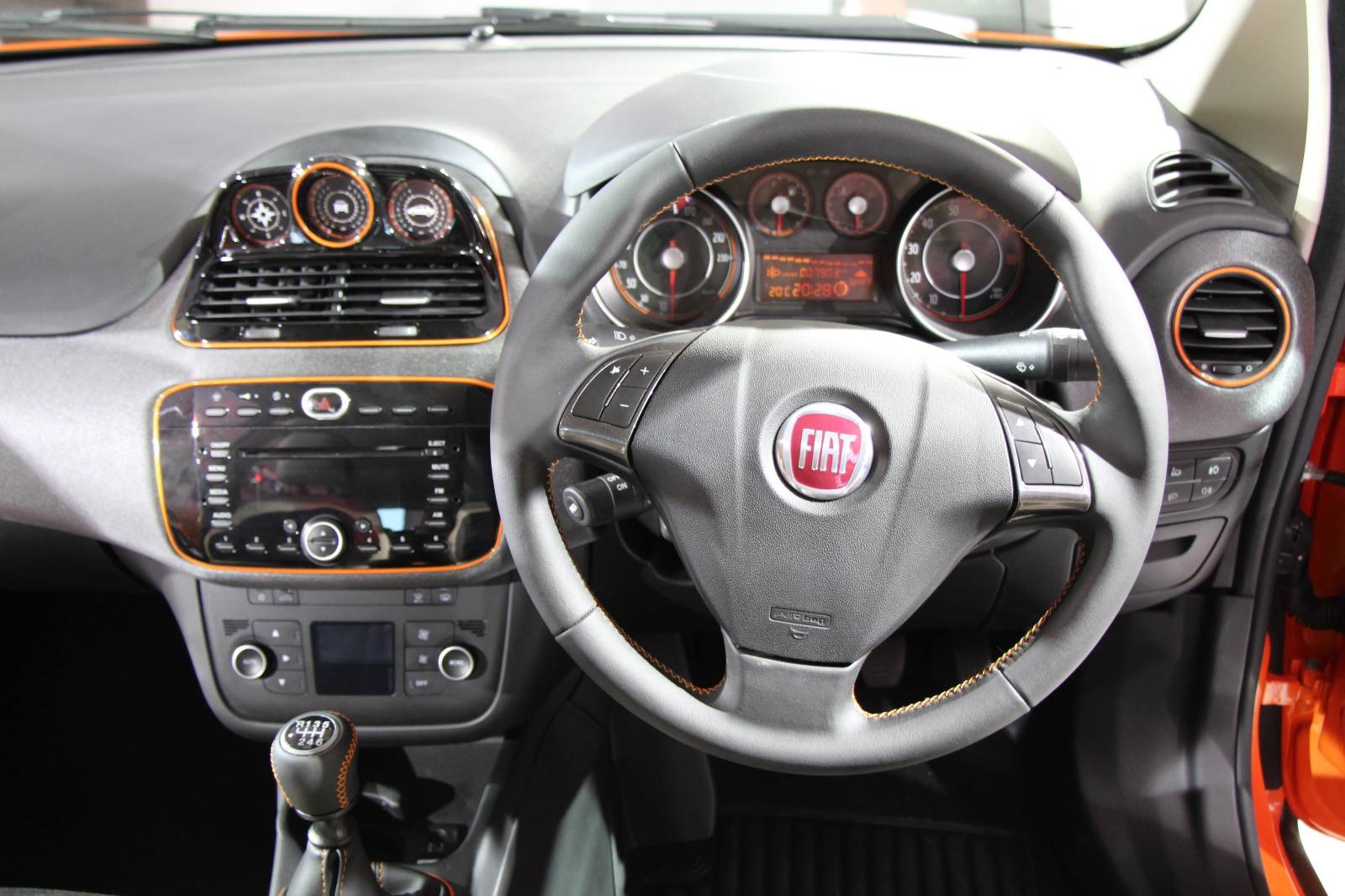
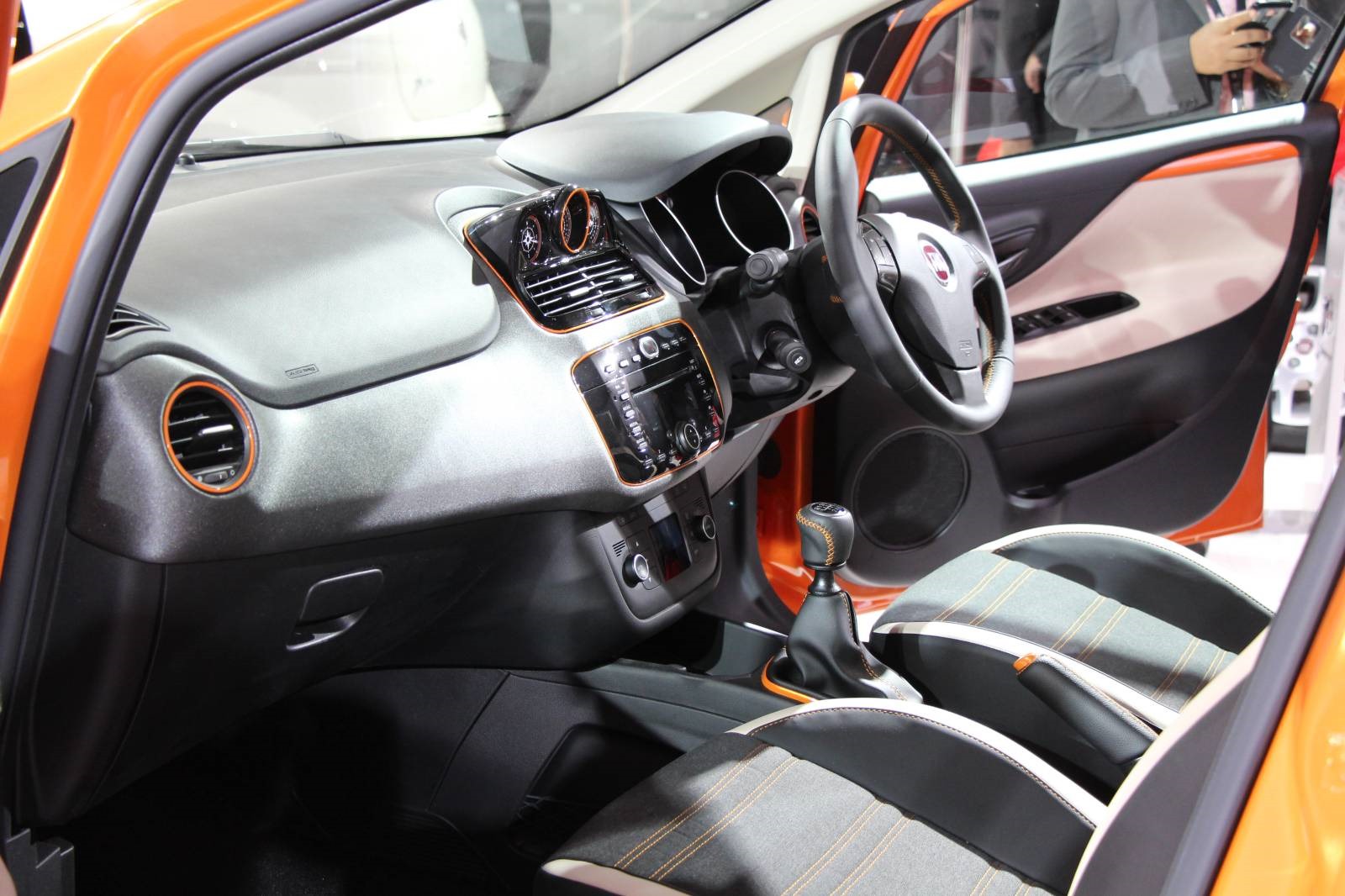
Fiat Avventura Concept (baseado no Punto)
NothingFace
New member
Mais um restyle a vir para o Punto ?
reckoner00
New member
É para o mercado Indiano.