Instale a aplicação
Como instalar a aplicação no iOS
Acompanhe o vídeo abaixo para ver como instalar o nosso website como uma aplicação web no seu ecrã inicial.
Nota: Esta funcionalidade pode não estar disponível em alguns navegadores.
Está a usar um navegador desatualizado. Pode não apresentar este ou outros sites corretamente.
Deve atualizar ou utilizar um browser alternativo.
Deve atualizar ou utilizar um browser alternativo.
Tópico McLaren
- Iniciador de tópicos BLADERUNNER
- Data de início

reckoner00
Well-known member
McLaren to break even ahead of expansion - Financial Times
British supercar manufacturer McLaren will break even this year ahead of an expansion drive into Asia and higher-volume segments as it aims to more than double its annual sales.
The carmaker, famous for its million-dollar sports cars such as the P1, quadrupled its sales last year and is betting on Chinese demand to spearhead an increase in sales to 4,000 by mid-decade.
McLaren Automotive, part of a group that includes the storied McLaren Formula 1 racing team, will launch a less expensive sports car in 2015, its chief executive said, and two new models each year from 2016 onwards.
“I expect about 1,500 [sales] this year and next year, and then after we get P13, around 4,000 cars,” said Mike Flewitt, referring to the new, lower-cost model in development.
Despite a recent slowdown in economic growth and the country’s car market, mainland China has become key for rival luxury marques such as Ferrari and Lamborghini. The country is expected to overtake the US as the biggest premium car market by the end of the decade.
“The indications are that the aggressive growth there is tapering off . . . But even with the reduced growth, there is a lot of opportunities for us in China,” said Mr Flewitt. “I don’t feel that we are behind the curve . . . it will continue to develop.”
McLaren entered China this month with three dealerships. The country is expected to account for 10 per cent of McLaren’s sales next year, or about 150 vehicles, while the company sees no growth in Europe, mired in the biggest car sales declines for two decades, until at least 2019.
“I wouldn’t be surprised if we end up with more than a third [of sales] in Asia,” the chief executive said in an interview. “I wouldn’t be surprised if it was 40, 20, 40” he said, referring to sales percentages in North America, Europe and Asia in the medium-term.
McLaren’s earnings before interest, taxation, amortisation and deprecation was just over £7m in 2012, according to documents seen by the Financial Times, against a loss of £53m in 2011, thanks to an almost 300 per cent increase in revenue to £266m.
The Woking-based manufacturer posted an operating loss of £10.9m last year, down from £59.1m in 2011, which Mr Flewitt blamed on heavy investment in new products.
“We’re bang on track to break even this year,” Mr Flewitt told the FT in an interview.
McLaren’s rapid sales growth is part of a resurgence in the UK car industry, written off at the turn of the millennium but now roaring back as a global leader in high-end manufacturing.
McLaren is spending £70m a year on research and development to bring out new models. The P13 will cost roughly two-thirds the price of its MP4-12C – roughly £110,000 – Mr Flewitt said.
But the carmaker has no plans to follow fellow UK luxury marques Bentley and Jaguar into selling SUVs.
It’s not the right time to be considering that,” Mr Flewitt said. “McLaren needs the global audience to understand our brand, so we need to be consistent in what we build.”

BLADERUNNER
New member
reckoner00
Well-known member
McLaren vai voltar a Le Mans em 2016
Si haces memoria, recordarás que McLaren logró vencer las 24 Horas de Le Mans con el McLaren F1 en 1995, en una de las carreras más épicas que recordamos, venciendo a prototipos y GTs diseñados para carreras con un coche que, en su desarrollo, no se había pensado para competir, logrando además copar cuatro de las cinco primeras plazas.
Ahora, la firma de Woking ha confirmado que volverá a Le Mans en 2016, y lo hará para la futura categoría unificada de GT, que unirá a los coches de GT3 con los GTE. Para ese año Martin Whitmarsh ha dicho que quieren tener listo un GT de acuerdo al nuevo reglamento para intentar reverdecer laureles, aunque en esta ocasión, viendo las prestaciones de los prototipos de Le Mans, McLaren tendrá que conformarse con luchar por la victoria en la categoría de GT.
Aún así, ver una lucha Ferrari-Corvette-Aston Martin-Porsche-McLaren en la categoría de Gran Turismo de Le Mans será un caramelo tremendamente apetitoso.

reckoner00
Well-known member
McLaren designer wants a carbon fiber monocoque Golf rival
Edit: McLaren declines hatchback plans
McLaren designer Frank Stephenson expressed his desire to launch a Volkswagen Golfcompetitor sometime in the future.In an interview given to Dutch magazine Autovisie, the person in charge of designing the MP4-12C, MP4-12C Spider and P1 said "I see a car like the VW Golf for 30 to 40,000 EUR, but McLaren with a carbon fiber monocoque, to happen in the future."
Frank Stephenson also expressed his disapproval regarding large design departments because he considers there are just too many people with their own opinions about styling and in the end the result is too toned down. Interestingly, Stephenson said Audi is a victim of this predicament.
He added that for a regular car manufacturer such as Kia the designer doesn't need to have a lot of engineering knowledge, but the situation changes when talking about a hypercar.
Edit: McLaren declines hatchback plans
“Actually it was not really a news and Frank Stephenson said that more on a joke tone… McLaren has no plans to create and build a car in the C-segment”, said a McLaren representative when contacted by the inautonews.com team.
Última edição:
reckoner00
Well-known member
BLADERUNNER
New member
Parece que a McLaren ache que é antiquado ter limpa pára-brisas. Assi irá adotar o mesmo sistema usado nos caças a jato de combate. É melhor ler a notícia...
McLaren to Replace Windscreen Wipers with Fighter Jet-Based Sound Wave Tech!

The windscreen wiper is a simple yet brilliant invention that has remained largely unchanged for 100 years. Since Mary Anderson invented them in 1903, wipers have allowed us to drive our cars safely when it rains or snows. However, to an innovation-driven company like McLaren Automotive, windscreen wipers are a bit old fashioned.McLaren is reportedly designing a system adapted from fighter jets to keep the windscreen clear in bad weather. The system is said to use high-frequency sound waves similar to those used by dentists to remove plaque from patients’ teeth. The carmaker is developing it for its new supercar expected to launch in 2015 – most likely the P13.
While McLaren is keeping the new technology secret, chief designer Frank Stephenson told The Sunday Times that the system is already in use on military airplanes.
“It took a lot of effort to get this out of a source in the military. I asked why you don't see wipers on some aircraft on when they are coming in at very low levels for landing. I was told that it’s not a coating on the surface but a high frequency electronic system that never fails and is constantly active. Nothing will attach to the windscreen,” Stephenson said.
According to Paul Wilcox, professor of ultrasonics at Bristol University’s faculty of engineering, the simple way to do it would be “to have an ultrasonic transducer in the corner of the windscreen that would excite waves at around 30kHz to bounce across the windscreen.”
It doesn’t sound like a bad idea at all: the absence of wipers will make cars more aerodynamic and lighter too, as there would be no need for the motor that moves them.
Thanks to Frisco for the tip!
BLADERUNNER
New member
A polícia de Dubai estreia um flamejante McLaren MP4-12C
[video=youtube;7ELQf-lc1FA]http://www.youtube.com/watch?feature=player_embedded&v=7ELQf-lc1FA[/video]


[video=youtube;7ELQf-lc1FA]http://www.youtube.com/watch?feature=player_embedded&v=7ELQf-lc1FA[/video]
Última edição:
McLaren 650S em Genebra
McLaren 650S em Genebra
Parece que a marca inglesa vai apresentar, no Salão de Genebra um novo modelo entre o 12C e o P1.
O nome refere-se à potência extraída do V8 twin turbo de 3.8 litros de cilindrada que já equipa o 12C.
Crê-se que este carro se apresente como a resposta da McLaren ao 458 Speciale (nesse caso, eu acredito mais que seja "apenas" uma versão do 12C e não um novo modelo, mas...).
Carscoops
McLaren 650S em Genebra
Parece que a marca inglesa vai apresentar, no Salão de Genebra um novo modelo entre o 12C e o P1.
O nome refere-se à potência extraída do V8 twin turbo de 3.8 litros de cilindrada que já equipa o 12C.
Crê-se que este carro se apresente como a resposta da McLaren ao 458 Speciale (nesse caso, eu acredito mais que seja "apenas" uma versão do 12C e não um novo modelo, mas...).
Carscoops
Imagens do 650S na net
Imagens do 650S na net
Pouco depois de ter feito o post anterior, passaram-me estas fotos pela frente:


The Supercar Kids
Em relação ao 12C, temos um incremento de potência para os 650 HP (daí o nome), o que dá quase 660 cv. O binário máximo é de 657 Nm.
As jantes são mais leves e são calçadas com Pirelli P Zero Corsa. Os travões são carbocerâmicos. Uma opção será os bancos em fibra de carbono semelhantes aos do P1, o que permitirá reduzir mais um pouco de peso.
A nível estético, é evidente nas fotos a mudança na frente, atribuindo-lhe um ar mais semelhante ao do P1, novas embaladeiras e entrada de ar lateral. Na traseira, muda o pára-choques e o aileron que, possivelmente, pela cor, será em carbono (a confirmar).
Imagens do 650S na net
Pouco depois de ter feito o post anterior, passaram-me estas fotos pela frente:
The Supercar Kids
Em relação ao 12C, temos um incremento de potência para os 650 HP (daí o nome), o que dá quase 660 cv. O binário máximo é de 657 Nm.
As jantes são mais leves e são calçadas com Pirelli P Zero Corsa. Os travões são carbocerâmicos. Uma opção será os bancos em fibra de carbono semelhantes aos do P1, o que permitirá reduzir mais um pouco de peso.
A nível estético, é evidente nas fotos a mudança na frente, atribuindo-lhe um ar mais semelhante ao do P1, novas embaladeiras e entrada de ar lateral. Na traseira, muda o pára-choques e o aileron que, possivelmente, pela cor, será em carbono (a confirmar).
Última edição:

topspeedPT
Well-known member
Não estava à espera de um facelift tão grande na frente :O


FredSimoes
New member
Então, mas assim isto mais parece um Facelift do 12C do que um modelo novo para ficar entre o 12C e o P1...
"Colaram" a frente do P1 no 12C e pronto!
"Colaram" a frente do P1 no 12C e pronto!
Última edição:
topspeedPT
Well-known member
Então, mas assim isto mais parece um Facelift do 12C do que um modelo novo para ficar entre o 12C e o P1...
"Colaram" a frente do P1 no 12C e pronto!
A McLaren é que é uma desgraça em marketing e reports.
Isto é uma versão do 12C para competir com o 458 Speciale daí a ser semelhante ao 12C normal.
O P15, modelo entre o 12C e P1, ainda está em fase inicial de desenvolvimento e vai custar à volta de 400k.
Portanto o line-up vai ser:
P13 (para competir com o 911)
12C (para competir com o 458 etc)
12C 650S (para competir com o 458 Speciale, Huracán "superleggera" etc)
P15 (para competir com o Aventador, F12)
P1
reckoner00
Well-known member
reckoner00
Well-known member
reckoner00
Well-known member


reckoner00
Well-known member
Novo McLaren 650S revelado - Autocar
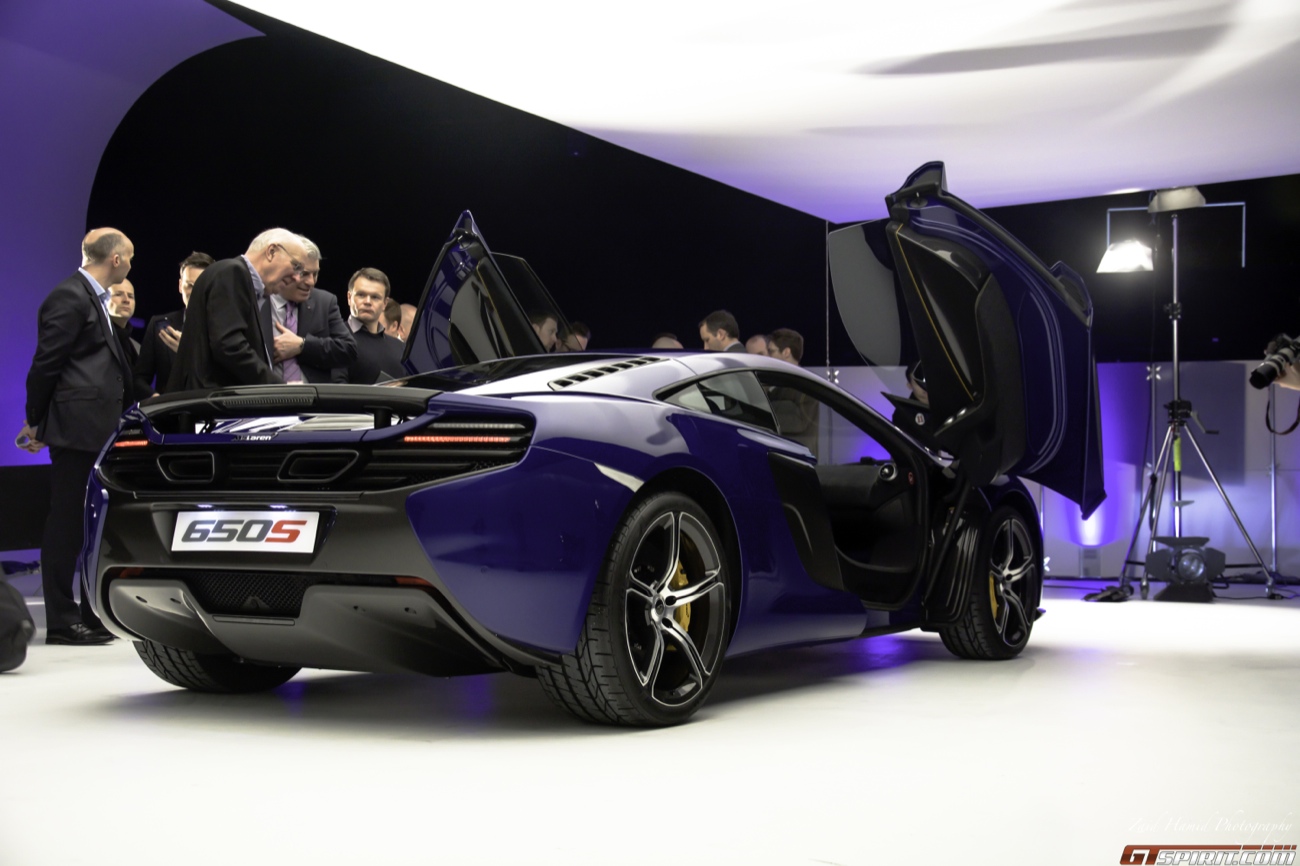
This is the new McLaren 650S, a £190,000 mid-engined coupé that’s capable of hitting 207mph. It will make its public debut at theGeneva show next month alongside a 650S Spider model.
The car is closely related to the 12C but is £20,000 more expensive and closer in styling to the recently launched £860,000 P1 hypercar. It also incorporates a basket of detailed revisions that improve performance in all areas but major on driver involvement.
The changes are designed to counter criticism of the 12C from early owners, and to incorporate relevant know-how gained from the P1, which is now in its delivery phase.
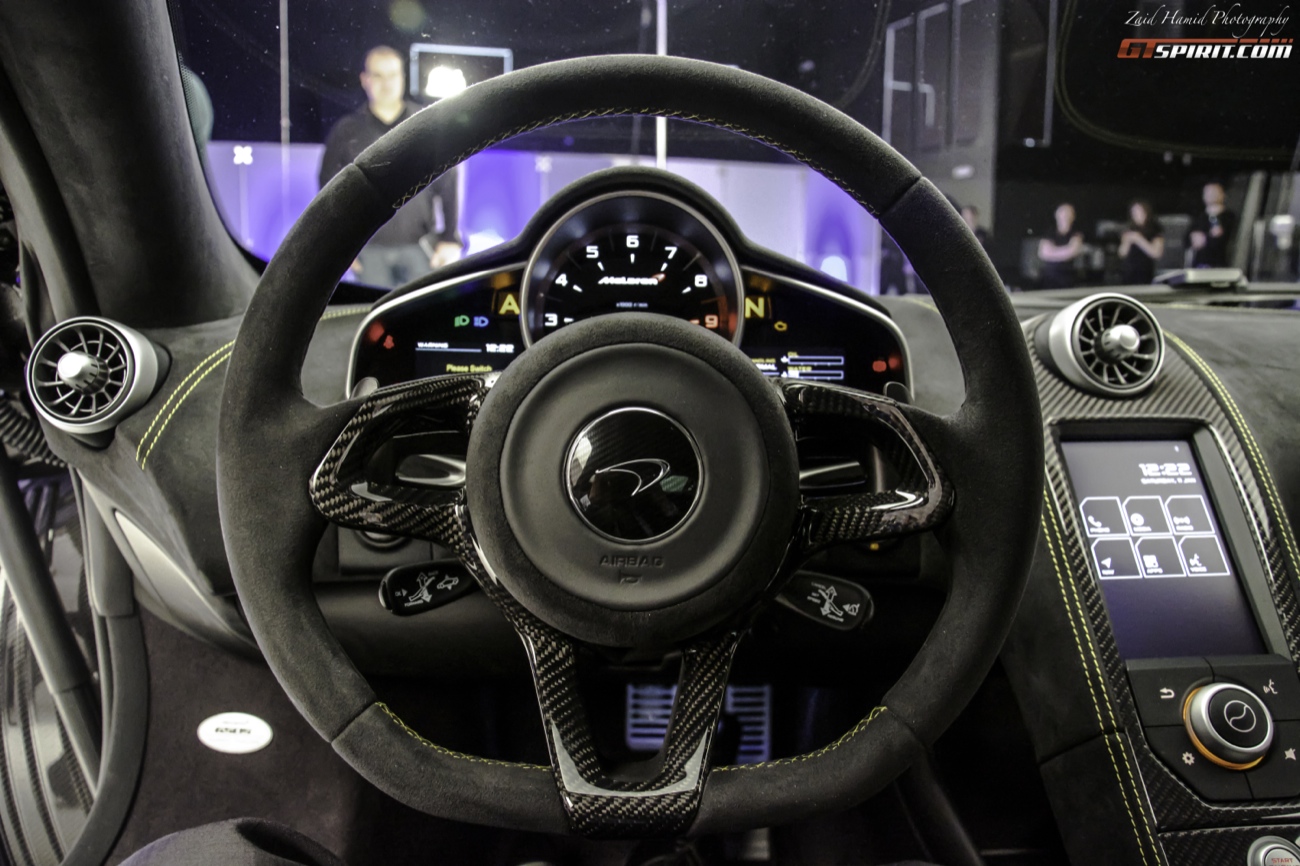
McLaren's 650S gets more standard equipment than the 12C, including lightweight forged alloy wheels, LED headlights, an Alcantara interior, carbon-ceramic brakes, revised sat-nav and a DAB radio as part of a sophisticated, screen-based audio system. The car also gets a new, wider design of Pirelli P Zero Corsa tyres.
The 650S, whose name reflects the enhanced output of its 3.8-litre turbo V8 in metric horsepower, is likely to be portrayed widely as the 12C they’d like to have built in the first place.
However, McLaren insists that the original model will stay in production at £170,000 and will find ready sales in markets where aggressive taxation swells ex-factory prices.
Sales volume of the two cars is expected to stay at about 1200 units a year. The big sales boost for McLaren will come after next year’s launch of a £120,000 mid-engined McLaren, codenamed P13.
The 650S is instantly recognisable from its P1-style all-LED headlights and other cues that are part of a new McLaren design style created under chief designer Frank Stephenson. McLaren says that the 650S fulfils an early promise made by group chairman Ron Dennis to launch a substantial model every year. About 25 per cent of the 650S’s components are different from those of the 12C.
The engine has modifications to its cylinder head and pistons and adopts new McLaren engine management software. Power climbs to 641bhp from the 616bhp of later 12Cs. There is an even greater boost to torque, which now peaks at 500lb ft, a figure developed between 3000 and 7000rpm.
To accompany the punchier engine, the 650S’s seven-speed dual-clutch automatic gearbox gets quicker, better-controlled gearshifts that make use of new McLaren patents. The 650S’s 0-62mph time is 3.0sec (a cut of 0.3sec) and the 0-125mph time is more than a second quicker at 8.4sec.
Spring rates have been stiffened by 22 per cent front and rear for better body control and are accompanied by revised damper mounts and rates. However, McLaren insists that the 12C’s ‘magic carpet’ ride survives in the 650S.
Among other chassis tuning changes are subtle adjustments to brake boost, to ABS and ESP intrusion and to the workings of the active aerodynamics that boost both engine cooling under extreme conditions and aerodynamic stability under brakes and during cornering. Peak downforce is now 40 per cent higher than that of the 12C and better balanced front to rear.
Listing all of these gains still doesn’t fully convey the extent of the 650S’s performance boost, according to McLaren’s head of product, Jamie Corstorphine. “The 12C is already an extremely practical, easy-driving car,” he said. “But when you drive a 650S, you soon appreciate that it has an even greater breadth of capability, plus more ability when it really counts.
“We haven’t built the 650S just for ten-tenths driving, and you don’t have to be a professional to enjoy it to the full. It feels special on any level; it’s up to the owner to choose the one he wants.”
reckoner00
Well-known member
Photoshop em preto e cinzento


reckoner00
Well-known member
[h=2]2015 McLaren 650S Specifications[/h]
Efficiency
CO2 275 g/km
Fuel consumption (combined) 24.2 mpg (UK)
Power to weight (with lightweight options) 500 PS (493 bhp) / tonne
CO2/power 0.42g/km per bhp
Speed
Maximum speed 333 km/h (207 mph)
Acceleration
0-100 kph (62 mph) 3.0 s*
0-200 kph (124 mph) 8.4 s*
0-300 kph (186 mph) 25.4 s*
0-400 m / ¼ mile 10.5 @ 224 km/h (139 mph)*
Braking
100-0 km/h 30.5 m (100 ft)
200-0 km/h 123 m (404 ft)
300-0 km/h 271 m 889 ft)
*with standard Pirelli P Zero™ Corsa tyres