RespectRequired
Banido
Frente tenebrosa [:vm)]

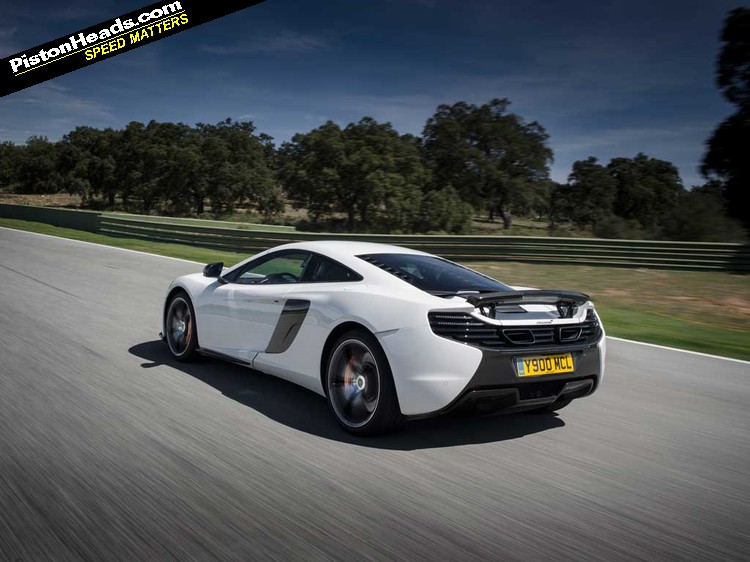
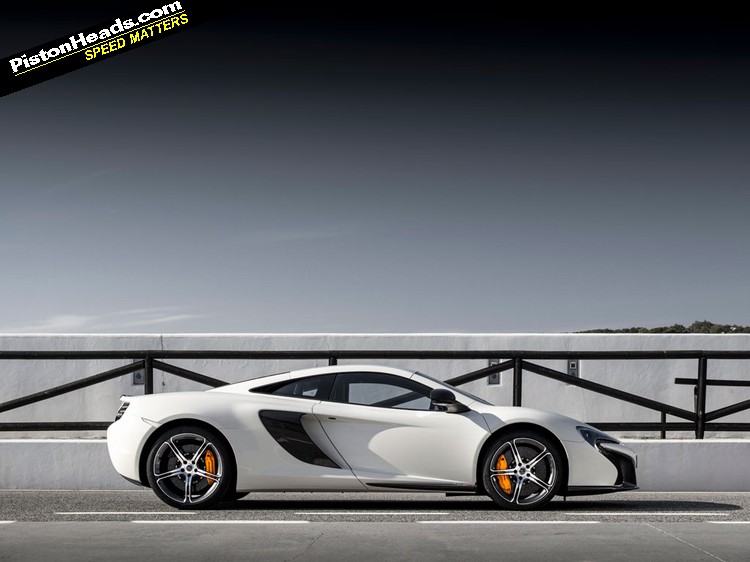
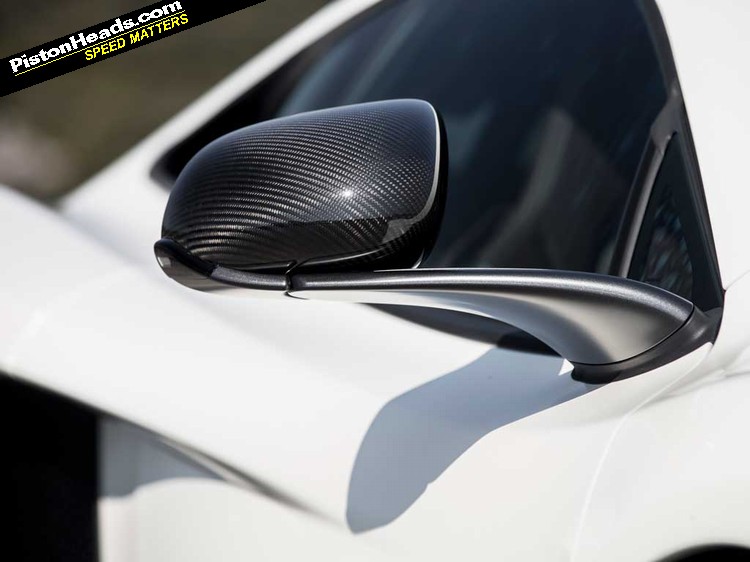
You can hear about how it drives very soon; here's a tasty pic to whet your appetite
So the McLaren 650S launch event is going on at the moment and we're looking forward to bringing you the full story from it next week. To get yourself up to speed on the new 650hp Woking-built supercar you can read our previous story - and interview with McLaren's Chief Design Engineer Dan Parry-Williams - here. Suffice to say though, this is more than just a 12C with a P1 style nosejob.
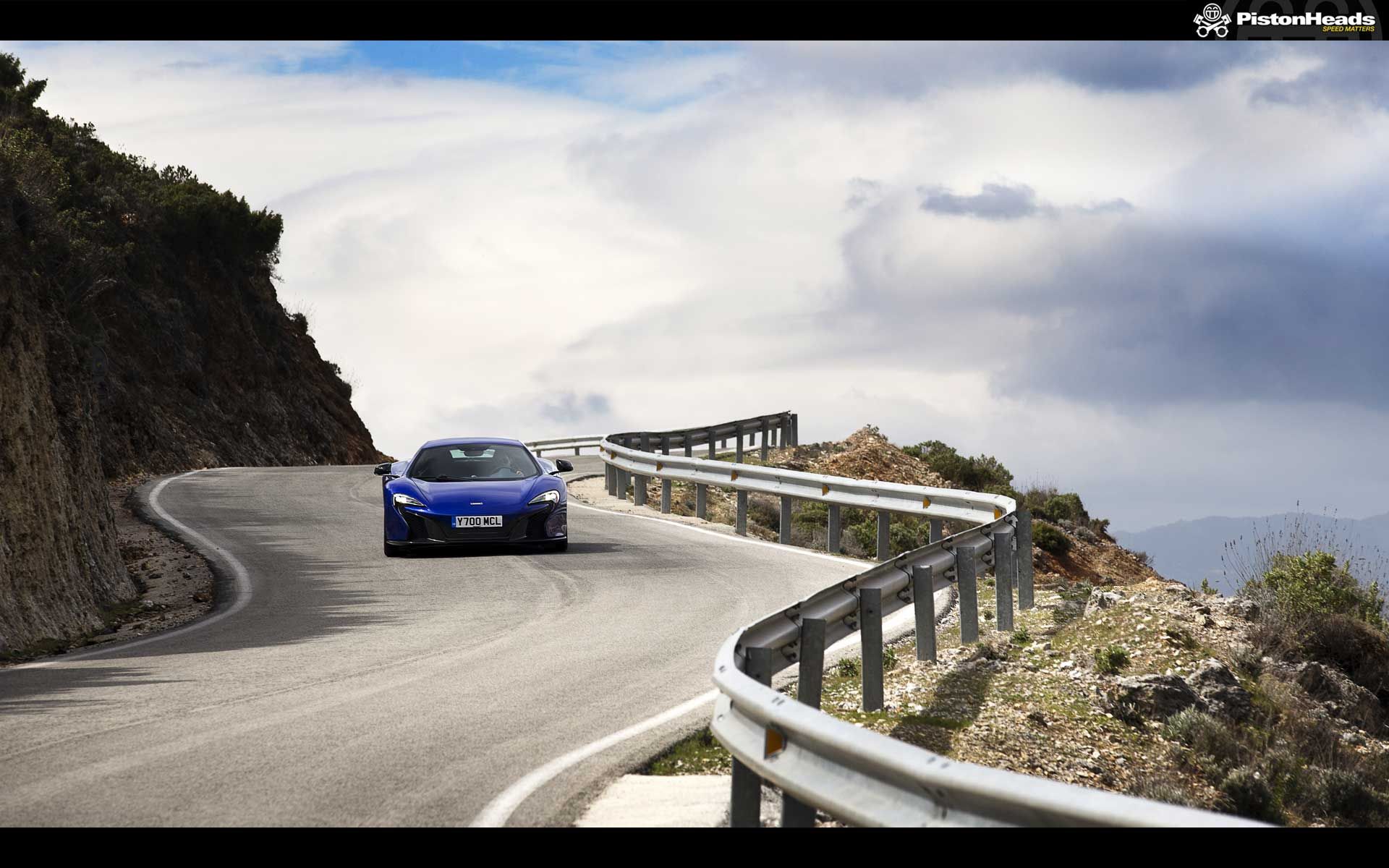
In the meantime get your desktop ready with this lovely image of an Aurora Blue 650S coupe somewhere in Spain. After seeing it under photographic lights in the studio and the glare of flashbulbs at Geneva it's good to finally have it out in the wild. More on this next week...

McLaren is obsessed with perfection. It’s been tinkering with the 12C ever since the launch three years ago, but now the brand has decided to overhaul the supercar with new P1-inspired styling, increased performance and more kit. Enter the 650S.McLaren stresses that the newcomer isn’t some extreme track day car along the lines of the Ferrari 458 Speciale. Instead, it’s simply a more powerful, more luxurious and sharper-driving version of the existing 12C.
And customers are so excited by the 650S, McLaren has halted production of the 12C to cope with demand for the new car. Still, a quick glance at the stats leaves little doubt that McLaren was gunning for Ferrari when it created the 650S. It can accelerate from 0-100mph in only 5.7 seconds – that’s just seven-tenths slower than the P1 – can hit 207mph, and is armed with 44bhp and 138Nm of torque more than the naturally aspirated Speciale.
McLaren wanted the 650S to be more engaging and intense to drive than the 12C, without sacrificing any of the everyday usability that marked it out. So, has it succeeded?
Without doubt, the first time you find the courage to push the 650S’s throttle all the way open is a truly breathtaking experience. Acceleration in second gear is ferocious to the point of alarming – and above 3,000rpm the whoosh of induction noise from the turbos is followed by an incredible shove of momentum as 678Nm of torque is sent surging through the rear wheels.
The engine hurtles towards the 9,000rpm red line so fast that the tacho needle struggles to keep up. However, you’d need to be at a race track to really appreciate the new level of performance the 650S has to offer. Corners rush up in a blur of noise, but through a series of challenging bends you can feel the effect of the tweaks to the suspension set-up.
Stiffer springs (22 per cent at the front, and 37 per cent at the rear) give the 650S an even more planted rear axle, and combine with the stickier Pirelli P Zero Corsa tyres – which have a more extreme tread pattern – to give an extraordinary level of grip and stability.
The car never feels twitchy or nervous, and even the tiniest steering inputs bring an instant response from the superbly balanced carbon fibre chassis.
These changes have had an impact on the steering, too. It’s quick, naturally weighty and lets you place the 650S with total precision. This was all true
of the 12C as well, though, and the biggest differences between the two only really start to shine through at the track.
The 12C was criticised for its braking feel and progression, so chief test driver Chris Goodwin and his team worked hard to improve this area as much as possible.
The 650S gets carbon ceramic brakes as standard, too. There’s more initial bite at the top of the pedal travel, and the ABS has been adjusted so it’s easier to modulate when braking into bends. You can clearly feel it when the Airbrake rises and pushes the wide rear tyres down into the road.
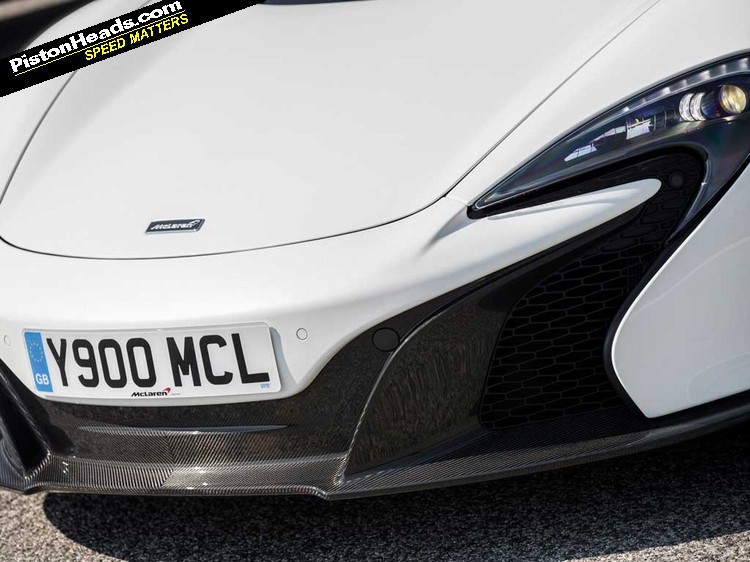
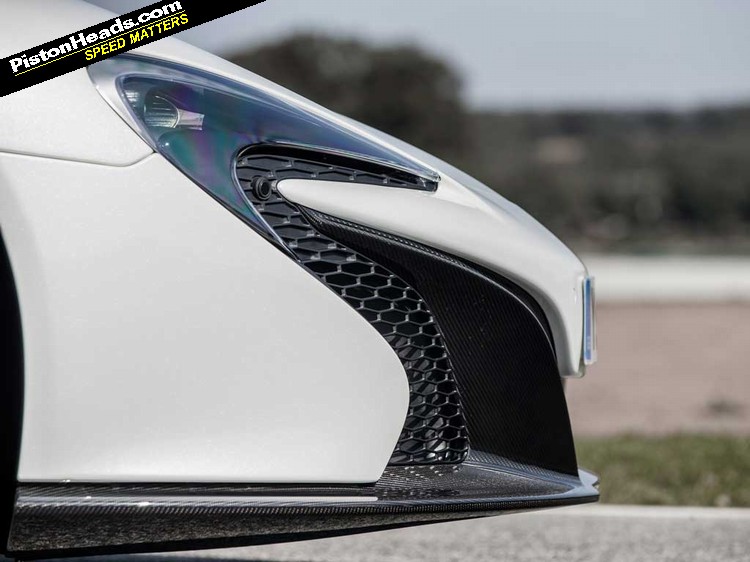
The P1-style front end isn’t only for show, either. The 650S gets bigger radiators and side vents to help cool the engine more effectively, and the carbon front splitter generates 40 per cent more downforce above 150mph. These changes might sound extreme, but McLaren has made a big effort to ensure the 650S can be used every day.
The new dampers have been calibrated to shrug off bumps with ease, and the 650S really does retain the same remarkable composure as the 12C. The seven-speed box has been tweaked to make it smoother in low-speed auto mode, and a new ‘cylinder cut’ system delivers a loud exhaust burst on upshifts.
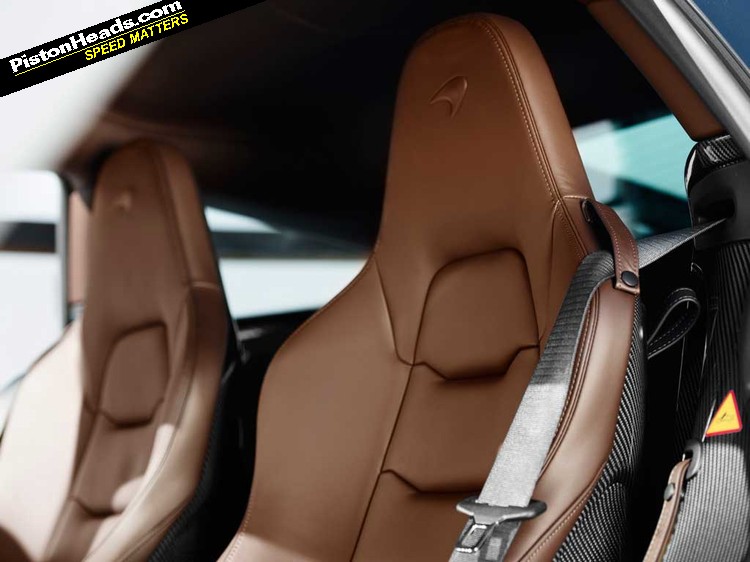
The elegant, simple cabin now has Alcantara trim, and there’s an extra-cost retractable wheel to make climbing in and out of the cockpit easier. There’s also a reversing camera, and fixed-back carbon fibre bucket seats based on those in the P1 hypercar are a must-have option.
Visibility is fantastic for a supercar, and the clarity of the driving environment – with a gorgeous, unadorned steering wheel – makes it easier to live with than you’d expect. Yet despite all the changes, the 650S is so similar in character and performance that it feels like a refined 12C rather than a true standalone model.
This might disappoint some buyers who were hoping for a more dramatic change – but the new McLaren still manages to combine heart-stopping acceleration and speed with remarkable usability, which is enough to justify the £20,000 premium over its stablemate.
Veredict:
It's hard not to admire the 650S’s stunning breadth of abilities. It looks, drives and sounds better than the 12C, but the changes haven’t drastically impacted on its character or performance. On track the car is faster and sharper to drive, but we were expecting it to move things on a bit further. Even so, it’s one of the most compelling and usable supercars on sale.
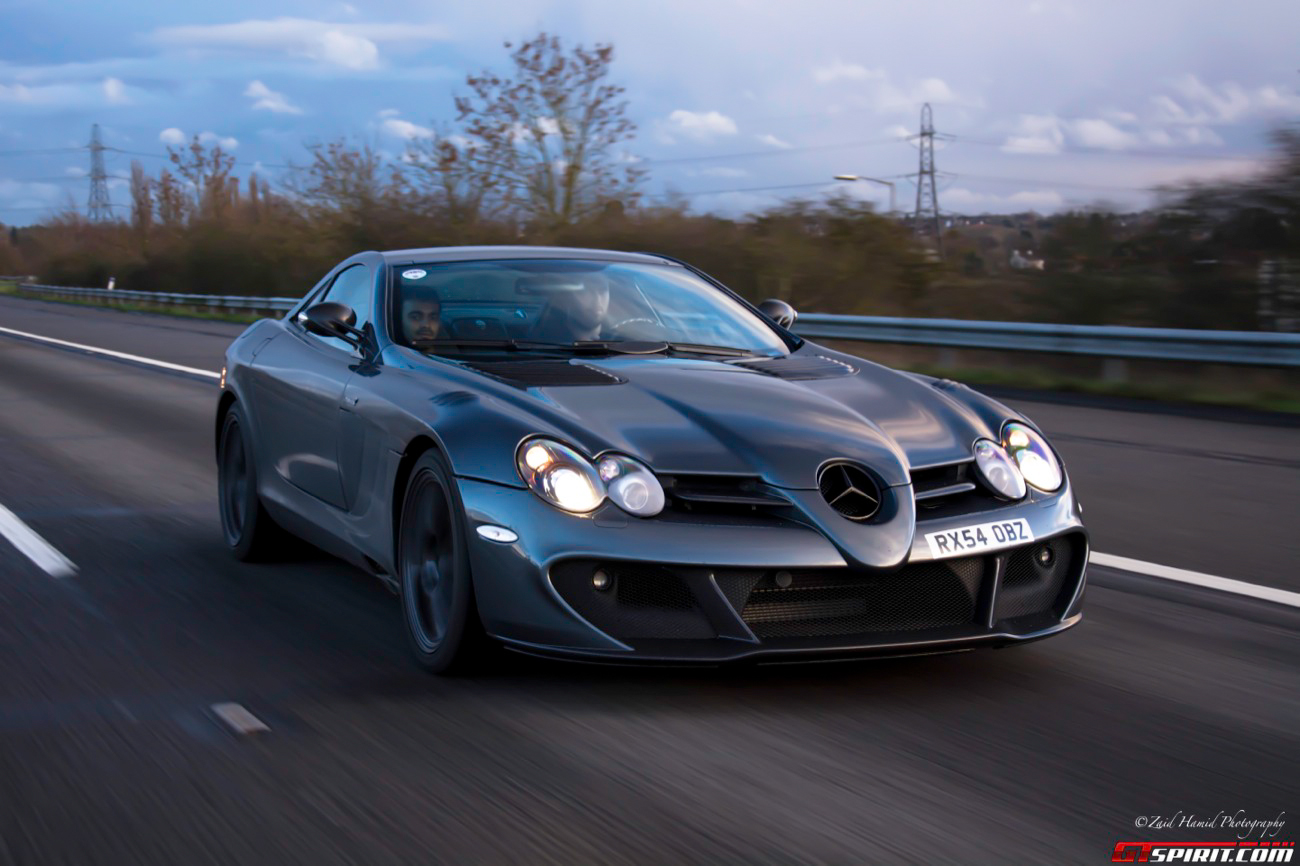
Mercedes SLR McLaren MSO Edition Review
Define ‘baptism of fire’. No, wait – I’ll do it for you. It’s a cold January evening, and a man from McLaren has just handed you the keys to a car that looks like this. As you clamber aboard – inelegantly, it has to be said, thanks to the lifting doors – a few spots of rain pepper the windscreen. You ease out of the car park, suddenly and painfully aware that you have no idea where the enormous bonnet ends – or, indeed, how much ground clearance that jutting bumper has. Nor can you easily spot any of the car’s four corners, given that this thing measures a full two metres in width and you’re sitting on the left-hand side in a right-hand-drive country.
Darkness has fallen, and as you slip onto a motorway heaving with jinking, stop-start rush-hour traffic, the shower turns biblical. Wind and rain lash the windscreen, and standing water has reduced both visibility and stopping distances to just a whisker more than sod all. Oh, and if you even think about straying beyond about half throttle, the back end decides it’d like to pop round and say hi.
Best get to get to grips with the Mercedes McLaren Edition SLR pretty bloomin’ sharpish, in other words. I’ve got the length of the M3 motorway to do so. This will not, however, be a halcyon sunset blast to acquaint myself with one of the most brutal-looking supercars ever to stalk the earth. As you might have guessed already, it’ll be a hellish blend of weather and traffic, garnished with a generous helping of angst and the occasional frisson of genuine, heart-in-mouth terror. Frankly, you don’t want to hear about it. So while I truck on through the Tuesday night rush, let’s find out a little more about this terrifically bonkers creation.
What is it? Well, it’s an SLR. That much is pretty obvious. But this is rather a special one. This one’s been taken in by McLaren’s Special Operations department, which we had a brisk tour of before setting off, and subjected to a strict fitness regime.
The company admits now that the standard car was flawed when it was released; a product of two different visions – Mercedes’s for a bigger, faster SL; McLaren’s for a supercar successor to the F1 – but one that satisfied neither. But, MSO says, it’s now gone back to the drawing board, and developed a package aimed at turning the SLR into the car it always hoped to produce.
The catch? Only 25 will be available. And while MSO will sell you certain parts separately, once all 25 of the complete packages have been sold, the company won’t let you build a 26th – at least, not as it stands today.
So, what does one of these desperately exclusive packages set you back? Around 134,500 euros, at time of writing. That price is exclusive of British sales tax, which adds another 30,000 euros on top if you’re eligible to pay it. And that’s in addition to the cost of the base car itself – a decent SLR will set you back at least 180,000 euros these days. In short, it doesn’t come cheap.
Engine
Under the bonnet, the stock SLR features a heavily-reworked version of the Mercedes M113 powerplant common to many AMG models that were available around the same time. Renamed M155 to take account of its many tweaks, it constituted a 5.4-litre V8, with a Lysholm supercharger bolted on to provide 0.9 bar of boost. So, in short, that’s an AMG V8 with a thumping great supercharger. If that sounds to you like it might have had a bit of oomph, you’d be right. 625PS at 6,500rpm, to be precise, matched by a whacking great 780Nm slug of torque served up at 5,000 revs.
Power, therefore, was never lacking in the original SLR, so it’s no surprise that McLaren has left the engine bay alone – for the most part. The only difference is enlarged radiators, which don’t increase peak power output but ensure that the SLR’s engine is producing more power across a greater spread of the rev range. There’s also a new exhaust; a ceramic-coated lightweight system that’s been tuned for a more mellifluous engine note. With the exception of those two changes, though, it’s business as usual – if you can call it that.
Transmission
Like the engine, the gearbox has remained unchanged from the stock SLR. In other words, you get the same AMG Speedshift R five-speed torque-converter transmission. Five-speed? Yes, that’s right; engineers felt that the brute force of the SLR’s powerplant might prove too much for the seven-speed unit, so a more robust and more mechanically simple five-ratio ’box found its home here.
As per the standard SLR, you get the choice between two automatic and three manual shifting modes, the former taking the form of ‘comfort’ and ‘sport’, and the latter comprising three progressively harder, faster shift actions, controlled by the paddle shifters mounted on the reverse of the steering wheel.
Suspension & Chassis
So far, so SLR, then. But don’t worry: things are just about to start getting interesting. It’s in the
chassis department that McLaren’s gone to town most of all – as you might expect, really. The centrepiece is a new handling package, developed with the aid of the company’s Formula One test rig, and consisting of a mass of revisions to the stock SLR’s suspension. Spring rates and low-speed bump damping have been subject to the most work, the idea having been to make the SLR feel both more pliant and more focussed. Downforce, too, has been increased by 15 per cent compared with the SLR 722 Edition, thanks to a series of upgrades to the car’s aerodynamics.
It doesn’t stop there, though. The steering, too, has been revised, in an attempt to drown out some of the nervousness of the original. McLaren says the turn-in is now much more progressive, and some of the standard car’s less pleasant yaw and pitch characteristics have been eliminated.
Design
Is there much to say about the McLaren Edition that a picture of the thing doesn’t? I mean, just look at it. With the possible exception of the Lamborghini Sesto Elemento, there can be few more brutally, overtly, deliberately aggressive-looking supercars than this. The stock SLR is a deeply attractive car, and pretty meaty in its own right – but park one next to a McLaren Edition and it looks almost effeminate by comparison.
In the flesh, the latter car’s even more striking. From the side, the long, diving nose leads over wheels that look almost too small, to an almost comically small cockpit and a chopped-off tail end; at the rear, the huge, grey-tinted lights glow above a beefy diffuser. But it’s up front that the McLaren Edition’s at its most striking. The gaping front air dam and razor-sharp bumper look as though they’d sooner chop your legs off at the ankles than aid in any sort of impact protection. This is, in short, a car with a serious sense of menace about it.
Interior
That sense of menace, however, doesn’t continue to the interior. That’s a good thing, because what you get instead is welcome familiarity. The SLR’s dash and switchgear architecture haven’t changed, though some carbon-fibre trim and a special plaque remind you exactly what flavour McMerc you’re sitting in. The seats, however, are new one-piece items finished in quilted Alcantara. But the majority will be recognisable for anyone who’s spent time in a modern Merc; well laid-out, easy to
use, and notably in this hard-driven 76,000-mile demonstrator, extremely well put-together.
Driving experience
For full disclosure, I have to point out from the off that I haven’t had the pleasure of driving the standard SLR. Here, then, is not the place to read a true comparison between that car and this. What I can tell you, though, is how the McLaren Edition stands up as a supercar in its own right. And the good news is, it’s everything its looks would have you believe.
With the night terrors of the M3 at rush hour just a distant memory, I’m able the following morning to find some reasonably dry tarmac to give the McLaren Edition its head. But not before I’ve nosed it out of town. Here, having adjusted to its sheer size, it’s actually a pretty docile thing to smooch around in.
The auto box means there’s no heavy clutch to deal with, and the steering’s light and easy. It’s not perfect, mind; the ride, while lacking the crashiness I’m told was a factor in the original, is still rather firm, which can grow wearing after a while. And the brakes are a struggle to get used to; the pedal is incredibly stiff, which makes moving it incrementally a real test of leg control.
But once the road opens, these quibbles are forgotten. I find a straight bit of tarmac long enough to hoof the throttle, and do it. Right the way down to the kickdown switch. The box obliges, dropping down two cogs, and that exhaust barks into life. No, actually, ‘barks’ is the wrong word. This isn’t so much noise as air being punched violently into your eardrums. Fitted with this exhaust, the SLR doesn’t grumble or howl so much as it thuds; insistently, repeatedly and relentlessly, punching you in the gut and in the head simultaneously with each walloping stroke of the engine. And with full-bore acceleration, the endless bass note is overlaid with a shrill scream; the supercharger wailing torturously as it pours air into the cylinders. These are not the musical notes of a Ferrari or a Lamborghini; this is the guttural, bludgeoning soundtrack that only an AMG Merc can make, except here it’s turned up to 12.
You’d spend your time revelling in the noise, but frankly, you’re too busy holding on for dear life as the SLR hurtles off down the road, feeling like it’s been hit up the jacksy by a rocket sled. There’s a touch of squirming at the rear and you grip the wheel to make sure things don’t get out of shape; mercifully, unless the road’s wet, they don’t. This isn’t acceleration that builds to a divine sweet spot, urging you to wring the best out of it. This is acceleration that matches the way the car sounds; a huge, brawny, thumping slab of it, delivered whatever the revs.
Arrive at a corner, and things only get better. Well, for the most part. Haul on the fantastically strong carbon ceramic brakes – that pedal stiffness suddenly isn’t an issue when all you want to do is stop as hard as you can – and the SLR draws up short in an astonishing distance. But that gearbox is a fly in the ointment, lacking the crispness and precision you’d desire, even in the harshest manual mode. With a bit of familiarity it’s possible to work with it, pulling the paddle earlier in order to time the actual shift correctly, but it isn’t ideal.
Once you get used to it, though, and get into a rhythm with the McLaren Edition, the way in which it bursts from corner to corner in a manic whirlwind of noise and power, as you grip the wheel and hold on for dear life, is astonishing. At each bend, there’s poise on the way in, thanks to deliciously quick steering and huge front-end grip, both of which translate into a sharp and precise turn-in. Then, brutality on the way out, as you stoke the throttle as much as you dare, feathering it earlier than you think as you feel the rear wheels start to shift sideways. That back end is, it has to be said, flighty; get carried away, and there’s no doubt that it’ll bite you – though what more would you expect from a car that looks like this? Crucially, though, there’s none of the uncertainty I’m told is a factor in the standard car. The McLaren Edition might be wild on the limit, but it certainly isn’t unpredictable.
Conclusion
Don’t imagine this car offers the grip or accessibility of some other supercars; nor should you expect the ultimate in scything precision, despite the hard work by McLaren. And though the automatic gearbox might lead you toward the idea that it’s a big, comfy, mile-munching GT, that wouldn’t be right, either; the ride’s still too firm and the exhaust noise too intrusive for that.
What the McLaren Edition does do, though, is thrill you to your core. It delivers huge, unrelenting, savage doses of drama that terrify and excite in equal measure. This is a car that tries to smash your face off with noise, and when it fails, tries instead to tear it off with power. Treat it without respect, and it might just succeed on both counts. But work with it, humour it and use that wonderfully quick steering to your advantage, and it’s a whole heap of fun. Any time, any place, what the McLaren Edition SLR delivers is a whopping adrenaline hit, on demand and without compromise. From the moment you flick open the thumb gate to access the gearlever-mounted start button, to the moment you limbo beneath the massive door to leave the car, every journey in this thing is an event; one with a sense of occasion few others can match.
This article is dedicated to the memory of Ollie Bourton and Darren Hayes, both employees of McLaren Automotive, who were tragically killed in an unrelated road traffic accident outside the factory on the day we returned the SLR. Our thoughts are with their families and all at McLaren at this difficult time

Turning off the stability control in a 641-hp, rear-wheel-drive supercar with summer tires in wet, sloppy weather on a 3.4-mile, 26-turn track can be a little nerve-wracking, but that’s what is about to happen as I enter my third lap of the Ascari racetrack in southern Spain. I’m at the helm of the new McLaren 650S, and at my right is McLaren test driver Gareth Howell, who doesn’t seem to be nervous at all as he switches the Powertrain and the ProActive Chassis Control (PCC) systems from their Sport to Track settings. He clearly knows something I don’t.
Here’s what he knows: Even in this foul weather, the 650S becomes more stable and more controllable the less the stability controls are activated. Why? Because you feel everything in the 650S, through the steering wheel, the seat of your pants, the firm brake pedal. Indeed, few cars communicate with such clarity each individual wheel’s amount of grip. It tells you in no uncertain terms when the driver is approaching his own limits—or more accurately, when it’s approaching the driver’s limits—and the more times we lapped Ascari, the higher the limits seemed to get. The 650S is a patient teacher, always at your level, and it allows you to climb its learning curve quickly and happily.

Introduced in February prior to the Geneva auto show, the $269,200650S coupe and the $283,925 650S Spider convertible are essentially face-lifted versions of the 12C supercar. The 12C already was good: It beat the Ferrari 458 Italia and Porsche GT2 RS in a three-way comparoshortly after its introduction in 2011. Yet in that test, as with subsequent drives, we had a few notable complaints: banal styling, a ho-hum exhaust note, and a general lack of smoothness thanks to grabby carbon-ceramic brakes and the seven-speed dual-clutch transmission.

P1 Inspired
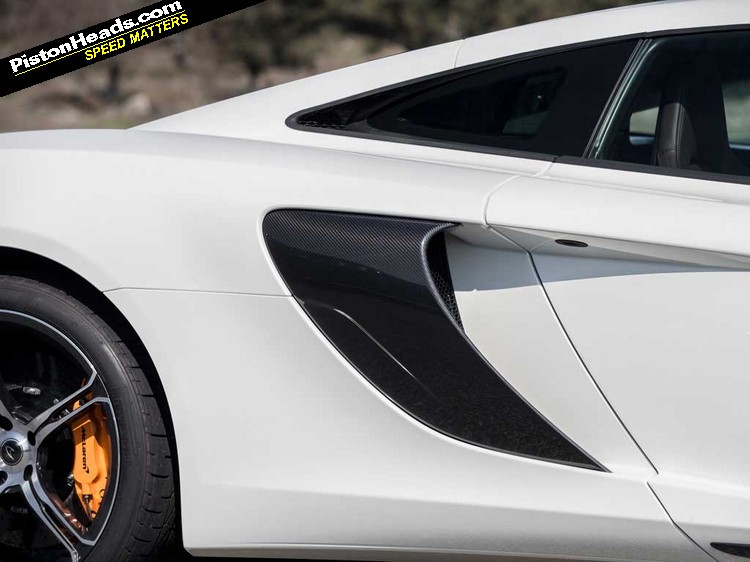
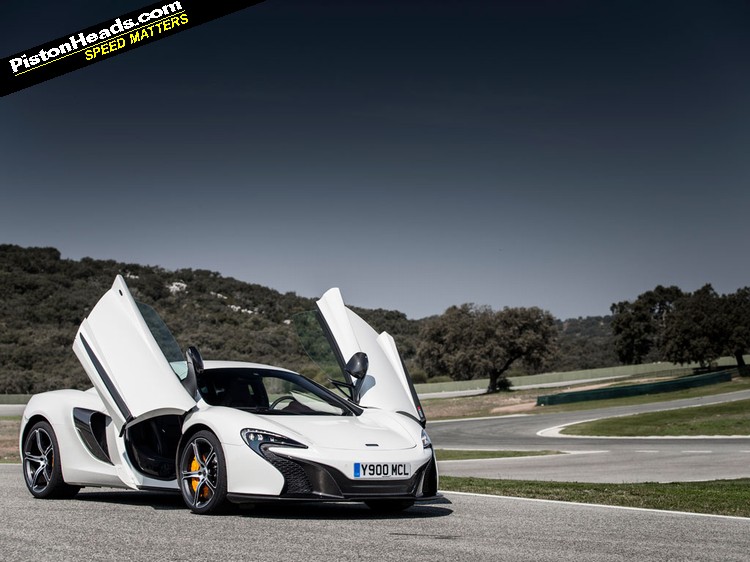
The 650S slots in just above the $241,900 12C, and contains 25 percent new components, but doesn’t outright replace the less-expensive car. The most immediately apparent differences are the revised styling bits. Inspired by McLaren’s spectacular, $1.15M P1 hybrid super-supercar, the 650S’s front-end appears infinitely meaner than the benign 12C’s, with a sculpted front bumper and serpentine grille that features a thin band of LED-based combination headlamps evocative of McLaren’s swoosh-shaped logo. Most body panels are shared with the 12C, but plenty of new stuff is attached to them, including carbon-fiber lower door blades, gaping side scoops to feed the hungry engine, and a recalibrated dynamic rear wing that, along with the new visage, is said to contribute to a 24-percent increase in downforce at 150 mph. McLaren credits the aero-sculpted nose cone as providing better high-speed turn-in.

The 650S derives its name from the 650-PS European horsepower rating (equivalent to 641 SAE net horsepower) of its twin-turbocharged 3.8-liter V-8, up from 616 horsepower in the 12C. Torque has welled to 500 lb-ft from 443 in the 12C. The added power comes courtesy of new pistons and heads, revised cam timing, new exhaust valves, and a new exhaust system. Other changes include firming up all three PCC settings, making carbon-ceramic brakes standard, stiffening the springs 22 percent in front and 37 in back, and mounting forged 19-inch front and 20-inch rear wheels wrapped in Pirelli P Zero Corsa rubber.
Eyeball-Sucking Performance
Thus equipped, we figure the 650S can hit 60 in 2.8 seconds, achieve triple digits in just 5.9 seconds, and blow past the quarter-mile mark in an astonishing 10.5 seconds, on its way to 207 mph. While the weather didn’t allow us to verify those numbers with test equipment, really the shove delivered by each jab of the throttle leaves us no reason to doubt ourselves. And the foul weather didn’t stop us from experiencing the newfound drivability of the seven-speed dual-clutch automatic, which cracks off instantaneous shifts and even slightly overlaps the clutches above 5000 rpm in Track mode as an “inertia push”—while providing everyday drivability much like a luxury car’s automatic in Normal mode.

Meanwhile, the huge carbon-ceramic brakes, supplemented by a rear spoiler that shoots upright to serve as a high-speed air brake, are not only powerful enough to suck your eyeballs out of their sockets, but do so with a wonderfully visceral, and natural, pedal feel.
For all its intensity, the 650S is eminently comfortable on the road. The ride quality is perfectly tolerable in both Normal and Sport modes, although Track mode is a bit brittle. Furthermore, McLaren maintains that the Spider—with its two-piece power retractable hardtop and 100-or-so pounds of added weight—is just as stiff, grippy, and fast around the track as the coupe (in fact, the car McLaren provided for us on the track was a Spider). Clearly, McLaren’s proficiency in carbon fiber pays dividends here—that, and the fact that McLaren has been building Formula 1 cars for half a century—as nary a squeak or a rattle or a crack or a pop emanates from the windshield cowl or anywhere else when kissing Ascari’s apex curbing or encountering hard bumps on the road.

The weather did not allow us to put the Spider’s top down—a 17-second process—until late in the day, but we did lower the retractable rear window often, opening a direct conduit for the engine’s improved exhaust note and exhilarating turbo whooshes. All of our test cars featured the $6490 sport exhaust system, giving coupe and roadster models alike a sweet sound. But if loudness is your thing, there’s a strong case to be made for scraping together the extra $14,725 for the roadster.

Getting Down to Business
But you don’t have to add much to the 650S’s satisfyingly minimalist interior, which remains refreshingly free of brand kitsch. It is an intimate space with surprisingly good outward vision, much like that of the original Acura NSX. No iDrive or MMI here, just a thin center stack containing a vertically oriented touch screen and push buttons for the adjustable chassis and powertrain and transmission. The ceiling, seats, and doors are swathed in faux suede, with soft leather available as an upgrade along with vast chunks of carbon fiber that alone can add the cost of an Audi A4 to the car’s bottom line. If it were our money, we’d stick with the nappy stuff but spring for the $6940 carbon-fiber racing seats, which are both wonderfully comfortable on the street and a road racer’s best friend on the track.

With its menacing looks and newfound dynamic proficiency, our remaining gripes are less significant: the doors need to be slammed hard to fully close, the infotainment interface is still fussy, and option pricing is obnoxious even by supercar standards. But in all honesty, if we could afford the car, we could live with those issues.
In previous coverage, we stated that the 12C elevated the supercar. With the 650S, McLaren has closed in on the top floor. And with some serious new competition in the form of the Ferrari 458 Speciale and theLamborghini Huracán, it’s arrival comes not a moment too soon.

What is it?
The slightly more expensive Spider version of McLaren’s awesome new650S, and if you can afford the extra £20k that it costs over and above the £195,000 coupé, then this is the version to go for.
Why? Because it can do just about everything the coupé can do dynamically yet adds a sizeable hit of extra sex appeal to go with it. And that arrives courtesy of a folding hard top roof that can glide up or down in but a few seconds, and which transforms the 650S into an even more exotic creature on the move.
Roof down you can hear the machinations of the 3.8-litre twin-turbo V8 that much more clearly, especially with the hood up but the small screen atop the bulkhead down, curiously enough. And yet there are pretty much zero compromises to be shouldered elsewhere. Indeed, even McLaren itself admits that the Spider, despite carrying an extra 40kg in kerb weight, can lap most circuits in exactly the same time as the coupé 650S, while its zero to 60mph time is identical to the fixed head car’s at 3.0sec dead.

What is it like?
At its core the 650S Spider contains the same carbonfibre tub, the same 641bhp 3.8-litre twin turbo V8 engine, and the same tweaked seven-speed dual clutch auto gearbox and suspension as the coupé model so, on the move, it feels pretty much identical to drive. Which means it is one of the sharpest, fastest open-top cars money can buy.
Because the car’s carbon tub was designed to be a Spider or a coupé from the outset, there are zero compromises in terms of its stiffness, and that makes the Spider 650S feel quite incredibly alert for a car with no roof. As on the coupé, the new nose treatment has more than a whiff of P1about it and will, says McLaren, form a key part of the company's design ethos from now on.
You'd have a harder job to spot the differences from the rear, though, because apart from a mildly redesigned diffuser and a couple of new fillets of carbonfibre around the tail-lights, the 650S looks all but identical to a12C from behind – as a Spider or a coupé.
The Spider also boasts a touch more luggage space than the coupé intriguingly, due to a small additional boot beneath the tonneau cover, behind the front seats. And on the road it always feels that little bit more engaging to drive, mainly because you can drop the roof and listen to the engine more intensely without there being any perceptible drop in stiffness, performance or drivability. And with the roof up it feels much like the coupé, albeit with not quite as good visibility to the rear three quarters.

Should I buy one?
If you can afford a car like this, then be in no doubt; the 650S Spider is the new rule changer in this class. It gives nothing away to its excellent coupé brother dynamically, and yet in reality it sounds, goes, looks and drives better than ever. And in that respect it feels something of a bargain, even at £215k
McLaren 650S Spider
Price £215,250; 0-62mph 3.0sec; Top speed 207mph; Economy24.2mpg (combined); CO2 275g/km; Kerb weight 1370kg (dry); EngineV8, 3799cc, twin-turbo, petrol; Installation Mid, longitudinal, RWD; Power641bhp at 7500rpm; Torque 500lb ft at 6000rpm; Gearbox 7-speed dual-clutch auto

What is it?
Arguably, the car the 12C always should have been. And even if that’s being a touch harsh on the mostly excellent 12C, in certain respects there can be little doubt that the 650S is the car McLaren could have built initially, had it given itself a little more time in which to do so.
In simpler terms, and on the other hand, the 650S is actually just a logical progression beyond what the 12C has achieved since its creation at the beginning of 2011.
At its core it contains the same carbonfibre tub, the same 3.8-litre twin turbo V8 engine, and the same seven-speed dual clutch gearbox as the 12C. Despite sharing its fundamentals with the 12C, though, over 25 per cent of the 650S is brand new, according to McLaren. So even if it is little more than a pumped-up 12C at heart with a new nose to give it more visual distinction, the 650S is genuinely a big leap forwards for McLaren.
In coupé form the 650S costs £195,000, although a Spider version is also available. For that you get a power increase from 617bhp to 641b (or 650ps, hence the name). Torque also rises to 500 lb ft, over 90 per cent of which is developed from 3000rpm onwards.
The gearbox has also been tweaked to produce even snappier shifts than before, and the car's responses have been altered subtly within the three different drive modes - Normal, Sport and Track - to further increase the driver appeal.
More modifications have been applied to both the soft and hardware of the suspension to sharpen the handling, but at the same time that spookily smooth ride quality that so distinguishes the hydraulically controlled 12C hasn't been compromised in any way. Instead the car simply feels crisper in its most aggressive setting and even more soothing in its most relaxed modes, says McLaren, providing it with a far broader dynamic repertoire than a 12C.
Outwardly it doesn't take long to pick the 650S beside a 12C. The new nose treatment has more than a whiff of P1 about it and will, says McLaren, form a key part of the company's design ethos from now on. You'd have a harder job to spot the differences from the rear mind; apart from a mildly redesigned diffuser and a couple of small new fillets of carbonfibre around the taillights, the 650S looks all but identical to a 12C from behind.
Inside there are several new features that distinguish the 650S; Alcantara becomes the standard trim material, the infotainment centre takes its cues from the P1 and is much more intuitive to use as a result, and if you specify the new carbonfibre sports seats - which cost £5000 (ouch) but are fabulous to sit in - you also shave a not insignificant 15kg from the car's already meagre 1330kg dry weight.
Carbonfibre ceramic brake discs become standard fitments, as do Pirelli P-Zero Corsa tyres.

What is it like?
When all is said and done with the 650S, performance is what this car is chiefly about. Yes it looks better with its new nose, and yes it's easier to interact with once you have climbed inside but the key thing about the 650S is the way it drives; the way it goes; the immediacy with which it steers, the way it stops and the way it goes around corners. And in all of these areas the 650S is actually quite shocking to begin with in the way it does everything so much better than the 12C.
Its performance doesn't sound that much more potent on paper, not to begin with at any rate; the 0-30mph time has dropped from 3.2sec to 3.0sec while the 0-100mph time has fallen from 6.2sec to 5.7sec.
But when you examine those numbers more closely, especially the zero to 100mph time, you do at least get some idea as to how explosively fast the 650S now feels - because 5.7sec to 100mph is, by any standards and at any price point, ridiculously rapid, bearing in mind that the 650S is rear-wheel drive.
What's so impressive about the 650S, though, is that it backs its titanic new levels of performance with such a mighty set of brakes and such a well rounded set of responses from its steering, gearbox and suspension that it never feels like it has too much poke for its own good. However fast it can go, it can stop, steer, and change gear every bit as well.
And they've got the brake pedal feel just right this time, too, even under light application, which isn't always the case with carbon ceramic rotors in situ.
And best of all is what happens when you scroll up through the car's three different drive modes - Normal, Sport and Track. You can sense the deeper effects of swapping between modes straight away; in Normal the 650S has a genuinely calm quality to its damping and ride in general; in Sport it feels properly switched on; and in Track it feels not a lot unlike a racing car in the way it responds; although you do need to get some heat into its front tyres before the turn in lights up – because with the front Corsas stone cold, the 650S does understeer a touch too much.
When I drove the 650S in Spain, I found the Spider to be the more engaging drive. The good news, though, is that whether you opt for the coupé or the Spider there’s no difference in lap times or performance. That’s a commendable achievement for McLaren, and something which isn’t always the case with European rivals.

Should I buy one?
If you’re in the market for a £200k supercar then it’s hard to think of anything that delivers better value than a 650S. When you've sampled what this car can do on road and track just once, you will want to come back for more, time and again, because the driving experience it offers is that rich, and that much more intense than it was in the 12C, which is saying something. But that's how mighty its achievements are, and how frightened by it Ferrari should now be.
McLaren 650S coupe
Price £195,000; 0-62mph 3.0 sec; Top speed 207mph; Economy24.2mpg (combined); CO2 275g/km; Kerb weight 1330kg (dry); EngineV8, 3799cc, twin-turbo, petrol; Installation Mid, longitudinal, RWD; Power641bhp at 7500rpm; Torque 500lb ft at 6000rpm; Gearbox 7-speed dual-clutch auto
Why McLaren's reimagination of the 12C is much more than a corporate nose job
What is 'fun' in a McLaren context? It was a surprising word to hear continually cropping up during the pre-Geneva technical presentation for the 650S, underlining a desire to be considered life and soul of the supercar party. Rather than the bookish nerd in the corner. OK, no favours were done by claiming 'fun' is a product of clutch actuation maps - with graphs to prove it - but the point was there. They even acknowledged that going sideways might actually prove enjoyable too and that the 650S was more inclined to accommodate such desires.
Corporate nose brings it line with the P1
But if you equate fun to going fast then the 650S certainly nails that particular objective. The 12C has never been criticised for its lack of performance but, by heck, there's a ferocity about the way the 650S gathers pace that feels much more significant than the on-paper increases of 25hp and 58lb ft over the 12C. Think Wile E. Coyote straddling a giant Acme firework and you get the idea. 650hp is, quite frankly, a lot. But it's the 500lb ft of torque, and the way it erupts from 3,000-7,000rpm, that really transforms the 650S into what feels like a different league of performance. To put that into context a 458 Speciale has 398lb ft and the Lamborghini Huracan 413lb ft, but not until the rev counter shows 6,500rpm. You can short shift it and ride the fast-swelling boost; you can rev it out in a lower gear to an angry sounding 8,000rpm. Either way, merest suggestion of lag aside there is never a point in the 3.8-litre V8's power delivery where it feels any less than rampant. Suddenly those operatic normally aspirated Italians seem a little hoarse.
Out with the old...
It's hard to look upon the 650S as anything other than a replacement for the 12C, even if the official line is that the two cars complement each other and will both remain on the McLaren pricelist. Execs and engineers are mindful of their language but can't completely hide the admission that elements of the 12C weren't quite there from the off. And the intervening time - then the P1 - have given experience and opportunity to improve. Upgrades have been applied along the way to iron out glitches and improve performance but you get a sense the 650S is the car the 12C was always meant to be, or at least the one McLaren hoped it could be.
Speed is a given; fun factor a pleasant surprise
It basically has everything we like about the 12C - the fabulous ride, the confidence inspiring ergonomics and visibility, the combination of crazy performance and liveability - but is significantly faster, with improved feel and a sense of polish not seen before. Up to a point. The window on our test car didn't quite reseal properly after dropping it for a tunnel noise test, meaning blustery progress up the motorway, but at least the nav worked properly. Does the addition of the P1 corporate face work?
If you'd never seen an original 12C you'd probably say yes but, on reflection, the transplant isn't entirely seamless. On the P1 it melds into that beguiling mix of organic shapes and exposed mechanical parts - a bit like Arnie's Model 101 Terminator stripped of his fleshy tissue. But on the 650S the swoopy curves jar somewhat against the more angular 12C body, enlarged side scoops being the only real visual difference aft of the A-pillars.
Harder, faster ... better?
Enough aesthetic hand wringing though. Violent stabs of acceleration between lumbering tipper trucks up the Ronda road out of Malaga prove that, yes, the 650S has the kind of punch that can leave you feeling a bit queasy. Or bimble along, slurring its gears and generally mooching about like a normal car. There's a bit more meat to the steering but even with a significant increase in spring rates - plus 22 per cent front and 37 per cent rear - it still has that floaty sense of comfort unique among contemporaries.
650hp is impressive but torque talks louder
It's not until we reach Ascari that some sense can be made of the performance upgrades, most specifically the steering and turn-in, the brake pedal feel and the recalibration of all the clever electronic systems like the roll cancelling Proactive Chassis Control, Seamless Shift Gearbox and active aerodynamics. Ascari is a technical track but there's a brutality in the way the 650S rips it apart that leaves you reeling. The noise - ferocious induction air and an exhaust big on volume and presence if not exactly pleasant - prepares you for the way it drives too, the 650S promising 12C approachability laced with a bit of the P1's explosive lunacy.
On the nose
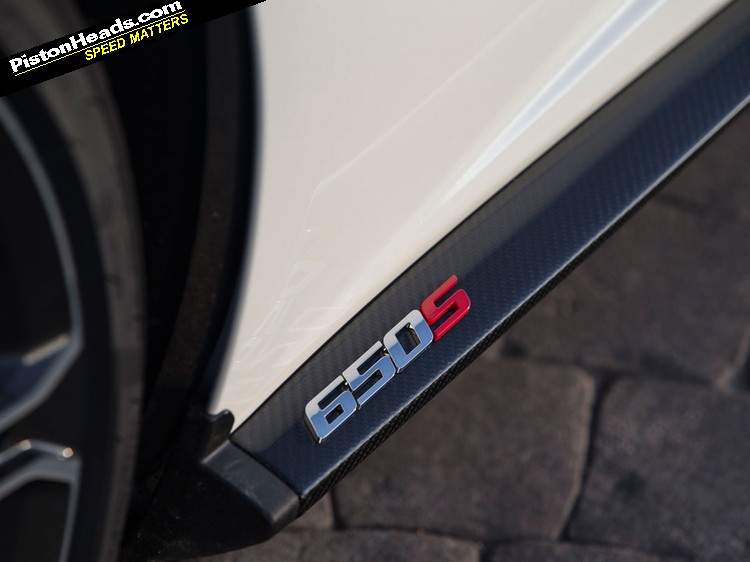
Having appreciated the much improved brake pedal feel (ceramics are standard) on the approach a corner the next big thing you notice is a significant degree of extra bite and weight to the steering on turn-in. The 12C was never sloppy but the way the 650S attacks the apex leaves you cursing your lack of bottle, painfully aware the front axle had much more to give. Contributory factors to this include redesigned front top mounts, improved downforce at the front of the car (those 650S branded side strakes are more than trim elements), that increased rear stiffness and bespoke 'MC1' Pirelli P Zero Corsas with significantly sturdier tread blocks (McLaren claims 13 per cent stiffer) and improved compounds. For more on the tech see the full press pack here.
Side strakes contribute to increased downforce
As that initial turn-in phase subsides your attention is drawn to the power delivery which, again, you've probably been unnecessarily cautious with. For all its straight-line savagery you can get on the accelerator much, much earlier than you'd expect in the corner, the throttle calibration brilliantly matched to the boost and never unsettling the chassis. Unless you ask it to.
Fun, quantified
Early in the Ascari lap there's a fast left into mirror-image right, the transition handled with a quick lift and the power you'd started feeding in from the second apex bleeding into a delicious smidge of oversteer on the exit. Flick the right side of the rocker-style paddle and you get to enjoy another of the 650S's new party pieces - the 'inertia push' upshift that uses kinetic energy built up within the engine to force through the shift with an exhilarating punch in the back. It's only enacted when you're in the Track powertrain mode and at the upper limits of the throttle but is still smooth enough to deploy when the chassis is loaded up. So much for the functional improvement; 'cylinder cut' interrupts the spark from the engine briefly to ignite a flare of exhaust noise for a bit of aural garnish on top.
With or without such gimmicks you may have gathered but the 650S is a properly exciting car to drive fast. But it manages to do this without being aloof or reserving its true talent for just those upper reaches of its performance envelope. There's a wide and accommodating window in weight transfers and those transient moments where the car is floating on extended dampers over crests that are beautifully transparent and full of information about the available options. Put simply there are no nasty surprises and plenty of delights.
New radiator layout and bigger single intakes
And the harder you push it the better it gets. Drive neatly and smoothly and it'll ruthlessly dissect a track in a way you'd expect. But when you start getting scrappy and more aggressive it responds in kind. Really stamp on the brakes, ride the inside wheel over the kerb, get hard on the power earlier than you dared previously and the 650S gets more playful still, the confidence from the brake pedal feel, the steering and seemingly unshakeable front-end grip matched with a wonderfully predictable shift in balance to the rear as the power feeds in. Do you miss a mechanical diff, active or otherwise?
Not that you'd notice, Brake Steer both aiding that turn-in but willing to let the rear axle relinquish its grip smoothly and predictably for a lovely throttle controlled balance on exit.
Melting rubber
As raised by Harris on the P1 test you sense how hard the tyres are working to cope though. The demands on them are huge and the Pirellis stand up to the heat and abrasion of the Ascari lapping remarkably well. After half a dozen circuits you'd expect them to be a soggy mess of melted rubber but the McLaren guys are confident that with correctly monitored heat cycles and pressures they've got staying power as well as grip. But if you're going to drive your 650S to the full extent of its abilities expect to be on first name terms with your local Pirelli stockist.
The drive back from Ronda permits a little more time for reflection on the 650S as a road car. Its pace is such you really have to watch yourself, the local feds well aware of the presence of a supercar launch on their local roads and potential speed differential with sleepy Spaniards problematic. The better to cut back and enjoy the 650S in its more mellow settings, appreciate the visibility, the cool modernity of the interior design and the lack of compromise on the luxuries. McLaren is very specific in stating the 650S is not the Speciale ("What, that slower car?" chuckles a mischievous Chris Goodwin) to the 458 Italia and no stripped out track wannabe.
Step from 12C is bigger than numbers suggest
It's a nominal 6kg lighter than a 12C, leaving the door open for a more minimalist version if the market demands. As it stands 1,330kg dry is 40kg more than a Speciale by the same measure but 50kg lighter than the 1,380kg quoted for the standard 458 Italia, the latter figure cheekily arrived at with optional forged wheels and fixed-back racing seats if you read the small print. Effectively then a 650S is a passenger lighter than a similarly equipped 458 but also has 489hp per tonne over the Speciale's 469hp per tonne, never mind 45hp and 102lb ft more. Does the market demand a stripped out version then? Product development director Mark Vinnels pouts at the question, admitting the door is open to go in that direction in future if required. But given the 650S's expanded track abilities come at no cost to its wider usability why would you want to? Sling a set of optional P1 fixed seats (£5,150 more, 15kg less) and an Alcantara wheel into the configurator if you fancy more of a circuit vibe and be done with it.
And that fun factor thing? To be explored in more detail following a chat with that man Goodwin but his parting shot summarises it neatly. "The trick is to build a car that's got a nice big operating window that doesn't just have one sweet spot," he says. "Ultimately if you lap this Ascari circuit 10 seconds a lap faster or slower it should still feel fun."
MCLAREN 650 S
Engine: 3,799cc V8 twin-turbo
Transmission: 7-speed dual-clutch auto (SSG), rear-wheel drive
Power (hp): 650@7,500rpm
Torque (lb ft): 500@6,000rpm
0-62mph: 3.0 sec
0-125mph: 8.4 sec (Spider 8.6sec)
Top speed: 207mph (Spider: 204mph)
Weight: 1,330kg (dry, Spider 1,370kg dry)
MPG: 24.2mpg (NEDC combined)
CO2: 275g/km
Price: £195,250 (Spider £215,250) - for options details and pricing see the respective coupe and spider pricelists
Video lap of Ascari here.
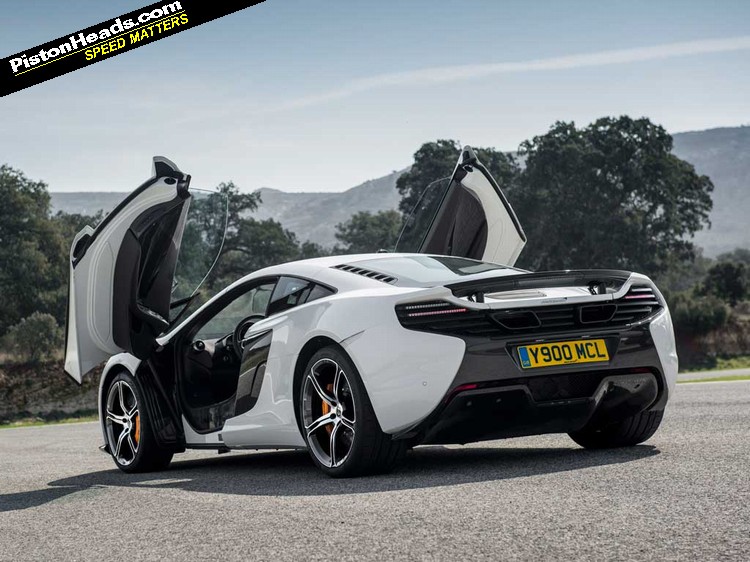


Ah, just like the race team does a fresh car every season, is this the 12C update? McLaren would rather you didn't say that. Whilst manufacture of the 12C has been temporarily suspended (yeah right) it's still available for order. But the 650S is faster, better around a track, and feels sharper on the road. Plus it looks more like a P1. And when you take into account the improved equipment including carbon-ceramic brakes, it's similar value to the 12C.
So you're saying there's absolutely no reason to buy the 12C now?
No I'm not actually. For a start, most of us at Top Gear don't actually think the 650S looks as elegant or well-proportioned as the 12C. Oh it's more dramatic, and it generates more downforce. But all that strange black swoopy stuff at the front reeks of facelift, and especially at the back makes the car look narrower and higher. Honestly, what is there left for Mansory to add?
More than that, the springs have been stiffened. This means a slight erosion of the 12C's extraordinary ability to swallow Britain's brutal lumpen urban roads, or indeed to glide through a whole transcontinental drive, in uncanny comfort.
Well, I can disguise the two-tone styling by ordering a black one, and I can cope with the comfort loss by driving my Range Rover in town. I want a supercar that's like a supercar. Is the 650S a better supercar than the 12C?
Oh my, and how. For a start, it makes it easier to go way faster. The 12C's performance didn't need fixing, not if you remember the way it hooned in on its 8500rpm red-line, making 625bhp. But the 650S, despite having only an extra 25bhp (that is four percent) feels epically quicker - fast enough to make your head spin.
How so, if it's barely more powerful?
Because torque in the mid-ranges gets an enormous boost. It's done through proper engineering, not just chipping. The engine has new pistons, new heads, revised valve timing, bigger intercoolers and a freer exhaust. Result is a sort of easy, almost casual, nature to its brutality. Warp-drive any time you choose. But only if you ask: the delivery is progressive and free of significant lag. What an engine.
Can I have some numbers please?
It does 0-62mph in 3.0 seconds, and 0-125mph in 8.4s. That's not quite as quick as the new generation of hypercars, but no variant of the Ferrari 458 or even the new Lamborghini Huracan can get close.
Can the chassis cope?
Not just cope. It comes back for more. There's more grip, and even more astounding body control especially through chicanes or when you lift off in a bend to tuck the nose in. But best of all, the thing feels more organic and transparent. You don't have to be leaning into a corner at last-gasp effort for it to feel alive. It's more engaging even at real-world speeds.
And it still has the ability of the 12C to maintain its speed even when the road is lumpy, because the dampers can decouple the two sides when it needs free wheel travel, but connect them when it needs anti-roll. And finally the Track mode sharpens the damping some more and the ESP lets the car slither around a surprising amount without leaving you entirely alone.
There are standard carbon-ceramic brakes, and Pirelli P Zero Corsa tyres. Both were optional on the 12C. The carbon brakes are great - even in day-to-day road driving they're progressive and quiet. The Corsas are fine on track, but on the road, when they're not fully warmed, the car can sometimes surprise you with understeer in a tight bend. If you live in temperate climes and don't drive on track, investigate Pirelli's calmer 650S tyre option.
Any other options?
Well you can get an electric steering column now, and electric seats, if you want to ease yourself in. There's a rear-view camera and a brilliant Meridian hi-fi. Or, in the other direction, carbon race buckets. Or about £20k of carbonfibre external panels, bumpers and aero parts, which shave off another few kilos, but would expose you to catastrophic levels of supermarket-car-park anxiety. Then you have the choice of Coupe (at £195,250) or Spider (exactly £20k more).
Any guidance on the Coupe-v-Spider thing?
The whole car, in either body style, gets its extraordinary rigidity and handling precision from the rigid carbonfibre lower tub. You really don't notice it being dulled when you switch from coupe to open spider, as I did at the launch event.
Anyway, the Spider has a hard roof so is as protective as the coupe when the roof is up in place, and it looks almost as good, and has almost as much storage space. Roof down, there's a whole new level of sensation and noise and drama. Eight out of 10 McLaren-owning cats prefer the Spider. And I agree.
 ]
]


What is it?
The McLaren 650S, the British supercar maker’s new model. Fundamentally it’s obviously a development of the McLaren 12C, although not a replacement (at the moment…) Available in coupe and Spider variants, it commands a £19,000 premium over the 12C, costing from £195,000.
Technical highlights?
With the 12C's 616bhp and 442lb ft outputs increased to 641bhp and 500lb ft, the claimed performance is mind-blowing: a 0-60 time of 2.9sec is impressive, but it’s the 0-100mph time which really sets out the McLaren’s stall – just 5.7sec, more than half a second quicker than the McLaren F1. The top speed is 207mph.
Most of the extra straight line performance over a standard 12C (which hits 60mph in 3.1sec) comes from the reworked engine, which has new pistons, cylinder heads and exhaust valves and revised cam timing.
The new nose makes a real difference, giving the 650S a much more distinctive McLaren identity than the 12C and sprinkling the car with a bit of P1 kudos. Aerodynamically the new snout also increases downforce by 40 per cent, the car now generating 100kg at 150mph, but that almost seems like a bonus.
What’s it like to drive?
Heading through town and then onto the motorway with the adaptive powertrain and handling modes set to normal it’s really very like a 12C. The spring rates are up by 22 per cent at the front and 37 per cent at the rear, which inevitably has some effect on the ride quality but it’s nothing like as severe as you’d imagine. The smaller bumps seemed to be a bit more noticeable but over bigger undulations there is still that slightly loose-limbed waterbed sensation as it soaks everything up.
The calm only serves to make the storm all the more shocking of course. Pressing the ‘Active’ button so that it glows orange and switching the dials to ‘Sport’ or even ‘Track’ stiffens the 650’s sinews and slices its response times. The combination of the stiffer springs and the Corsa rubber means that you seem to get better initial reaction as you turn into a corner and then more confidence to lean on the front end. Until the tyres have got a bit of heat into them there is a bit of understeer to manage through the tighter corners and you can get the 650 to oversteer if you’re on the throttle with the boost building early enough, but by and large the car is simply stunningly fast and completely composed without an ounce of slip.
In the past this poise would occasionally have been disrupted by the braking, but not any more. The 650 comes as standard with carbon ceramic discs, but where there used to be a horrible dead feeling at the top of the pedal travel followed by an abrupt application of pad to disc, there is now superb feelsome progression.
With an extra 58lb ft over a 12C, the 650S is brutal under full acceleration and what look like slim chances of overtaking opportunities turn out to be gaping great ones as you slot safely back in barely a third of the way to the next corner.
Pure performance has its own thrill, of that there is no doubt, but there’s some emotion still lacking in the 650S. I got to the end of several fast runs feeling in awe of and slightly giddy with the speed, but not elated and grinning at the driving experience. I think a big part of the problem is the sound. The turbocharged engine simply doesn’t make a noise that you crave. There’s supposedly a new cylinder cut on upshifts when you’re in Sport mode, but sadly I couldn’t really detect the added drama it was meant to add and although overall it’s not a bad sound being piped into the cabin, you won’t lie awake at night longing for the next time you hear it.
How does it compare?
The short briefing we had styled the McLaren 650S as a car that has better performance than a Ferrari 458 Speciale or Porsche 911 GT3 (neither was actually named, obviously) but without the rawness and compromises in habitability, usability and ride quality. Its 641bhp comfortably beats their respective 597bhp and 468bhp outputs, but we’d have to get them together to fully compare driving experiences. The 911 GT3 was our 2013 Car of the Year and the Speciale looks set to mount a serious challenge for 2014’s title, so the 650S won’t have it easy.
Faster and better looking
Still lacking some engagement
Lanzarse en la producción de deportivos y superdeportivos sin la ayuda de un gran fabricante es siempre una apuesta muy arriesgada, incluso para McLaren. Y es que en su caso, hasta ahora los modelos de calle de la firma fundada por Bruce McLaren no fueron éxitos financieros. Es cierto que el F1 (con motor V12 BMW) marcó un hito en la Historia del automóvil, pero no fue una operación rentable a nivel comercial. En cuanto al SLR de Mercedes, McLaren era casi una subcontrata. Demasiadas imposiciones de Mercedes mataron al concepto y hacen que no sea un McLaren por derecho propio, aunque hayan ganado dinero con él.
Sin embargo, la nueva estrategia de McLaren de desarrollar sus coches sin aportaciones exteriores está dando sus frutos. 2013 fue el primer año en que McLaren ganó dinero. Y según cuentan en Bloomberg, McLaren Automotive tiene previsto multiplicar sus beneficios por cuatro en 2014. "Es el año en el que más P1 entregaremos", explicó el director financiero de la marca, Paul Buddin.
Todos los P1 están ya vendidos, lo que permite a Mike Flewitt, CEO de McLaren, seguir con su plan de expansión que consiste en presentar un nuevo modelo cada año y ampliar la red comercial en casi todos los mercados. El objetivo declarado es de aquí a tres años robarles una parte importante de la clientela a Ferrari y Lamborghini.
Con tan sólo dos modelos en su gama, McLaren ha logrado entregar 1.500 coches en 2013. Una cifra muy alejada de la de Ferrari (6.922 coches), pero no tanto de Lamborghini (2.121 coches). Aunque es cierto que en el caso de Lamborghini todo se debe al cambio de la línea de montaje (6 meses parada) que tuvo que pasar del Gallardo al Huracán.
Si McLaren sigue con el ritmo actual de crecimiento alcanzará el nivel de las dos firmas italianas. Y no vemos razones para que no sea así, pues aún tiene que lanzar al mercado un modelo más asequible, en la zona de precios del Porsche 911, lo que sin duda impulsaría todavía más las ventas de la firma de Woking.