
You are using an out of date browser. It may not display this or other websites correctly.
You should upgrade or use an alternative browser.
You should upgrade or use an alternative browser.
Toyota Prius 2014/2015 (e NS4 concept)
- Thread starter BLADERUNNER
- Start date


 ]
]
BLADERUNNER
New member


BLADERUNNER
New member
Novo Toyota Prius em 2015

First launched way back in 1997., The Toyota Prius has been repeatedly changed his appearance, but its distinctive design has remained the same outline. For some time now there have been rumors that the new generation of the popular hybrids should appear 2015th year, and this time it looks to be significantly altered.
As claimed by some sources, the new model will have a lower profile hood and sides, and although it will keep the size of the current version, the shorter will be the front and rear end. Also, the design will not be reminded of drab box, but also in a more modern and rounded lines.
The Japanese reportedly tested several types of batteries that will be applied to different ways of driving, thanks to the partnership with Tesla is able to develop advanced lithium-ion cells instead of nickel-metal hydride version.
Source: Index.hr
Render: Autobild.de
First launched way back in 1997., The Toyota Prius has been repeatedly changed his appearance, but its distinctive design has remained the same outline. For some time now there have been rumors that the new generation of the popular hybrids should appear 2015th year, and this time it looks to be significantly altered.
As claimed by some sources, the new model will have a lower profile hood and sides, and although it will keep the size of the current version, the shorter will be the front and rear end. Also, the design will not be reminded of drab box, but also in a more modern and rounded lines.
The Japanese reportedly tested several types of batteries that will be applied to different ways of driving, thanks to the partnership with Tesla is able to develop advanced lithium-ion cells instead of nickel-metal hydride version.
Source: Index.hr
Render: Autobild.de
reckoner00
New member
Render:


reckoner00
New member


whereagles
Well-known member
Essas fotos do carro evolto em lona são verdadeiramente assustadoras!!!

starcraft2
New member
Vamos la ver...

Stockinger
New member
Sabem para quando está prevista a apresentação da próxima geração Prius? E quando se prevê que comece a chegar aos concessionários ?
reckoner00
New member
Nova geração do Prius adiada por 6 meses - Autonews
Toyota Motor Corp. has delayed the start of production for the fourth-generation Prius from next spring until December 2015, as engineers sweat the details of a new vehicle architecture and the company's next-generation hybrid system.Toyota initially targeted a spring manufacturing launch for the next version of its hallmark hybrid, code-named 690A. That has been pushed back to December, people familiar with the matter say.
The Prius confirmation vehicle, a prototype typically built 12 months before Job 1 to ensure performance, is scheduled for around November 2014.
Production of the plug-in version is expected to begin in October 2016.
Reasons for the roughly half-year delay are unclear. One source said engineers were tweaking the car to ensure maximum fuel economy, possibly adjusting body and chassis issues.
A Toyota spokesman said the company could not comment on future product plans.
Hybrid czar Satoshi Ogiso, managing officer for product planning, also declined to comment on timing. But he told Automotive News Europe sister publication Automotive News the car will be a test bed of critical new technologies, including Toyota's modularized vehicle architecture and next-generation hybrid system.
Getting the next Prius right is paramount, so engineers may be forgiven for taking time to perfect it. The car, which premiered in 1997, is the world's best-selling hybrid and a technology showcase.
Toyota, which sold more than 1 million hybrid vehicles in 2013 for a second straight year, has more riding on the Prius' redesign than bragging rights. It will also show whether President Akio Toyoda's new product development strategy is on the right track.
The new modular approach, dubbed Toyota New Global Architecture, aims to boost the number of parts shared among vehicles to improve quality and lower costs. But even one problem with a small part could multiply across millions of vehicles because of the new focus on commonization.
The new hybrid system is expected to be smaller, lighter and more efficient. The company is targeting a fuel economy improvement of at least 10 percent over the third-generation Prius, which debuted in 2009. Toyota considers that the benchmark target for each new generation.
"We need to prioritize fuel efficiency," Ogiso said.
The next-generation hybrid system will be overhauled to support a wider range of engines and vehicle types, he said. It will go beyond the compact Prius C, standard Prius and Camry-class cars.
Fuel efficiency will get a lift from a new gasoline engine with thermal efficiency rates above 40 percent, Ogiso added. The current Prius engine, the most efficient in Toyota's fleet, has a 38.5 percent efficiency rate. Higher thermal efficiency means more energy is captured to power the wheels, and less is lost through heat.
One technology won't be deployed in the next-generation hybrid system, Ogiso said: the energy-saving computer chips that Toyota unveiled in May.
Such semiconductors manage the flow of electricity through the power control unit that integrates a hybrid vehicle's battery, motor and generator. The new ones will be made of silicon carbide and experience only a tenth of the energy loss of the silicon-based chips used today.
The technology has the potential to deliver 10 percent better fuel efficiency because less energy is lost when the battery powers the car's electric motor or when the regenerative brakes recharge the battery. Ogiso said deployment of those chips is on a 2020 horizon.
reckoner00
New member
Novo Toyota Prius poderá ter AWD opcional e dois tipos de bateria
Tal y como os comentamos hace unos días las últimas noticias anunciadas por Autonews Europe indican que la producción de la próxima generación de Toyota Prius, con nombre en Código 690A, se retrasará hasta diciembre de 2015.Los ingenieros de la marca japonesa están llevando a cabo los últimos ajustes y la puesta a punto de la nueva plataforma y el nuevo sistema híbrido que prometen, será revolucionario.
El ajuste de la nueva plataforma modular global está tomando más tiempo del planeado a los ingenieros de la marca. Os recordamos que con esta nueva plataforma, la marca nipona buscarecortar los costes de producción al hacer que los modelos de su catálogo compartan más piezas entre ellos.
Responsables de la marca confirman que la nueva generación del Toyota Prius, será hasta un 10% más eficiente que la actual generación, lanzada al mercado en 2009.
Hoy volvemos a saber más detalles del modelo y alguna posible explicación adicional al retraso de esta revolucionaria y esperada generación.
¿Cómo será el nuevo modelo “ECO” de Toyota?. Presumiblemente, la marca refinará un poco más la aerodinámica, recortará peso, mejorará el motor de combustión y ampliará la autonomía en modo 100% EV.
Mientras que la aerodinámica y la plataforma mejoraran el consumo y el comportamiento dinámico del modelo, mejores baterías harán lo mismo con la ampliación de la autonomía en modo EV.
Todo apunta que la marca nipona tendrá dos paquetes de baterías: por un lado la de hidruro de níquel que montará de forma convencional el modelo y por el otro una de iones de litio de mayor capacidad que presumiblemente aumentará el precio del vehículo y se ofrecerá como opción.
La marca podría ir más allá y ofrecer dos sistemas de tracción diferenciados: un sistema detracción delantera de serie y un sistema AWD opcional. Este punto no debe de chocarnos ya que la nueva Plataforma Global está diseñada para abaratar costes por estar pensado para varios modelo y los SUV la emplearán también…
El sistema híbrido de próxima generación que se estrenará en el próximo Prius será utilizado en una amplia variedad de vehículos, será más pequeño, más ligero y más eficiente.
reckoner00
New member


reckoner00
New member
reckoner00
New member
Ainda com baixa resolução

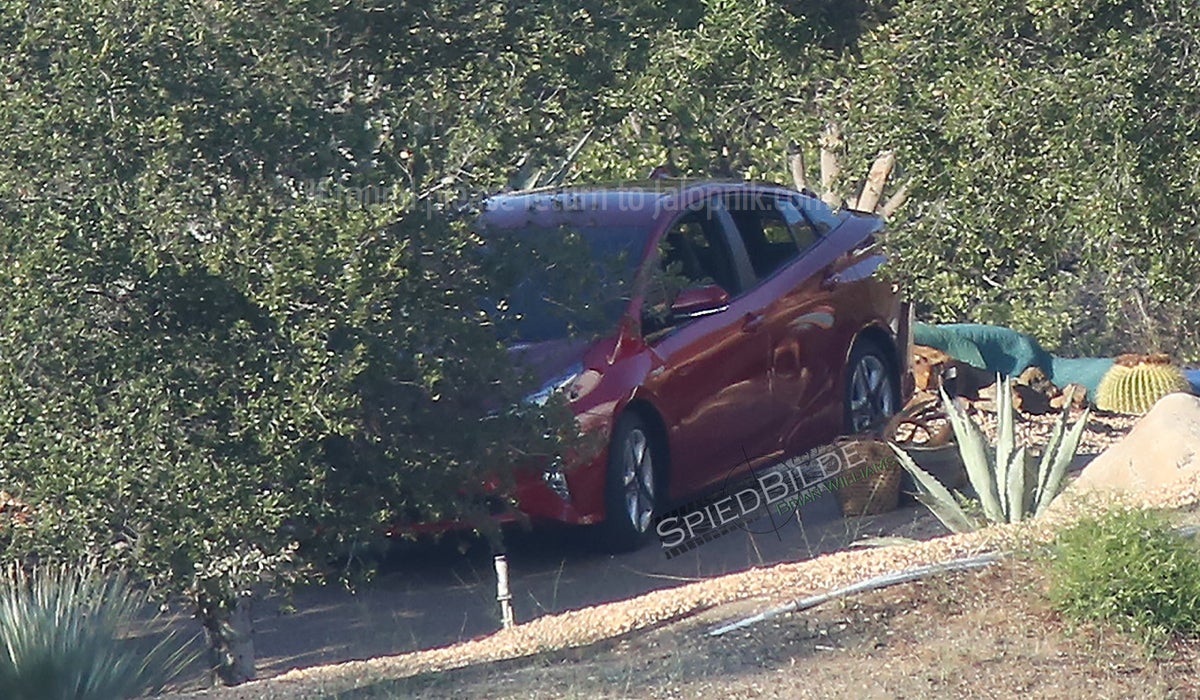
Last edited:
reckoner00
New member


Last edited:

 ] Agora na Europa, é para esquecer.

