
Instale a aplicação
Como instalar a aplicação no iOS
Acompanhe o vídeo abaixo para ver como instalar o nosso website como uma aplicação web no seu ecrã inicial.
Nota: Esta funcionalidade pode não estar disponível em alguns navegadores.
Está a usar um navegador desatualizado. Pode não apresentar este ou outros sites corretamente.
Deve atualizar ou utilizar um browser alternativo.
Deve atualizar ou utilizar um browser alternativo.
Conversa da treta
- Iniciador de tópicos Real
- Data de início

FastLee
New member
Não me digas que tens um da primeira geração... Um desses foi o nosso 2º carro de família. Após o Simca ter entregue a alma ao criador, tivemos um Micra de 1989 preto
Nop. Os primeiros eram os K10. Eu tenho dois K11's.
Um consideravelmente raro já. 1.3 super S de 94, com AC e 152 mil kms reais. Vai ser restaurado.
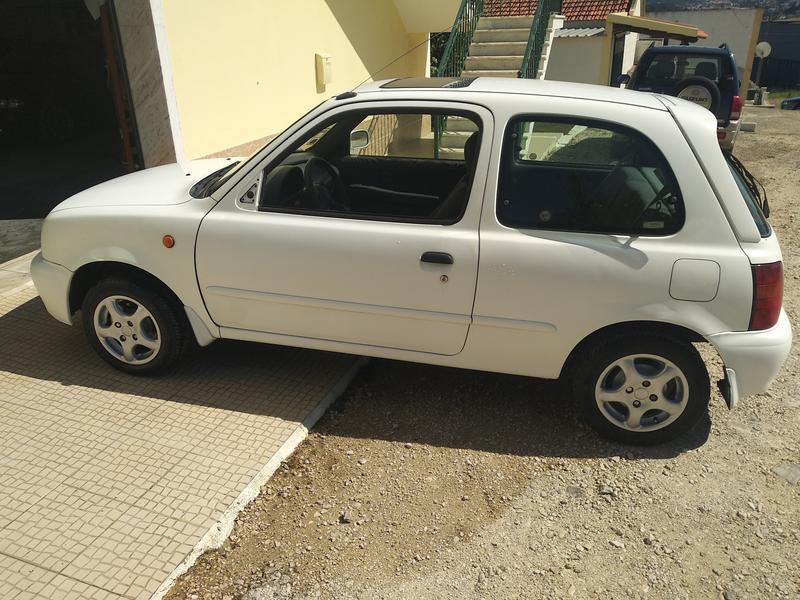
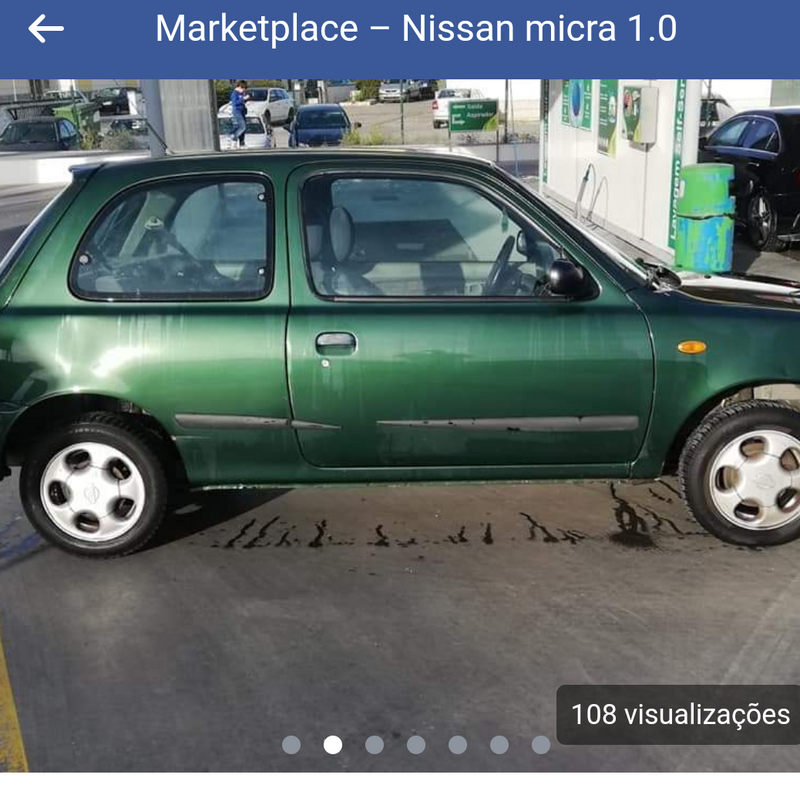
E o meu actual daily drive sem preocupações. 1.0 GX de 1998. Comprei porque tinha umas jantes raras, dificeis de encontrar e que eram extra nos super S... o tipo nao vendia so as jantes [
 ].
].

FastLee
New member
Assim num resumo muito rápido, quando deve ser utilizado o "4H" e o "4L"?
4L sao as redutoras. Sempre que tiveres um obstaculo para passar a velocidade mais reduzida para estar nao forçar a embraiagem. Ha quem ande em TT em 4L e chegue a ir em 5ª em redutoras. Na maioria dos casos equivale a velocidade de ir ali entre 2ª e 3ª em "altas" (4H)
4H é para andamento a velocidades normais mas em piso escorregadio. Podes ir por exemplo em trilhos de areia ou lama em 1ª ou 2ª em 4H. Vai s puxar às 4 mas nao velocidade reduzida.

nto
Well-known member
in: https://www.carsguide.com.au/adventure/advice/when-to-use-low-range-in-your-4x4-69074
[h=1]When to use low range in your 4x4[/h]
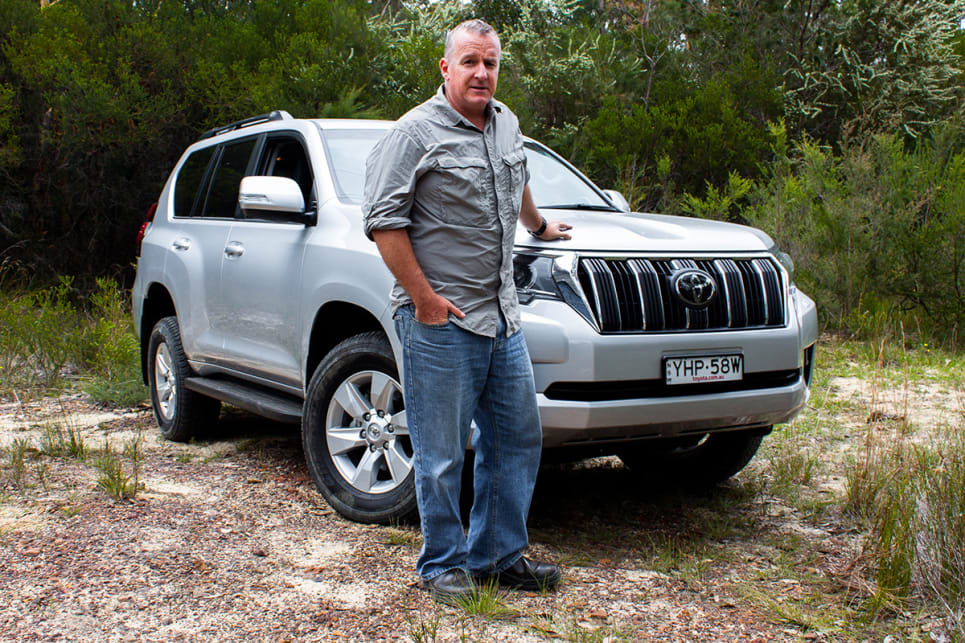
Your 4x4 is an open ticket to a never-before-experienced world of off-road adventures. It has the bush-ready set-up (purpose-built engine and drivetrain with dual-range – high- and low-range – transfer case, suspension and more) aimed at getting you to places those with a two-wheel drive (2WD) or all-wheel drive (AWD) vehicle can only ever dream of.
The problem is there are plenty of 4x4 (four-wheel drive) owners who have never used low-range, or even know when they should use low range, or indeed how to engage four-wheel drive at all. There's no shame in that, and it's easy enough to get your head around the proper operation of it all once you have – that's why we're here.
Here are our tips for when (and how) to use low range.
[h=2]High- and low-range explained (basically)[/h]If you want a detailed explanation of a 4x4 system, go here but for the purposes of this yarn, remember these few basic points for those of us with an off-roader armed with a dual-range transfer case:
In 2H (two-wheel drive, high range) two wheels, usually the rear, are driving your vehicle. You use 2H for normal road driving.
In 4H (four-wheel drive, high range) all four wheels are driving your vehicle. You use 4H for surfaces on which you may need greater traction than you would for bitumen; think firm sand, dirt roads, gravel tracks and the like.
In 4L (four-wheel drive, low range), all four wheels are driving your vehicle and a low gear ratio is being used. Your vehicle's wheels will turn much more slowly than they would in high range, so slower speeds and more torque are the go. You use 4L for soft sand, sand dunes, steep hills and declines, deep mud or snow, and slow-going rock-crawling.
It used to be that you would have to engage high- or low-range using a little shifter near your main manual or auto shifter, and some of us from The Old Days even had to get out of our 4x4s and actually lock our manual locking hubs on the front wheels for off-road work; and then unlock them when switching back to 2H. Not any more; you can now switch to high- or low-range via a dial or knob in the cabin.
In many modern 4x4s you can switch from 2H to 4H without stopping, but still have to come to a complete stop to switch from 4H to 4L.
[h=2]When to use low range[/h]Use 4L when you need optimum traction and absolute maximum power. As we said before, in 4L (four-wheel drive, low range), all four wheels are driving your vehicle and a low gear ratio is being used.
Low-range is one of the keys to the kingdoms of beach and bush. You'll use low range to get you through soft sand, over soft-sand dunes, up steep hills and declines, through deep mud or snow, and it'll help you drive over rocks.
The lower gearing also gives your 4x4 vehicle better engine braking, which helps to control your progress on downhill sections.
[h=2]How to engage low range[/h]Before you switch to low range, deflate all of your tyres to a psi (pounds per square inch) pressure that suits the terrain. As we always say: get your tyre pressure right and that goes a long way to getting you across, over or through pretty much any natural challenge.
Aim for tyre pressure between 15 and 18psi for soft sand and soft-sand dunes, although you may have to go lower. Use between 20 and 25psi for mud or rocks, but again, you may have to drop pressure even lower.
To engage low range, stop your 4x4, put it into Neutral or Park, and use your dial to switch from either 2H to 4L, or (assuming you've been in 4H in the lead-up to the low-range terrain you're about to tackle) 4H to 4L.
Watch for an illuminated icon or lettering ('4L') on your instrument panel to indicate that 4Low has actually been engaged. Don't drive up the hill or onto the terrain you've selected 4L for until you are certain low-range is properly engaged.
Once you know 4L is engaged, shift into first gear, ease your foot off the brake and allow the vehicle to crawl up the hill, across the soft sand – whatever you're on.
In low range, let your vehicle do the work; use gentle acceleration, soft braking and, here's the secret, go slowly. Change up or down through the gears as required. Take your time and creep along.
You really don't need to do a whole lot more other than watch your wheel placement, check for hazards and enjoy the ride.
[h=2]When not to use low range[/h]Low range is generally for slow-going; don't use it for high-speed driving on any surface. In fact, don't use low range at speeds faster than 60km/h for long periods because that may result in serious damage to your vehicle.
[h=2]Switch back to 2H[/h]Make sure that when you've finished low range driving you inflate your tyres back to suitable pressures, and switch back to 4H (if you're back on firm sand, etc) or 2H (if you're back on the bitumen).
Too easy.
nto
Well-known member
Ou...
in: https://www.4x4community.co.za/forum/showthread.php/270935-When-to-use-2H-4H-and-4L
It very much depends on your vehicle, Use 2H on Tar & hard solid surfaces. & only use 4H & 4L on loose surfaces, ie Gravel, Mud & Sand.
4H for Gravel Roads will give you better traction & control.
4L gives you the ability to crawl over seriously rough terrain.
Always Ensure you disengage 4H/4L before returning to Tar.
Some 4x4s have 4H & 4HL (or Lc) with these vehicle you can use 4H on Tar if you need more traction. HL or Hc mean the centre diff is locked & you will get "diff wind" if used on solid surfaces.
in: https://www.4x4community.co.za/forum/showthread.php/270935-When-to-use-2H-4H-and-4L
FastLee
New member
Já agora a troca destas relações deve ser sempre feita com o carro parado e a direção alinhada com o carro, certo?
O GV permite a passagem de 2H a 4H em andamento reduzido. Para passar a 4L, sim, convem parar.

rjpmendes
Well-known member
Normalmente o 4L, utilizamos uns metros antes de atascar! [Obrigado a todos apr
Resumindo, num percurso normal de terra batida ou escorregadio uso 4H, para piso com muita lama ou para subidas difíceis ou passagem de obstáculos uso o 4L
 ]
]
MikePug82
Well-known member
O GV permite a passagem de 2H a 4H em andamento reduzido. Para passar a 4L, sim, convem parar.
Thanks
@Fastlee uma vez que tens um, é normal o pedal da embraiagem ser tão levezinho? às vezes até dá a sensação que está solto [
] Pode ser sensação estranha para mim por não estar habituado. O meu sogro diz que é assim, a minha Maria diz que nos 4 anos que andou era assim. Aliás diz ela que era das coisas que gostava no jipe, não cansava o pé esquerdo [
]
MikePug82
Well-known member
Normalmente o 4L, utilizamos uns metros antes de atascar! [
[
] A ver se não me esqueço de não o meter []
FastLee
New member
Thanks
@Fastlee uma vez que tens um, é normal o pedal da embraiagem ser tão levezinho? às vezes até dá a sensação que está solto [
Pode ser sensação estranha para mim por não estar habituado. O meu sogro diz que é assim, a minha Maria diz que nos 4 anos que andou era assim. Aliás diz ela que era das coisas que gostava no jipe, não cansava o pé esquerdo [
Yup. Embraiagem leve e caixa um pouco mais dura que os carros comuns. Tipico dos jipes suzuki que tive / conduzi

TerranoII
Well-known member
[
Não eras o primeiro [
] ]
]CoelhoImprudent
New member
Agora no início, para habituar, recomendo parares sempre e meteres em ponto-morto. Só para criar um bocado de memória muscular. Senão acontece como a mim e tentas engatar redutoras ainda em 1ª (parado) e aquilo não ativava []
]
MikePug82
Well-known member
Yup. Embraiagem leve e caixa um pouco mais dura que os carros comuns. Tipico dos jipes suzuki que tive / conduzi
É isso apr
MikePug82
Well-known member
Assim é que se faz...ainda tem uns tó do AHO Clube TT [
Caraças, essa suspensão estava subida em quanto? 7 ?
TerranoII
Well-known member
Caraças, essa suspensão estava subida em quanto? 7 ?
Mais do que a conta...uns 4 cm a puxar aos 5 cm [
]
MikePug82
Well-known member
Mais do que a conta...uns 4 cm a puxar aos 5 cm [
Com esse buraco todo à mostra na cova da roda já merecia levar uns pneus de camião tipo os do teu Pajero [
]PS: Essa combinação de jante+pneu está 5* [br
]