GLobal Ncap
Mazda 2
https://static1.squarespace.com/sta...c/1639030620750/Mazda+2+2021+-+fact+sheet.pdf
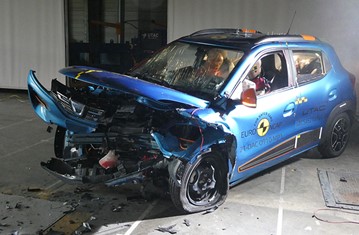
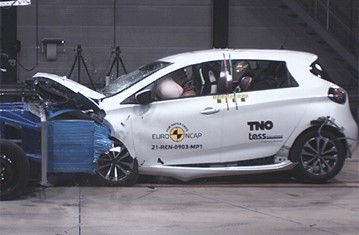
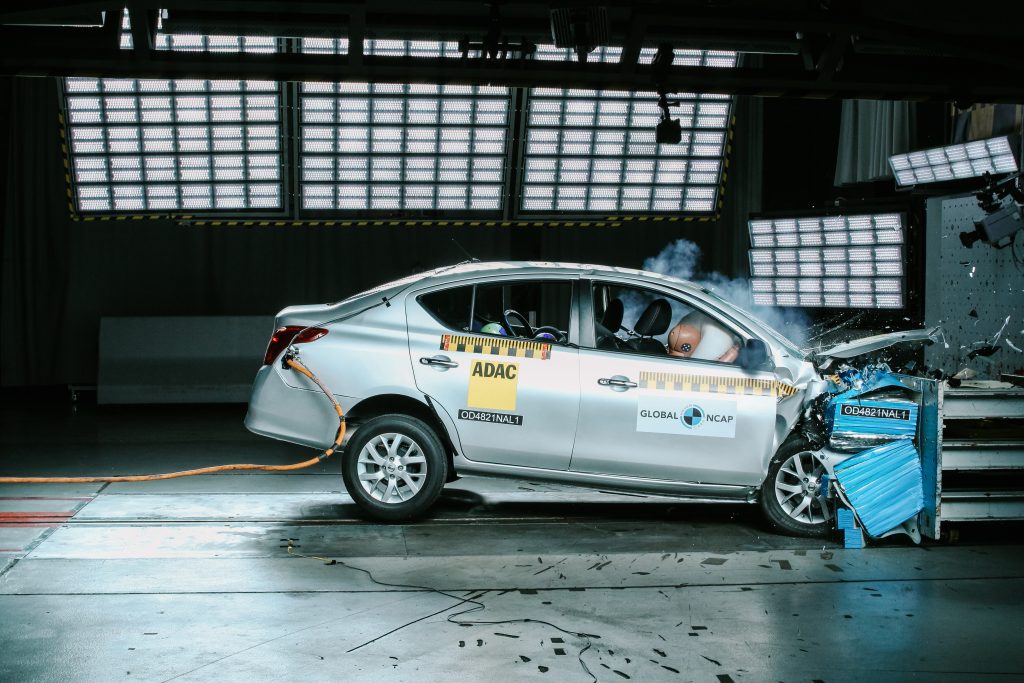
The Mazda 2 with driver and passenger airbags achieved four stars for adult occupant protection and three stars for children. The Nissan Almera with driver and passenger airbags scored three stars for adult occupants and three stars for children.
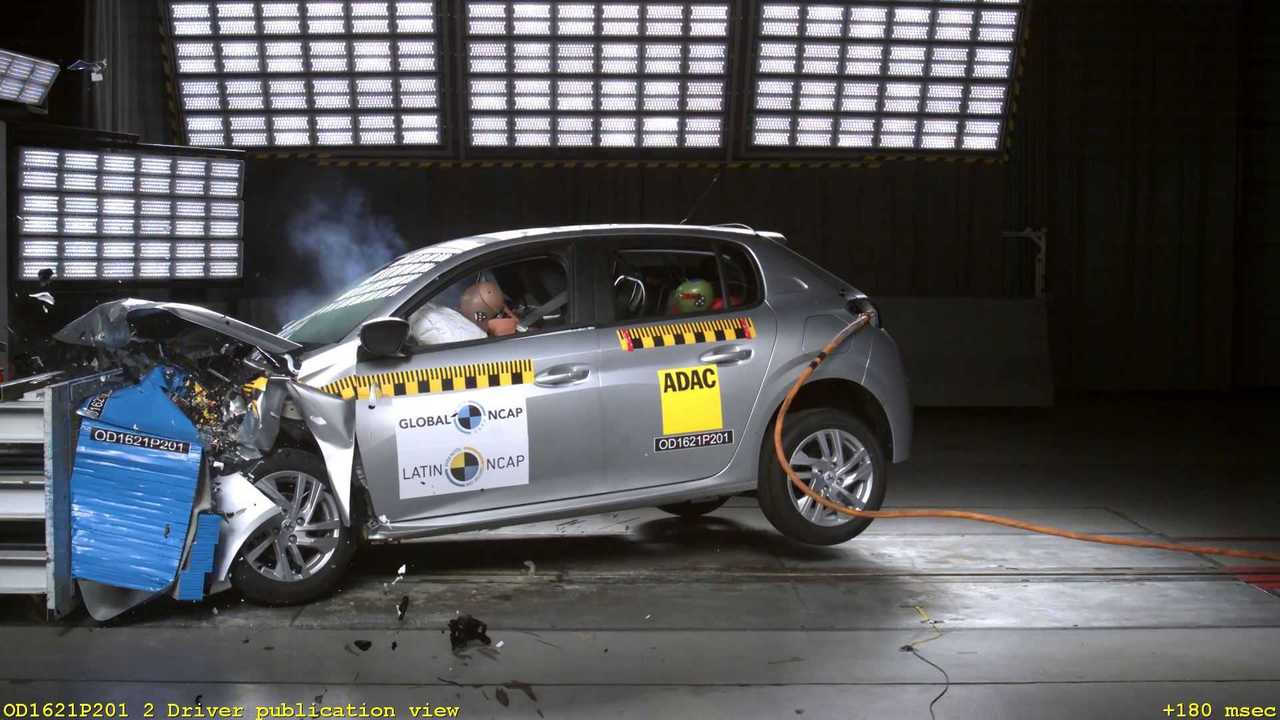
Peugeot 208
https://www.latinncap.com/en/result/156/peugeot-208-+-4-airbags
The Peugeot 208, manufactured in Argentina, with 2 frontal airbags, 2 side body airbags and Electronic Stability Control (ESC) as standard equipment, achieved two stars under Latin NCAP’s latest protocols. The popular compact model achieved 51.53% in Adult Occupant box, 54.92% in Child Occupant box, 54.13% in Pedestrian Protection and Vulnerable Road Users box and 55.81% in Safety Assist box.
The 208 was tested in frontal impact, side impact, whiplash, pedestrian protection, ESC and ‘Moose’ test. The model showed an acceptable performance in the frontal impact and good side impact for the adult protection thanks to its restraints systems. Whiplash protection was good, the car meets rear impact UNR32 regulation requirements and offers a rescue sheet according to Latin NCAP requirements. The bodyshell and footwell area were rated as unstable. The lack of standard side head protection airbags limited the car scoring. In order to score AEB points, cars need full passive protection and without the curtain airbags the 208 would not be able to score AEB points, technology which is available in the 208 versions.
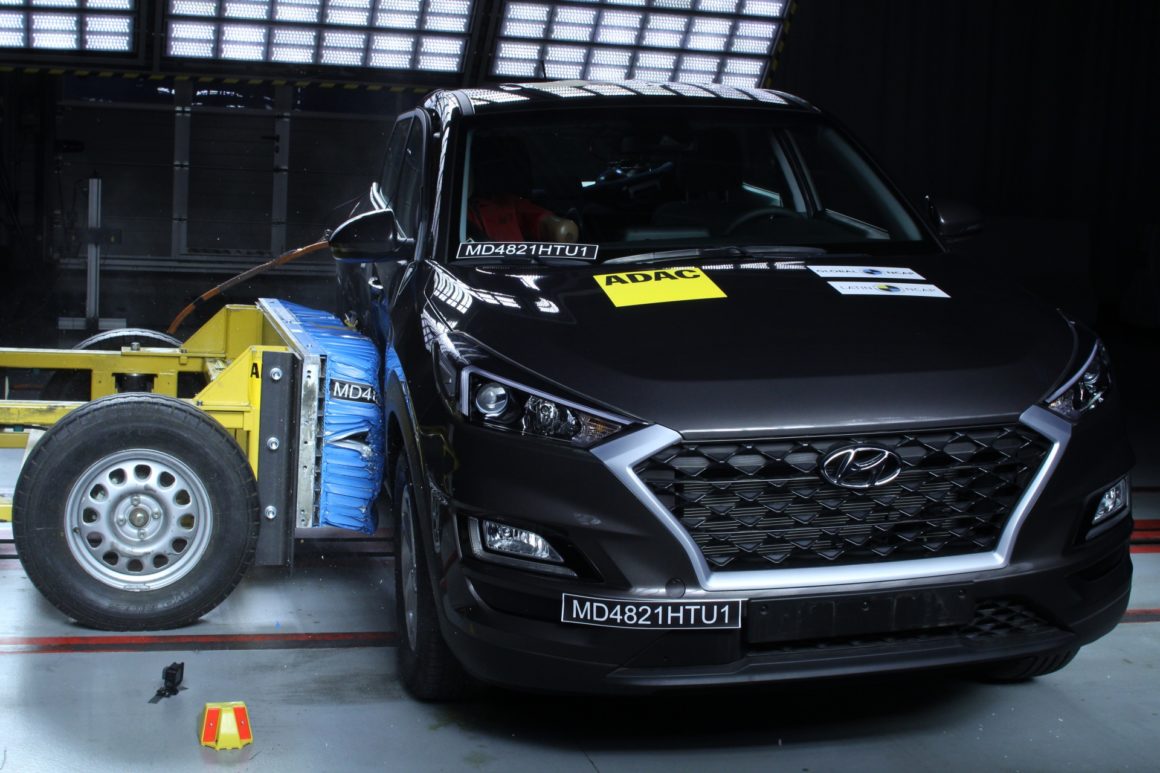
Hyundai Tucson
https://www.latinncap.com/en/result/155/hyundai-tucson-+-2-airbags
The Hyundai Tucson, manufactured in South Korea, with 2 frontal airbags as standard and no standard ESC achieved zero stars under Latin NCAP latest protocols. The earlier version of the SUV achieved 51.21% in Adult Occupant box, 4.37% in Child Occupant box, 49.85% in Pedestrian Protection and Vulnerable Road Users box and 6.98% in Safety Assist box.
The Tucson was tested in frontal impact, side impact, whiplash and pedestrian protection. The model showed good performance in the frontal impact and side impact for the adult protection, however, the lack of standard side head protection airbags limited the car to get better scoring. Whiplash protection was good. The bodyshell and footwell area were rated as stable. Child occupant protection performance was poor because the Tucson surprisingly has lap belt in the rear centre seating position as standard and also because Hyundai declined to select the Child Restraint Systems (CRS) for the tests. Pedestrian protection was over all average with poor protection to upper leg protection and low score in the head, this car does not offer Autonomous Emergency Braking for Venerable Road Users as an attempt to compensate the pedestrian protection described before in order to avoid or mitigate the impact. Safety assist showed only SBR points. The car does not offer ESC as standard as well as other relevant technologies.
Optional safety equipment would certainly offer better protection and Latin NCAP offered Hyundai to test the new version of the Tucson but the manufacturer declined the offer.
The Tucson version tested by Latin NCAP clashed in time with the new version of the model. Latin NCAP purchased the unit tested in February 2021 as Hyundai’s official representatives in 3 relevant countries confirmed that the new Tucson for Latin America was at least 2 years away. Things developed differently and the new Tucson came in to Latin America during 2021. This does not invalidate this result as there are many “old” Tucsons still available as new or as second hand which can be purchased by consumers.
Nissan Almera
https://static1.squarespace.com/sta...030722066/Nissan+Almera+2021+-+fact+sheet.pdf




 ]
]
 ]
]

/i.s3.glbimg.com/v1/AUTH_cf9d035bf26b4646b105bd958f32089d/internal_photos/bs/2021/b/k/2NjMIPQ5mGwvRowwAXuQ/vlcsnap-2021-08-02-16h50m15s017.jpg)


