Bolsa e investimentos

Quais são as implicações/desvantagens/problemas que podem surgir devido ao preço estar a cerca de 1 dolar?

O preço do barril nos contratos do próximo mês está ainda a 21 dólares. Hoje dá-se o encerramento dos contratos de Maio, no qual se está a verificar uma oferta (crude já em barril) que ultrapassa loucamente a procura (necessidade de consumo). Chegámos ao ponto em que o produtor paga para lhe levarem o produto. Mesmo para valores de dólar os prejuízos para as empresas produtoras são imensos, pois a extração apresenta custos elevados.
 
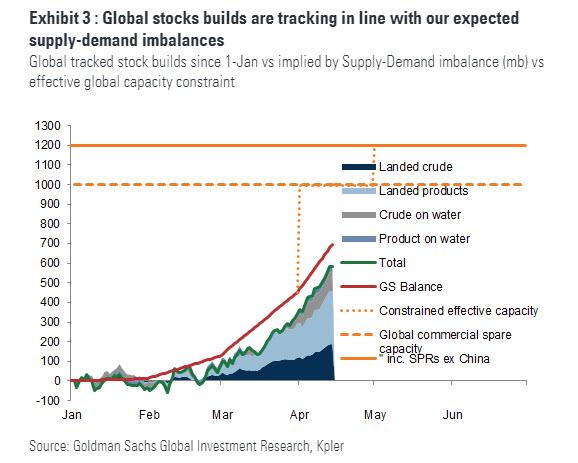
A razão porque o crude está em valores negativos tem a ver com o espaço de armazenamento estar esgotado (em virtude da oferta ser muito superior à procura.

Para nós aqui na Europa não existe (para já) este problema:

Waterborne crudes like Brent will be far more insulated, staying near cash costs of $20/bbl with temporary spikes below.
Brent is priced on an island in the North Sea, 500 meters from the water, where tanker storage is accessible. In contrast, WTI is landlocked and 500 miles from the water. This illustrates an important point. Shut-ins will be not be based upon where wells sit on the cost curve but rather on logistics and access. High-cost waterborne crude oil that can reach a ship (storage we have historically never ran out of), are better positioned than landlocked pipeline crude oil sitting behind thousands of miles of pipe, like the crude oils in the US, Russia and Canada. In 1998, when surpluses last breached storage capacity, it was these landlocked crude oils that were the hardest hit.
So while markets like WTI, particularly WTI Midland, or Canada’s WCS can go negative, Brent is likely to stay near cash costs of $20/bbl
. Ultimately, the market never hits nameplate capacity, as other bottlenecks are also at play. During 2008 and also in this crisis, dollar funding and credit constraints that prevent oil owners from accessing storage and transportation capacity also played a role. We believe that the Fed’s actions last week alleviate some of this risk, but oil itself creates dollar liquidity given its importance in global trade and setting the price of other traded goods and another sharp drop in oil prices could create additional dollar shortages.
 
O preço que falamos é o WTI, que é o petróleo americano. As reservas nos EUA estão tão mas tão carregadas que não há mais onde colocar barris.

Para Portugal interessa mais o preço do Brent e da OPEC, ambos em mínimos históricos, mas longe do 0.

Edit: o PauloRaposo adiantou-se
 
O estado e a GALP deixam de ter desculpas com certas contas manhosas...? :confused: [:D] [:D]


Edd :)


Isto não influencia diretamente o preço aqui na Europa. Estamos a falar de contratos de futuros para entrega em Maio nos EUA. Para Junho, nos EUA (WTIC), o preço anda à volta dos $21. Para Junho, na Europa (Brent), o preço está acima dos $25.
 
Se o petróleo não voltar a ser usado é o equivalente a dizer que vamos todos morrer com esta pandemia.

O petróleo tenderá a ser cada vez menos usado. Eu acredito que o seu valor irá descer a medio longo prazo, ainda que o valor do combustível não vá descer nunca. Vai ser como o tabaco, imposto + % residual do que interessa.

Eu neste momento não estou a comprar nada. Estou à espera que isto dê a volta porque não creio que esta subida seja para ficar. Não gosto do conceito de socialismo nos mercados e o FED está a fazê-lo de uma maneira nunca antes vista.
 
O contrato de futuros do crude (Nymex WTI) para entrega em Maio, nos EUA, fechou hoje nos - 37,63 USD. Deixo aqui uma explicação do que se passou:


Here Is The Full Explanation Behind Today's Unprecedented Negative Oil Price


Courtesy of IHSMarkit's energy vice presidente Roger Diwan

How did you end up with negative oil prices today? This happens when a physical futures contract find no buyers close to or at expiry.

Let me explain what that means:

A physical contract such as the NYMEX WTI has a delivery point at Cushing, OK, & date, in this occurrence May. So people who hold the contract at the end of the trading window have to take physical delivery of the oil they bought on the futures market. This is very rare.


It means that in the last few days of the futures trading cycle, (which is tomorrow for this one) speculative or paper futures positions start rolling over to the next contract. This is normally a pretty undramatic affair.

What is happening today is trades or speculators who had bought the contract are finding themselves unable to resell it, and have no storage booked to get delivered the crude in Cushing, OK, where the delivery is specified in the contract.

This means that all the storage in Cushing is booked, and there is no price they can pay to store it, or they are totally inexperienced in this game and are caught holding a contract they did not understand the full physical aspect of as the time clock expires.

The contract roll and liquidity crunch that made the extreme sell-off today possible but it DOESN’T necessarily represent futures market conditions: NYMEX June settled today at $21.13.

The June contract is not out of the woods either: today’s action indicate that physical oil markets at Cushing are not in good shape and that storage is getting very full.


A decline of over 15% in the June contract price points to real worries that the physical stress will continue to reverberate, and will force a lot more production shutdowns during May than the ones announced so far.


So today negative prices are the reflection of dire market conditions for producers, with the hope that demand restart before the middle of May and that the June contract does not face the same fate.
 
Ninguém lhes mandou encher o traseiro a fazer stock em tudo o que era buraco, com montes de petroleiros parados sabe-se lá onde no tempo das vacas gordas e agora não têm onde o meter... Não o venderam na altura e agora estavam a segura-lo, aguentem-se!


Edd :)
 
Voltar
Superior